A recent study utilizing NASA’s Chandra X-ray Observatory has found that many smaller galaxies may not contain supermassive black holes at their centers. This research challenges the prevailing notion that nearly all galaxies host these gigantic cosmic features. The analysis focused on a sample of over 1,600 galaxies and has significant implications for understanding galaxy formation and the origins of supermassive black holes.
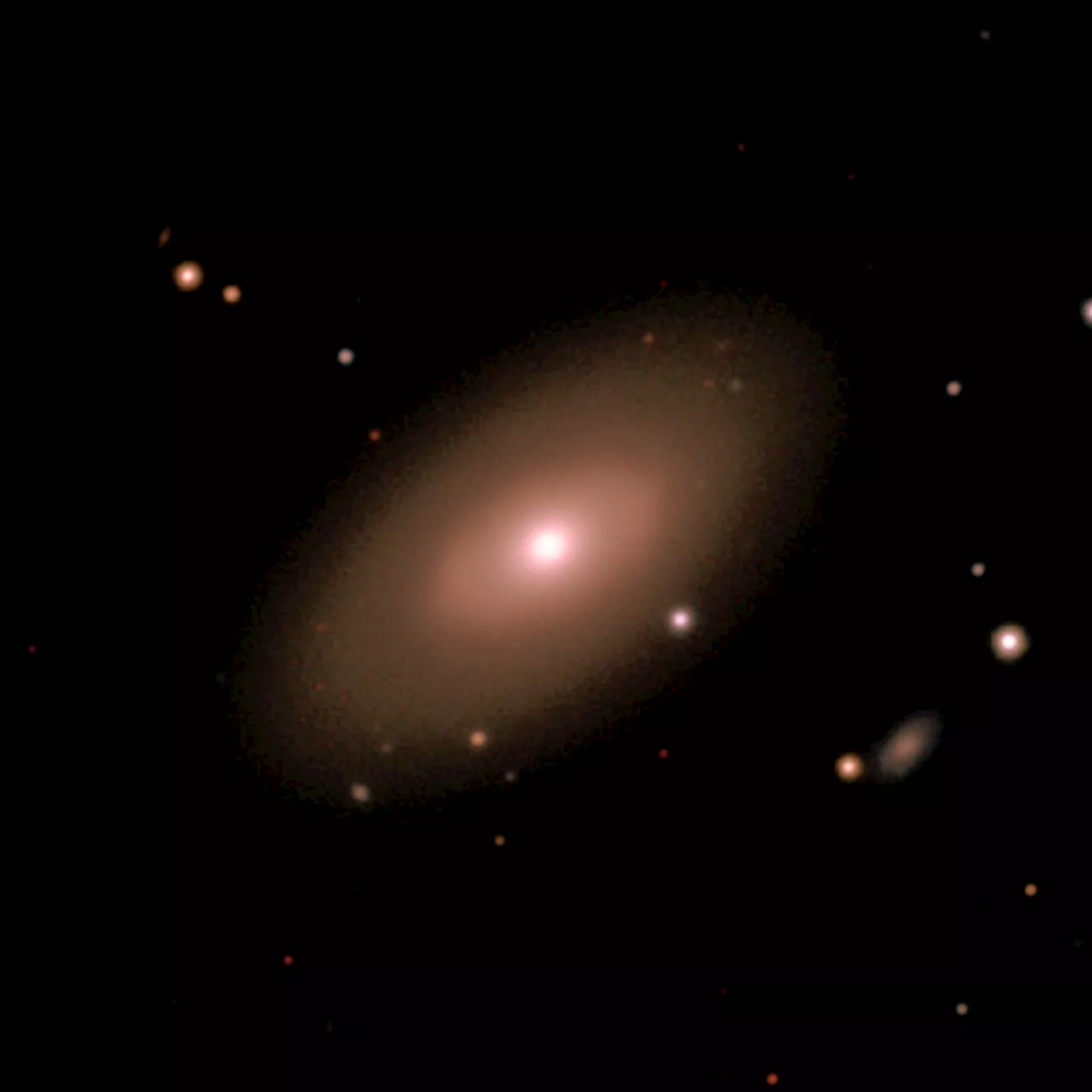
The study examined data collected over two decades from various galaxies, including NGC 6278 and PGC 039620. These two galaxies exemplify the research findings, showcasing the stark contrast in black hole presence between smaller and larger galaxies. The results suggest that smaller galaxies, particularly those with masses under three billion solar masses, typically lack the bright X-ray sources indicative of supermassive black holes.
According to Fan Zou, an astronomer at the University of Michigan and the lead author of the study, “It’s important to get an accurate black hole head count in these smaller galaxies. Our study gives clues about how supermassive black holes are born.” The research findings were published in The Astrophysical Journal.
Key Findings from Chandra Observations
The team analyzed X-ray emissions from galaxies to identify potential black hole activity. While over 90% of massive galaxies, including those comparable in size to the Milky Way, showed signs of supermassive black holes, smaller galaxies frequently did not exhibit such clear indicators. The researchers noted that many dwarf galaxies—those with significantly less mass—often lack the X-ray signatures characteristic of black holes.
The Chandra data indicated that massive galaxies have bright X-ray sources resulting from material falling into their centers, which is heated by friction. In contrast, smaller galaxies like PGC 039620 showed no such emissions, leading to the conclusion that they likely do not contain supermassive black holes.
The study explored two primary explanations for the absence of X-ray sources in smaller galaxies. The first posits that the prevalence of black holes is considerably lower in these galaxies. The second suggests that if black holes do exist, the X-ray emissions from matter falling into them may be too faint for Chandra to detect.
Implications for Understanding Black Hole Formation
Zou and his team concluded that there is indeed a lower incidence of black holes in smaller galaxies compared to their larger counterparts. “We think, based on our analysis of the Chandra data, that there really are fewer black holes in these smaller galaxies than in their larger counterparts,” said Elena Gallo, a co-author from the University of Michigan.
The amount of gas falling toward a black hole influences its X-ray brightness. Smaller black holes are expected to pull in less gas, resulting in fainter emissions. Nonetheless, the researchers observed an additional deficit of X-ray sources in low-mass galaxies beyond this expected decline, suggesting many of these galaxies might simply lack black holes altogether.
This finding supports the notion that the formation of supermassive black holes is a rarer event, primarily occurring in the most massive galaxies during their formation. Anil Seth, another co-author from the University of Utah, emphasized that if smaller black holes were formed from collapsing massive stars, one would expect to see a similar fraction across all galaxy sizes.
The implications of this research extend to understanding gravitational wave events as well. A reduced number of black holes in smaller galaxies could lead to fewer potential mergers, which are significant sources of detectable gravitational waves.
NASA’s Marshall Space Flight Center manages the Chandra program, while the Smithsonian Astrophysical Observatory’s Chandra X-ray Center oversees scientific operations. The study adds a vital piece to the intricate puzzle of galaxy evolution and the cosmic role of black holes, setting the stage for future research that may further illuminate the mysteries of our universe.