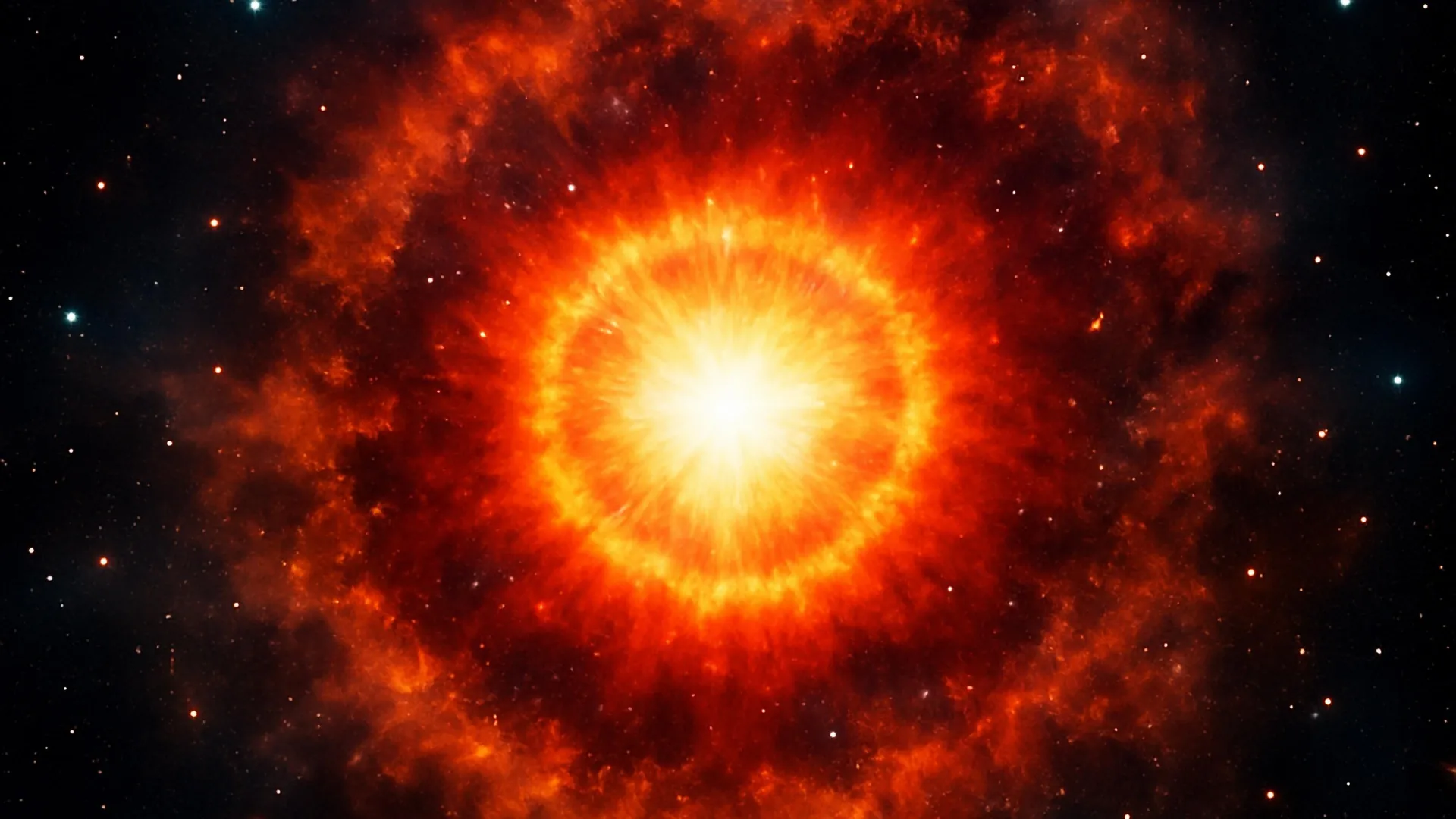
A recent study has revealed that the remnants of a supernova, specifically the Cassiopeia A, are significant contributors to the elements essential for life. Researchers from Kyoto University and Meiji University utilized data from the XRISM satellite, launched by JAXA in 2023, to uncover unexpectedly high levels of chlorine and potassium in the supernova remnant. These findings, published on December 8, 2025, challenge existing theoretical models that underestimated the role of supernovae in producing such critical elements.
The study’s authors focused on the origins of vital elements that are crucial for life and planet formation. While many elements are produced within stars and dispersed through supernova explosions, the origins of chlorine and potassium have remained elusive. Current models suggested that stars should generate only about one-tenth of the chlorine and potassium observed in the universe, leading to a longstanding scientific dilemma.
New Insights from XRISM Data
To address this gap in understanding, the research team employed the high-resolution capabilities of the XRISM satellite. The Resolve instrument aboard XRISM provided an energy resolution approximately ten times sharper than older X-ray detectors. This allowed researchers to detect faint emission lines associated with the rare elements in the Cassiopeia A remnant.
The results from the analysis showed clear X-ray emission lines of chlorine and potassium at levels significantly exceeding predictions from standard models. This marks the first observational confirmation that a single supernova can produce enough of these elements to align with astronomical observations. The researchers attribute this enhanced production to powerful mixing processes occurring deep within massive stars, potentially driven by rapid rotation, binary interactions, or shell mergers.
Corresponding author Toshiki Sato expressed excitement about the findings, stating, “When we saw the Resolve data for the first time, we detected elements I never expected to see before the launch.” He emphasized the significance of making this discovery with a satellite developed by their team.
Understanding Stellar Evolution
The implications of this research extend beyond mere elemental discovery. The findings suggest that the building blocks of life formed under extreme conditions inside stars, far from environments conducive to life as we know it. This study highlights the power of high-precision X-ray spectroscopy in exploring the processes occurring within stellar interiors.
Another corresponding author, Hiroyuki Uchida, remarked on the importance of their work: “I am delighted that we have been able, even if only slightly, to begin to understand what is happening inside exploding stars.”
Moving forward, the research team plans to investigate additional supernova remnants using XRISM to determine whether the elevated chlorine and potassium levels found in Cassiopeia A are common among massive stars or unique to this particular remnant. This ongoing research aims to uncover whether the internal mixing processes identified are a widespread feature of stellar evolution.
As Kai Matsunaga, another corresponding author, aptly stated, “How Earth and life came into existence is an eternal question that everyone has pondered at least once. Our study reveals only a small part of that vast story, but I feel truly honored to have contributed to it.”
These groundbreaking findings not only enhance our understanding of the universe but also provide a clearer picture of how the fundamental elements necessary for life came into existence.