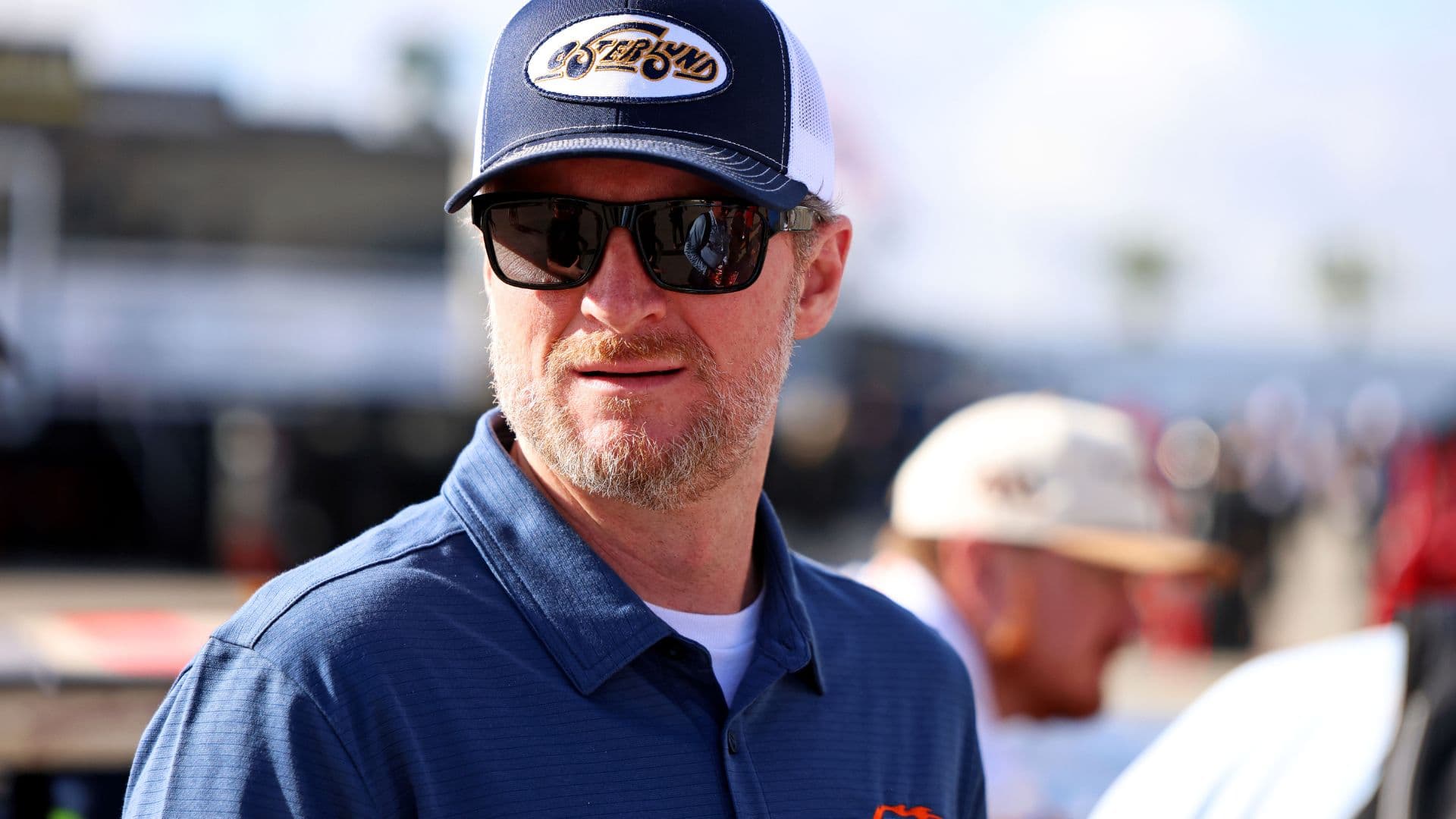
The return of the All-Star Race to North Wilkesboro Speedway in 2023 has sparked significant excitement among fans, drivers, and teams. This revival was largely attributed to the efforts of Dale Earnhardt Jr., whose advocacy played a pivotal role in revitalizing the historic track. However, recent discussions have raised questions about NASCAR’s influence in this resurgence. In a candid conversation on his podcast, The Dale Jr. Download, Earnhardt clarified that NASCAR did not initiate the revival of the speedway.
While North Wilkesboro had not vanished from the racing scene, it faced many challenges due to a lack of modern infrastructure. The venue remained active in the Late Model circuit, attracting dedicated fans despite its limitations. Recognizing this sustained interest, Earnhardt chose to leverage the momentum rather than let it dissipate.
In 2019, Earnhardt took a significant step by approaching Marcus Smith, CEO of Speedway Motorsports, to gain access for preparing the track for iRacing scans. This move was not merely administrative; Earnhardt actively participated in the preparation. His hands-on involvement led to North Wilkesboro becoming a popular venue on the iRacing platform, amplifying calls for a real-world return.
As enthusiasm grew, Smith approved a CARS Tour event at North Wilkesboro in 2022, branded as the “Racetrack Revival.” This event was pivotal, as Earnhardt himself competed in a Late Model race, reinforcing the argument for North Wilkesboro’s capacity to host national-level competition. Within months, the speedway was confirmed to host the All-Star Race during NASCAR’s 75th anniversary season, accelerating restoration efforts.
Despite the excitement surrounding the All-Star Race, Earnhardt emphasized that the credit for the track’s revival should go to others. He specifically pointed to Smith and the financial backing from North Carolina’s Build Back Better fund as key factors. Earnhardt stated, “There is a lot of stuff about NASCAR in all of this that I don’t know… But I’ll tell you what I do know, is that North Wilkesboro came back because of Marcus Smith … NASCAR, you know, they didn’t play any role.”
According to Earnhardt, NASCAR’s involvement comes only after the track ownership presents a completed project. He elaborated that NASCAR responds positively when Smith indicates the track is ready for the schedule. “NASCAR never was going, ‘Guys, we gotta get Wilkesboro going,’” he clarified, emphasizing that his comments were not intended as a slight against the organization.
He credited the collective efforts of state and local government support, as well as volunteers who have maintained the property over the years. Even basic tasks, such as grass maintenance, played a crucial role in preserving the track’s viability for a return to competition. Earnhardt expressed that these contributions deserve recognition for their part in the revival.
Earnhardt’s sentiments were echoed by his sister, Kelley Earnhardt-Miller, who noted that her brother’s significant efforts in bringing the CARS Tour to North Wilkesboro and participating in an event that attracted 20,000 fans were pivotal before NASCAR and Speedway Motorsports officially added the All-Star Race to the calendar.
The narrative surrounding North Wilkesboro’s revival serves as a testament to the combined efforts of dedicated individuals and organizations, showcasing how grassroots enthusiasm can lead to significant changes in the world of motorsport.