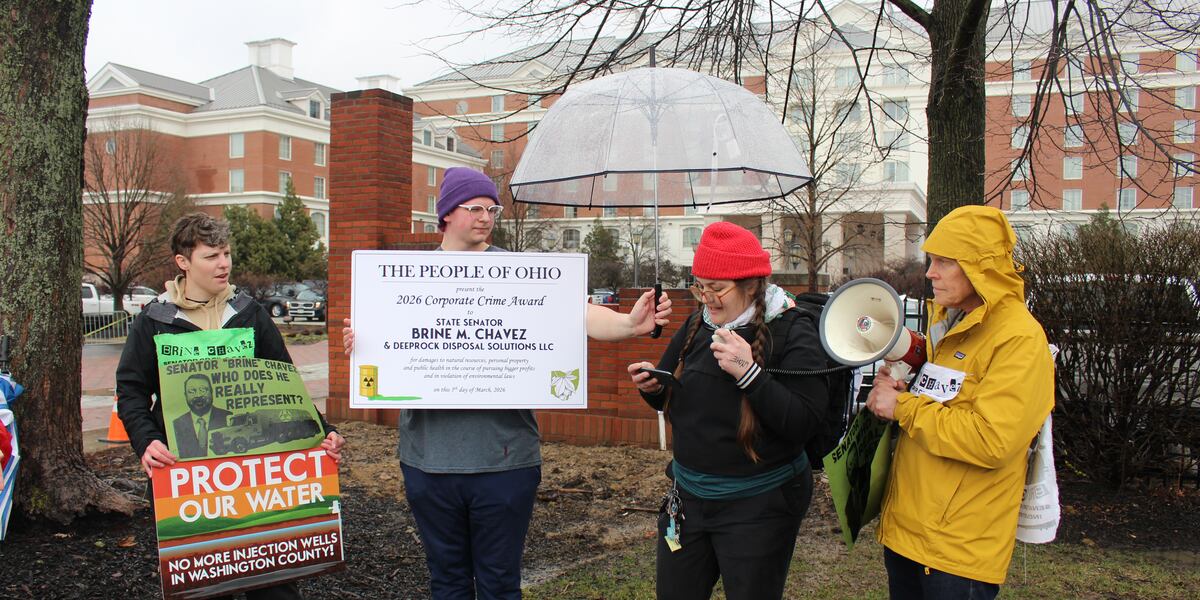
URGENT UPDATE: Activists gathered outside the Easton Hilton Hotel in Columbus, Ohio, on Thursday, protesting State Senator Brian Chavez (R – Dist. 30) as he received the Oilfield Patriot Award from the Ohio Oil and Gas Association. The demonstration coincided with the 79th annual meeting of the association, highlighting ongoing tensions regarding the controversial practice of injection wells in the region.
The protest was spearheaded by local residents and members of Washington County for Safe Drinking Water and the Buckeye Environmental Network. Activists are raising alarms over Chavez’s deep connections to the oil and gas industry, notably as the former CEO of DeepRock Disposal Solutions, which operates injection wells in Southeastern Ohio. While Chavez claims to have distanced himself from the company, protesters assert that he continues to influence policies favoring the oil sector as the chair of the Senate Energy Committee.
During the protest, activists presented their own “Corporate Crime Award” to Chavez and DeepRock. “We deliver this award for writing laws to shield the injection well industry from liability,” stated Kat Finneran, co-chair of the Buckeye Environmental Network. She emphasized that brine from Chavez’s former company is reportedly migrating underground, posing a significant risk to the drinking water of 32,000 people in Marietta, Ohio, and threatening the health of local communities.
The urgency of the situation is amplified as local governments and water boards unite to call for a moratorium on injection wells, intensifying the debate around environmental safety and public health.
In response to the protests, John Fortney, Communications Director for the Ohio Senate Majority Caucus, dismissed the demonstrators as “radical organizations” aiming to undermine the oil and gas industry through “junk science.” Fortney’s comments reflect a broader narrative from state officials who have characterized dissenting voices as influenced by “California special interests.”
However, local activist Bev Reed countered these claims, asserting the group’s commitment to Ohio and its residents. “We are an Ohio-based organization,” Reed said. “We’re Ohioans. We’re Appalachians. We’re all over the state.”
As the protest unfolds, the divide between local residents and state officials continues to widen, with significant implications for environmental policy and community health.
WHAT’S NEXT: The fallout from this protest may influence upcoming legislation regarding injection wells as activists vow to maintain pressure on lawmakers. Residents in affected areas are urged to stay informed and engaged as this critical debate evolves.
Stay tuned for further updates on this developing story, as the situation remains fluid and may impact policy decisions in Ohio.