URGENT UPDATE: In a bold political maneuver, Democrats are rallying around the term “affordability,” positioning it as a critical rallying cry ahead of the upcoming midterm elections. This shift was notably initiated by Representative Mikie Sherrill of New Jersey on President Donald Trump‘s first day back in office, highlighting a growing concern over the nation’s affordability crisis.
As of now, “affordability” has surged to the forefront of political discourse, dominating conversations in the wake of recent elections where it played a pivotal role in Democratic victories this November. With Americans increasingly burdened by rising costs of living, the Democratic Party is seizing this moment to capitalize on widespread economic anxieties.
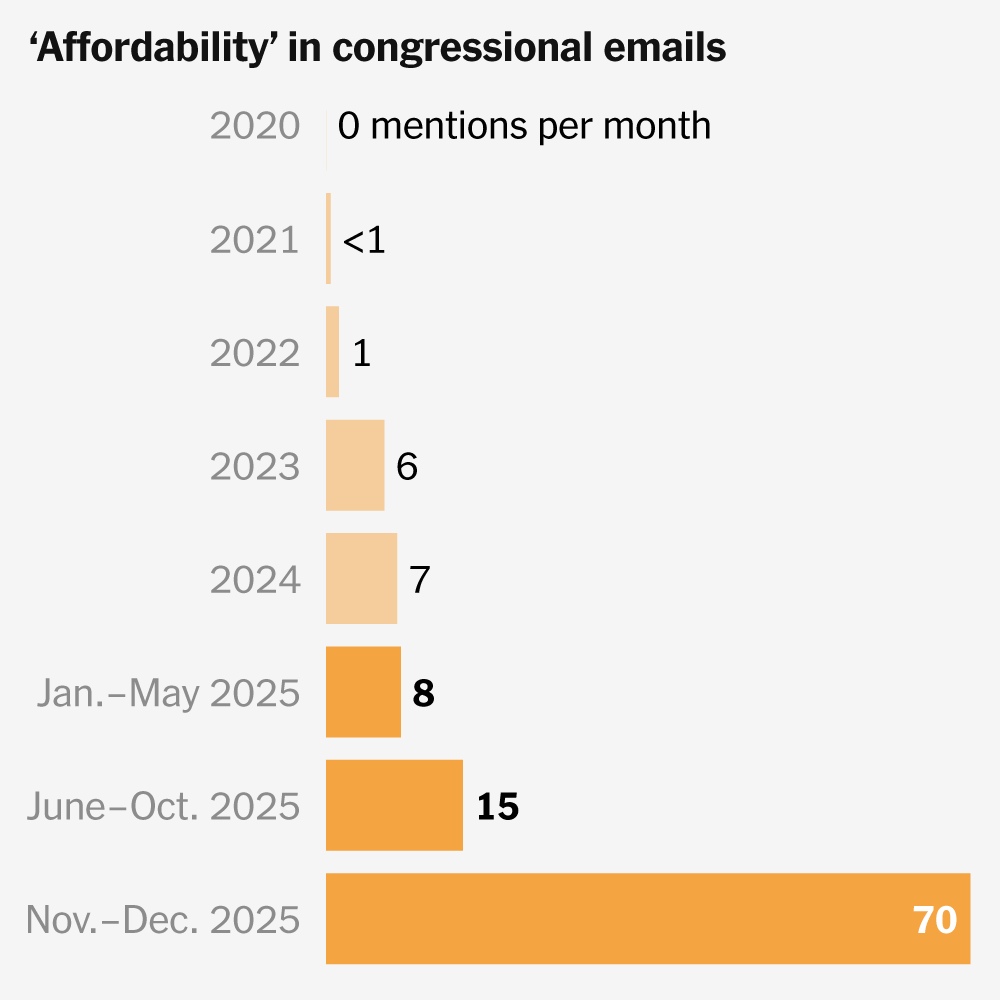
Recent data shows that references to “affordability” are skyrocketing in congressional communications, signaling a strategic pivot. A notable increase in mentions of this term in emails from members of Congress indicates a shift in focus from more specific economic issues to a broader, more relatable term that resonates with everyday Americans.
The urgency surrounding affordability is palpable, as surveys reveal that economic concerns are the top priority for voters. A significant portion of the population is expressing fears about their financial stability, with many feeling they are falling behind. This sentiment is set to shape the political landscape as both parties prepare for a fierce battle in the midterms.
What’s next? Democrats are expected to ramp up efforts to promote affordability as a cornerstone of their campaign strategies, while Republicans may counter with their own messaging. With the midterm elections approaching, expect affordability to remain a critical issue influencing voter decisions.
As the conversation evolves, it’s clear that “affordability” is more than just a buzzword—it’s a powerful tool that could determine electoral outcomes. Stay tuned for updates as this story develops and the political arena heats up.