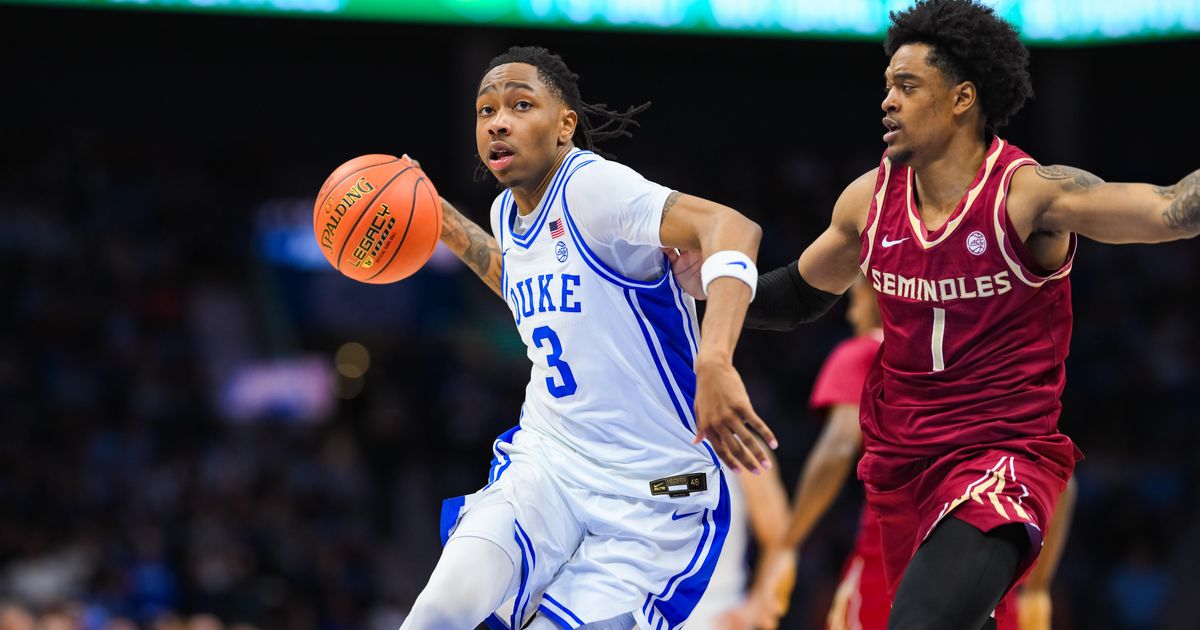
URGENT UPDATE: In a shocking turn of events following Duke University’s latest victory, player Isaiah Evans revealed he received a threatening message from a disgruntled bettor. Just minutes after the top-ranked Blue Devils advanced to the ACC Championship game on March 14, 2026, Evans disclosed that a stranger wished harm upon him due to his performance—scoring only six points and missing all seven 3-point attempts.
The message came after Evans had previously scored a career-high 32 points against Florida State, leading many sportsbooks to set his over/under at 15 points for the game against Clemson. “I just got a text right now. Some dude told me: ‘I hope you blow your knee out,’” Evans stated post-game, highlighting the intense pressure athletes face from bettors.
This alarming incident underscores the growing concerns surrounding legal sports betting in North Carolina, which launched online betting in March 2024. Since then, over $13 billion has been wagered across eight legal operators in the state. The rise of proposition bets, where individuals can bet on the statistics of players, has led to widespread harassment of athletes.
Evans is not alone in his experience. Former North Carolina player Armando Bacot reported receiving hundreds of messages from fans upset over his performance following the launch of betting in the state. Duke senior Maliq Brown echoed these sentiments, noting he often hears comments related to betting while walking through arenas.
NCAA President Charlie Baker is calling on states with legal sports betting to ban prop bets on college games, citing the harassment athletes endure. Meanwhile, ACC Commissioner Jim Phillips expressed support for eliminating such bets, linking them to athlete harassment and potential game manipulation. “We should have zero tolerance for that,” Phillips stated, emphasizing the immense pressure placed on young athletes.
The popularity of prop bets continues to surge, with fans eager to wager on specific player performances during games. According to Joe Maloney, president of the Sports Betting Alliance, these bets reflect the growing fandom surrounding individual players.
In response to the crisis, North Carolina state representative Marcia Morey has introduced bills to ban prop betting on college sports, yet these proposals have stalled in the legislature. “We’re seeing a huge increase in social media threats to college players,” said Morey, who has firsthand experience as a former NCAA investigator.
However, former Representative Jason Saine, who advocated for legalizing sports betting in North Carolina, argues that criticism of athletes is inevitable, regardless of betting’s presence. “Athletes are in the public sphere. They’re going to get criticized, period,” he stated.
As the debate intensifies, a new investigative documentary titled The Gamble: Sports Betting in North Carolina will premiere on March 18, exploring the rapid rise of the sports betting industry and its implications for athletes.
The escalating threats facing players like Isaiah Evans raise urgent questions about the integrity of college sports and the safety of student-athletes in an increasingly commercialized environment. As the landscape continues to evolve, the need for protective measures against harassment and exploitation becomes ever more pressing.
Stay tuned for live updates on this developing story.