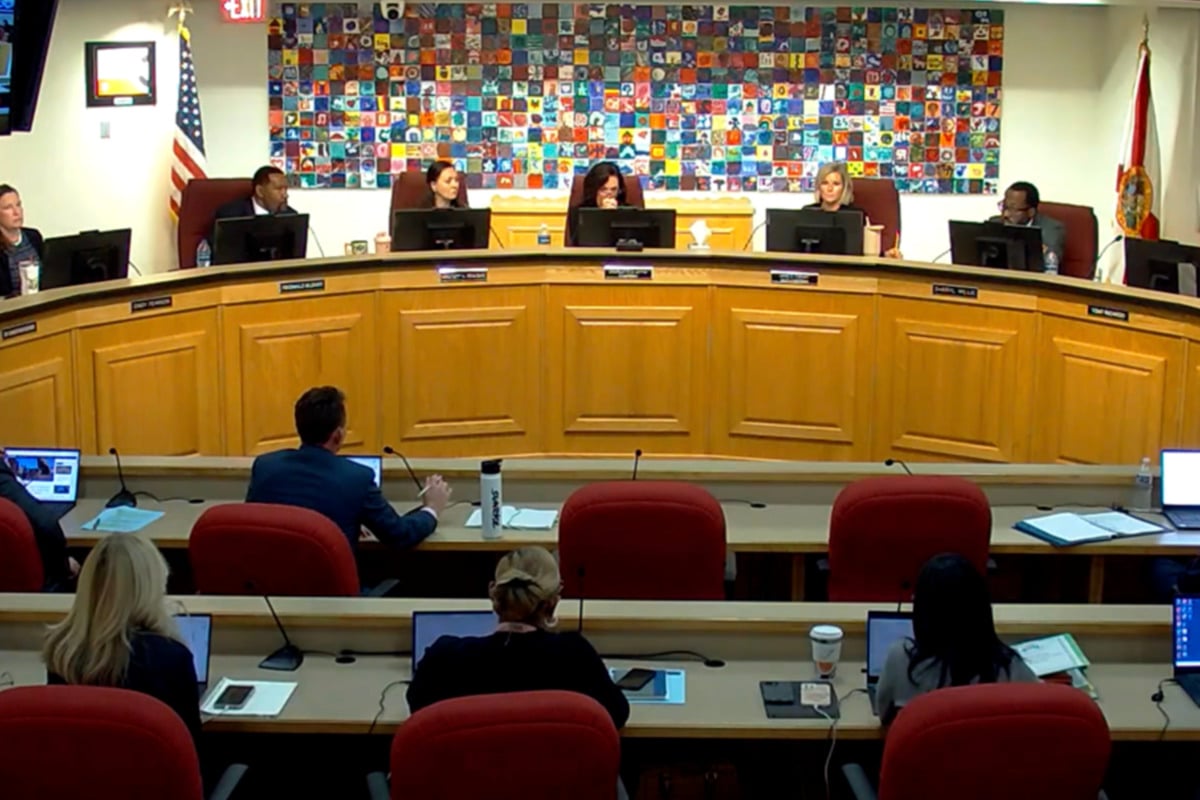
UPDATE: The Duval County School Board has just announced significant revisions to its policy for reviewing challenged educational materials, a move that affects how students access learning resources. The new guidelines, outlined in Board Policy 4.30, come amid increasing scrutiny over educational content in Florida schools.
Under the revised policy, all complaints regarding educational materials—including books and films—must now be submitted through an official online form. Notably, if a complaint alleges “pornography” or “sexual conduct,” the challenged materials will be removed from student access within five school days and remain unavailable until the review process concludes, according to Duval County Public Schools.
The updated policy specifies the structure of the Material Review Committee (MRC), which consists of nine members appointed by the school board. Out of these, seven are voting members, all of whom are parents of children currently enrolled in district schools. This committee is tasked with ensuring that the evaluation of materials is both informed and consistent, as stated in the official announcement.
The MRC is given 30 days to evaluate any challenged material, during which they will hold publicly noticed meetings. Importantly, authors, publishers, or sponsors of the challenged materials are invited to respond during this review period. Following the review, the committee will submit a written report to the school board, which will act on their recommendations immediately.
Additionally, the revised policy introduces a clear process for parents to appeal decisions regarding challenged materials, reinforcing the district’s commitment to transparency and community involvement. More detailed information about these changes can be found on the Duval County Public Schools website.
These updates mark a pivotal shift in how educational content is regulated in Duval County, impacting students, parents, and educators alike. As the landscape of educational materials continues to evolve, stakeholders are urged to stay informed about how these changes may affect access to learning resources.
Watch for further developments as this policy takes effect, shaping the future of educational content in Florida’s schools.