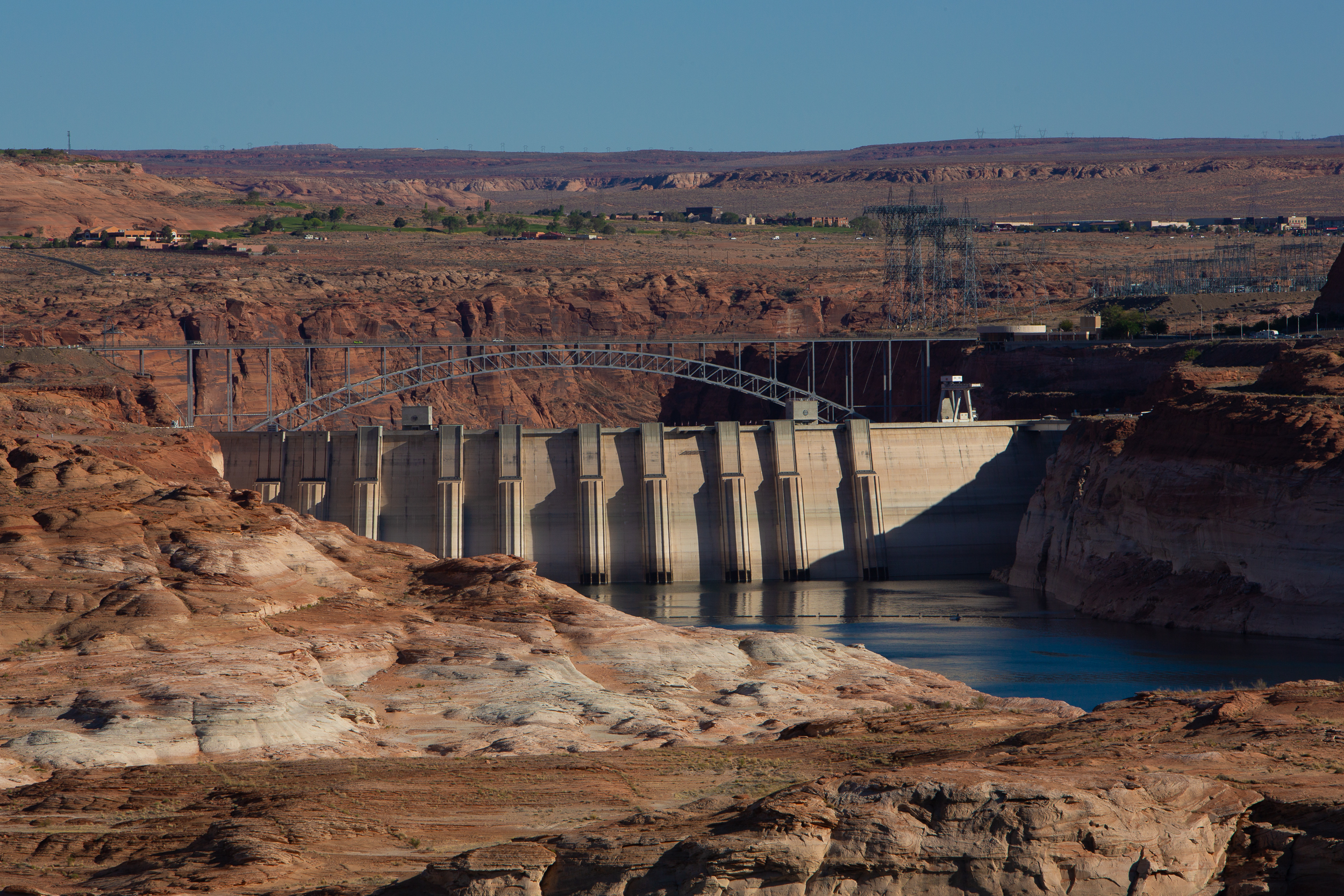
URGENT UPDATE: The future of the Glen Canyon Dam is hanging by a thread as alarming conditions escalate. With Lake Powell water levels plummeting and critical infrastructure at risk, experts warn of a potential failure that could impact millions.
As of now, February 14, 2026, looms as a pivotal date for negotiations among the Colorado River Basin states—California, Arizona, Nevada, Utah, New Mexico, Colorado, and Wyoming—who must agree on a management plan to avert federal intervention. This deadline follows a previous one on November 11, which came and went without resolution, highlighting an ongoing water crisis that has been years in the making.
The urgency of this situation cannot be overstated. Current projections show that Lake Powell has dropped to 3,490 feet above sea level, dangerously close to the minimum power pool threshold. Should levels fall below 3,370 feet, the dam could reach a state known as “dead pool,” where water would only flow through the dam when river levels exceed evaporation losses—effectively cutting off water supply to 25 million people downstream, including agricultural fields vital to the economy.
A critical flaw in the dam’s design exacerbates these challenges. The River Outlet Works, the only remaining passage for water in a low-reservoir scenario, are at risk of erosion when used for extended periods. This could lead to catastrophic failures and further complicate water management during peak demand seasons.
The Bureau of Reclamation has faced criticism for its lack of transparency regarding the dam’s operational challenges. Recent letters from the Lower Basin states call for immediate action to address the dam’s infrastructure limitations, citing federal law that mandates acknowledgment of these issues in environmental impact assessments.
In a shocking twist, the dam’s history reveals a pattern of mismanagement. Designed for a stable water supply, it has struggled under the unpredictable conditions of the Colorado River, which has experienced a 20% drop in flow this century due to climate change. The El Niño event of 1983 almost resulted in disaster, showcasing the dam’s vulnerability to both floods and droughts.
Former Bureau of Reclamation Commissioner Floyd Dominy, who oversaw the dam’s construction in the 1960s, proposed a simple yet innovative solution to the impending crisis: a bypass system to manage water and sediment flow more effectively. His vision remains unaddressed, underscoring the urgent need for re-engineering the dam to ensure a sustainable future for the Colorado River and the ecosystems it supports.
As the clock ticks down to the new negotiation deadline, the stakes are higher than ever. The implications of failing to act are dire, with potential ecological and economic disasters looming. With the future of the Glen Canyon Dam at risk, it is crucial for federal and state officials to prioritize not just immediate fixes, but long-term solutions that secure water resources for generations to come.
Stay tuned for further updates as this situation develops. The need for immediate action is clear, and the fate of millions hangs in the balance.