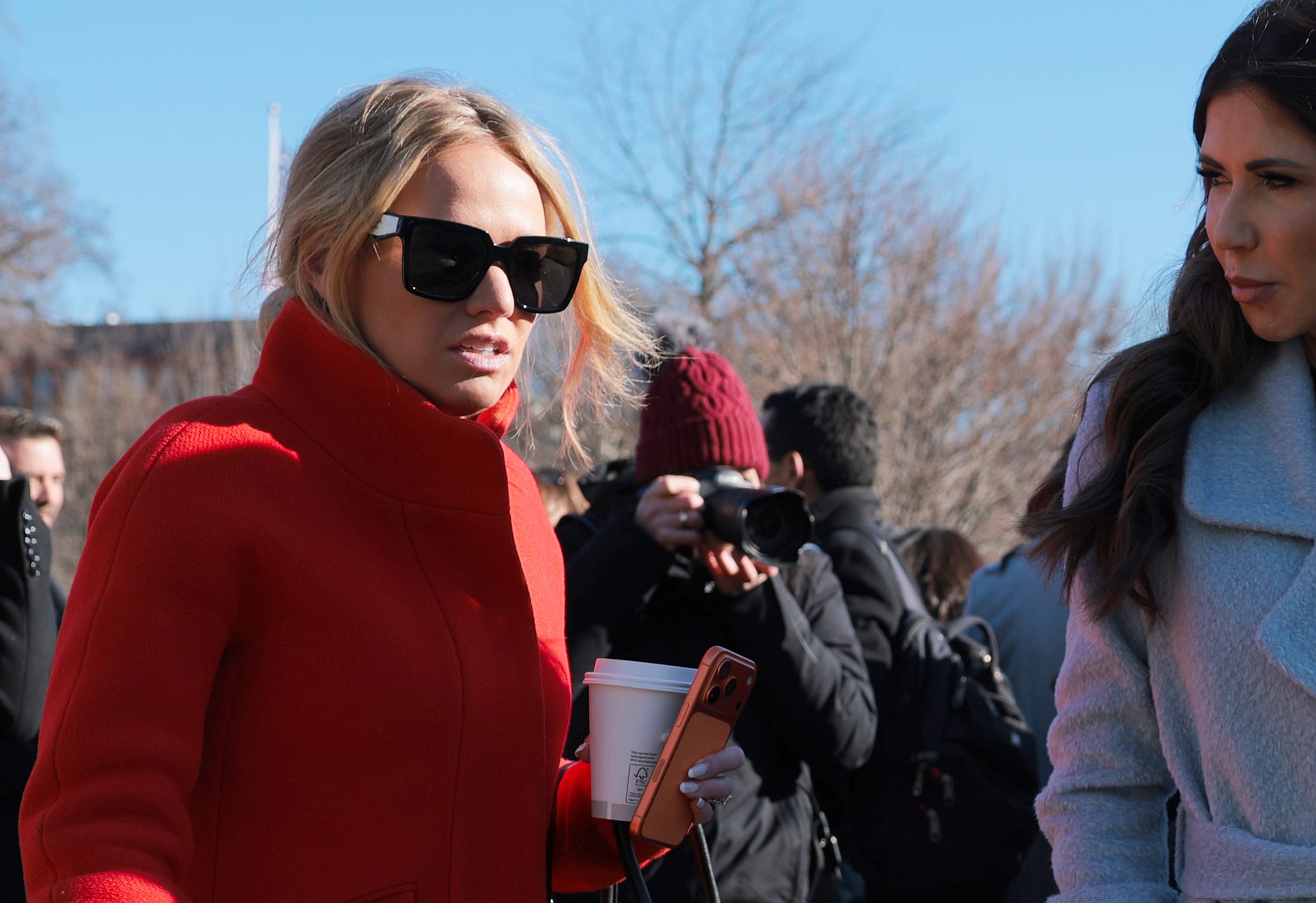
Tricia McLaughlin, the Assistant Secretary for Public Affairs at the Department of Homeland Security (DHS), has announced her departure from the agency. Known for her vocal support of the Trump administration’s immigration enforcement policies, McLaughlin has been a prominent figure in daily briefings and media interactions, frequently engaging directly with reporters.
As the spokesperson for DHS, which oversees vital agencies such as Immigration and Customs Enforcement (ICE) and Customs and Border Protection (CBP), McLaughlin often challenged the narratives presented by the media. She was frequently involved in contentious exchanges, utilizing social media to address reporters individually. Her statements and press releases, which sometimes included claims about demonstrators and deportees that were later found to be inaccurate, solidified her position as one of the most quoted officials in the administration, second only to former President Donald Trump.
Homeland Security Secretary Kristi Noem acknowledged McLaughlin’s contributions in a statement, praising her for her “exceptional dedication, tenacity and professionalism.” Her departure comes amidst a partial funding lapse for the DHS, which began on February 14, 2026, after Congress was unable to agree on a funding bill. Democrats have expressed reluctance to support funding without significant modifications to the department’s immigration enforcement strategies.
Controversial Statements and Actions
McLaughlin’s tenure was marked by several controversial statements, particularly following the fatal shootings of U.S. citizens Alex Pretti and Renee Good in Minnesota. She characterized both individuals as domestic terrorists before investigations were completed. McLaughlin claimed that Good was obstructing law enforcement operations with her vehicle, while asserting that Pretti had “violently resisted” arrest. Subsequent bystander video footage undermined these claims, raising questions about the accuracy of her statements.
In addition to these incidents, McLaughlin faced scrutiny over her defense of ICE’s practices, including the use of administrative warrants to enter homes rather than obtaining warrants signed by judges during immigration enforcement actions. This approach has drawn criticism from various advocacy groups and lawmakers concerned about civil liberties.
Response from the Community
The announcement of McLaughlin’s resignation has generated a mixed response from the public and political commentators. Some view her departure as a necessary step towards reform within the DHS, especially in light of ongoing concerns regarding immigration enforcement policies. Others, however, express concern that her exit may signify a continuation of the contentious dynamics surrounding immigration policy in the United States.
As the DHS navigates this period of uncertainty, McLaughlin’s legacy as a polarizing figure in immigration enforcement will likely linger. Her outspoken nature and combative interactions with the press have left a lasting impression on the agency’s public image.
The reasons for McLaughlin’s resignation remain unclear, and further developments may provide insight into the future direction of the DHS and its handling of immigration issues. With the funding lapse and ongoing debates about immigration policy, her departure could usher in a new chapter for the agency as it seeks to address pressing challenges ahead.