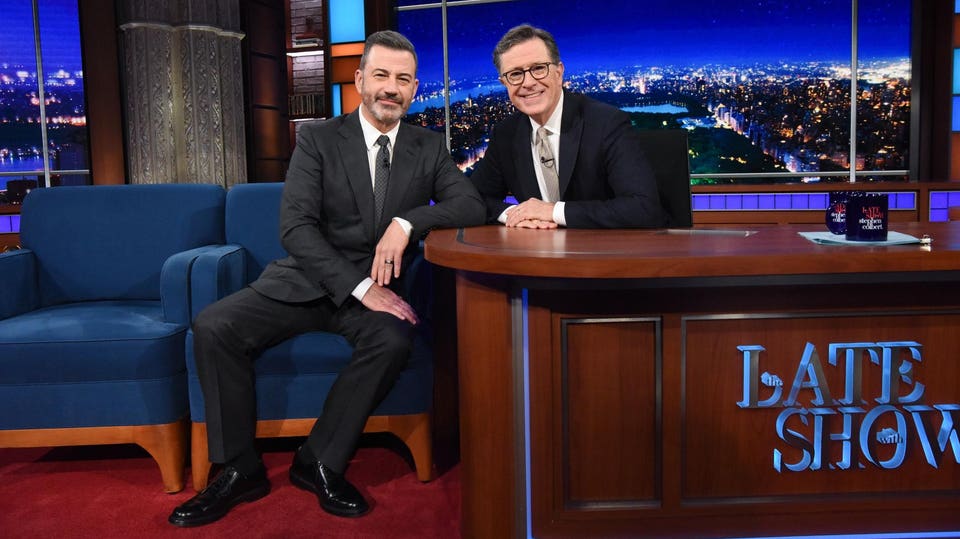
UPDATE: Late-night TV takes a defensive stance as hosts Jimmy Kimmel and Stephen Colbert react to the Federal Communications Commission (FCC) enforcing its “equal time” mandate. This controversial decision, announced on August 3, 2023, requires networks to give equal air time to opposing political candidates, a move the hosts label a “crackdown” aimed at silencing them.
In a fiery monologue on Thursday night, Kimmel accused the FCC, led by chair Brendan Carr, of “reinterpreting long-agreed-upon rules” to stifle late-night talk shows. He connected the ruling to former President Donald Trump, claiming it continues Trump’s “war on talk shows” and undermines open discourse. Kimmel highlighted the absurdity of enforcing such rules today, stating, “Broadcast TV used to account for 100% of viewing…now it’s like 20%.”
Kimmel’s comments follow a brief mention of the FCC’s notice in his Wednesday show. He emphasized the exemption that late-night shows have enjoyed since 2006, which allowed them to operate without the equal time requirement. “This is a sneaky little way of keeping viewpoints that aren’t his off the air,” Kimmel declared, suggesting that the move is part of a broader strategy to silence dissenting voices.
Colbert joined the fray later, humorously noting, “I got to watch what I say about Trump, because Johnny Law is once again coming after your’s truly here.” His comments triggered boos from the audience as he acknowledged the implications of the FCC’s decision on his show. “This is clearly an attempt to silence me, Jimmy, and Seth,” Colbert stated, referring to fellow late-night host Seth Meyers.
The timing of the FCC’s enforcement raises significant questions about the future of late-night television. Kimmel pointed out that while networks like Fox News and Newsmax dominate the political landscape with “24/7 Trump programming,” his show faces new restrictions that could limit its political commentary.
Both hosts’ remarks reflect a growing concern among late-night comedians that their platforms may be compromised. Kimmel warned, “Whatever happens, this is another example of this administration trying to squash anyone who doesn’t support them.” Colbert echoed the sentiment, sarcastically telling the FCC, “Hey, I’m flattered you think that appearing on my show has the power to affect politics in any way.”
As this situation develops, it could reshape the landscape of political discourse on late-night television. Viewers and industry insiders alike will be watching closely to see how the FCC’s ruling affects not only Kimmel and Colbert but also the broader media environment.
Stay tuned for more updates on this urgent issue as the implications unfold for late-night programming and political commentary.