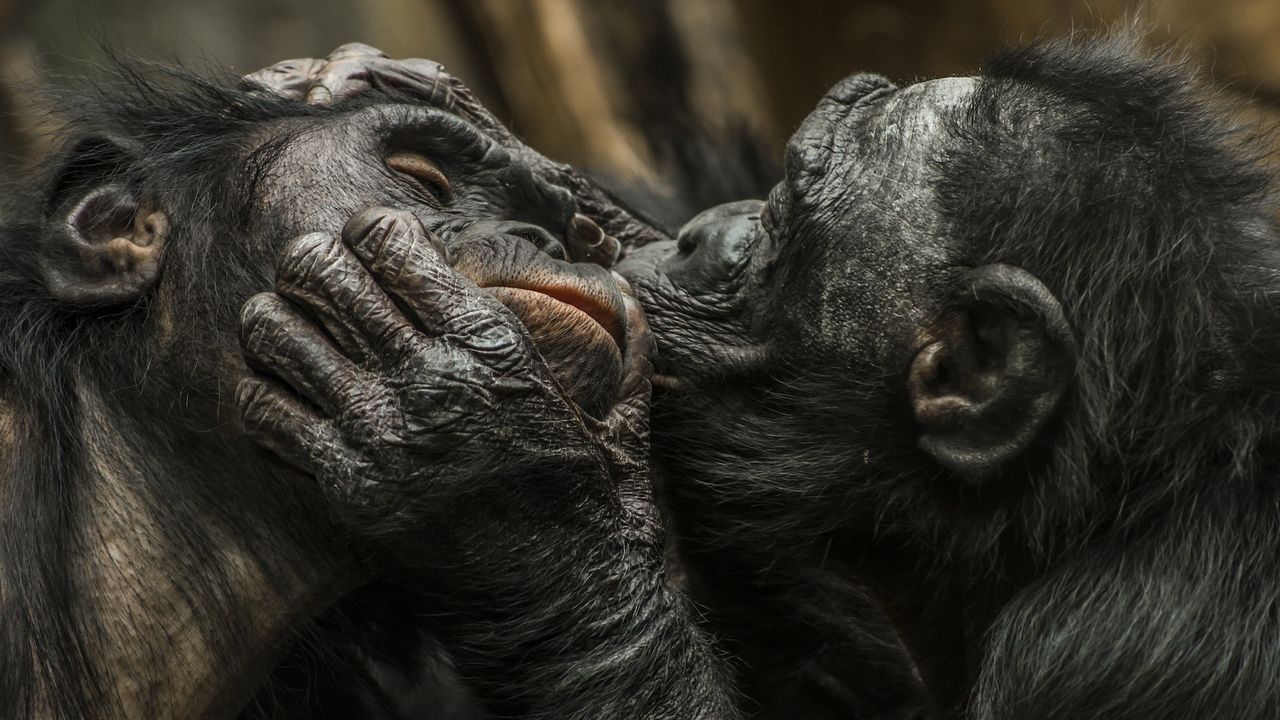
UPDATE: A groundbreaking study published on November 19 in the journal Evolution and Human Behavior reveals that the act of kissing may date back an astonishing 21 million years. Researchers from the University of Oxford conducted a comprehensive analysis, suggesting that kissing originated with the shared ancestor of humans and large apes.
The implications of this discovery are profound. Kissing, often considered a modern human behavior, likely played a role in the social interactions of our ancient relatives, including Neanderthals. The study’s lead author, Matilda Brindle, emphasizes that this is the first extensive exploration of kissing from an evolutionary perspective, highlighting the diverse sexual behaviors observed in primates.
In defining kissing, the researchers distinguished it from other mouth-to-mouth actions in nature, such as food transfer seen in orangutans and chimpanzees. Kissing was defined as “non-aggressive, mouth-to-mouth contact that did not involve food transfer.” This definition allowed the team to identify kissing behaviors in various modern primates, including bonobos, gorillas, and macaques.
Using advanced statistical modeling techniques, the team ran simulations 10 million times to reconstruct the evolutionary history of kissing. They concluded that kissing likely evolved once in the common ancestor of large apes between 21.5 million and 16.9 million years ago. Interestingly, kissing was not found in ancestral groups of macaques and baboons, indicating a separate evolutionary path for these species.
This study aligns with earlier research suggesting that Neanderthals not only kissed each other but also interacted closely with modern humans. Previous studies indicated possible microbial exchanges between Neanderthals and Homo sapiens, hinting at intimate interactions, potentially including kissing.
The findings raise intriguing questions about the role of kissing in human evolution. Experts suggest that kissing may enhance reproductive success by allowing individuals to assess a partner’s health and genetics through chemical cues. Additionally, kissing could strengthen social bonds and facilitate microbial exchange, which may benefit immunity.
However, the prevalence of kissing among various human cultures remains inconsistent. Only about half of all cultures today engage in kissing, leading to speculation that similar variations existed in ancient populations.
As researchers continue to explore the origins and implications of kissing, this new study opens the door for further inquiries into the evolutionary significance of this intimate behavior. What remains clear is that kissing has deep roots in our shared ancestry, bridging connections across millions of years and species.
Stay tuned for more updates as this fascinating research continues to unfold.