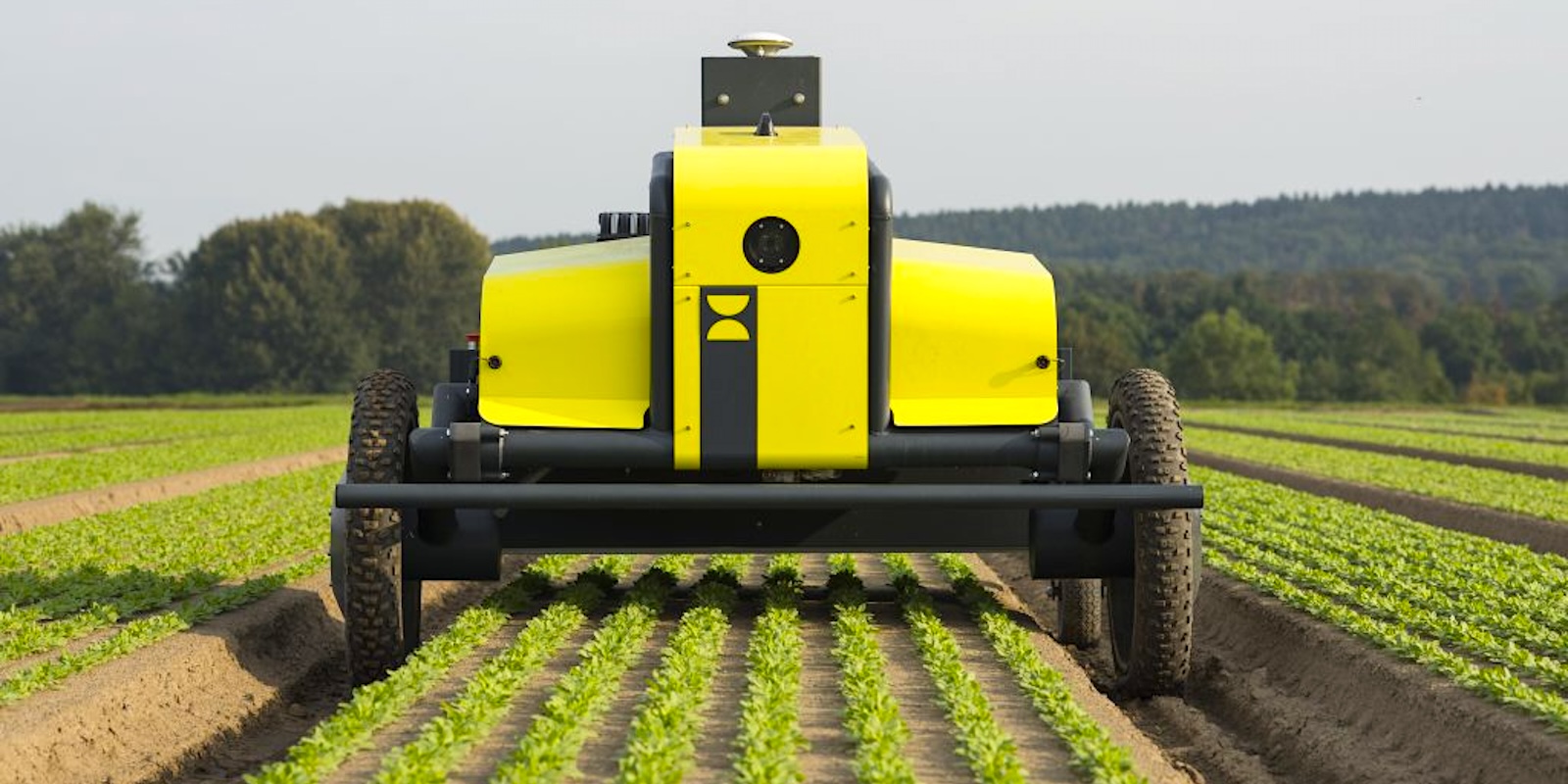
BREAKING: In an exciting development for sustainable agriculture, Japanese equipment giant Kubota has just announced a partnership with Norwegian tech startup Kilter to co-develop the cutting-edge Kilter AX-1 ultra high-precision weeding robot. This revolutionary technology is set to launch in Europe, targeting farmers in Germany and the Netherlands who grow high-value crops like spinach, salad lettuces, herbs, celeriac, and strawberries.
The new AX-1 aims to radically transform farming practices by drastically reducing herbicide use by up to 95%. Utilizing innovative Single Drop Technology, the robot applies micro-doses of herbicide directly to weeds, ensuring minimal impact on surrounding crops and soil health. Kilter’s CEO Anders Brevik emphasized the complexity of the technology, stating, “You can’t buy a field-ready droplet applicator off the shelf. We had to design one that survives years of dust, vibration, temperature swings, and long operating days.”
Farmers are expected to benefit from improved crop quality and higher yields as they adopt this advanced solution. The collaboration aligns with Kubota’s Smart Farming Solutions Division, which was launched in 2024 to integrate innovative agricultural technologies into their product offerings.
Currently, there is no information available regarding pricing or the potential release of the AX-1 in North America. The partnership comes amid growing demand for sustainable farming solutions, as both companies aim to shift the industry towards reduced chemical usage and promote biodiversity.
The Kilter AX-1 represents a significant leap forward in agricultural technology, reflecting the increasing urgency for environmentally friendly farming practices. As this partnership unfolds, stakeholders in the agricultural sector will be closely watching how this innovative robot performs in real-world settings.
Stay tuned for updates on the deployment of the Kilter AX-1 and its impact on European agriculture. The push for sustainability is gaining momentum, and this collaboration could set a new standard for the future of farming.