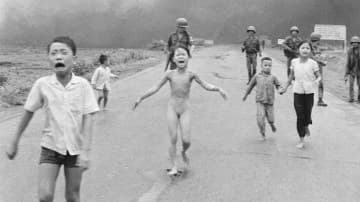
URGENT UPDATE: A groundbreaking documentary titled The Stringer has just revealed that the iconic photograph of Phan Thi Kim Phuc fleeing a napalm attack during the Vietnam War may not have been taken by renowned photographer Nick Ut, as long believed. This shocking twist is putting a spotlight on the true authorship of one of history’s most powerful images.
The photo, which captured a moment of sheer horror during the North Vietnamese Easter offensive in mid-1972, has long symbolized the devastating impact of war on civilians. It depicts a young girl, Phuc, running naked down a road, her skin severely burned. She was just one of many caught in the crossfire, but the image has become synonymous with the Vietnam War’s brutality.
Recent disclosures from Carl Robinson, who worked in the Associated Press (AP) bureau at the time, suggest that the actual photographer may have been Nguyen Thanh Nghe, a freelancer who sent his work to the AP. Robinson, who lived with this revelation for decades, stated, “I felt the weight of the falsehood of authorship for years,” emphasizing the importance of correcting the historical record.
The documentary dives deep into the events of that day, reconstructing the chaotic scene that unfolded around Trang Bang, about 40 miles northwest of Saigon. The film features commentary from experts and footage from various sources, creating a compelling narrative around the photograph’s legacy and its implications.
In a statement, Fiona Turner, the documentary’s producer, noted that Robinson’s recollections were instrumental in piecing together the timeline of events. However, the controversy over the photograph’s authorship raises broader questions about the ethics of war photography and the narratives that shape our understanding of history.
As the documentary gains traction, it has already sparked significant discussion in media circles. A reunion of Vietnam War correspondents held in April 2023 revealed the ongoing complexities surrounding the photograph. Notably, both Ut and Robinson were present but did not interact, underscoring the unresolved tensions in their shared history.
While the film presents a convincing case for Nghe as the true photographer, skepticism remains among some veteran correspondents.
“What really counts is the image, not who shot it,”
said Robinson, highlighting the greater message of the photograph over its authorship.
The emotional impact of the image continues to resonate, serving as a stark reminder of the human cost of conflict. Phan Thi Kim Phuc, who survived the attack, has since become a goodwill ambassador for UNESCO and continues to share her story, emphasizing healing and reconciliation.
As this story unfolds, audiences are urged to consider not just the photograph itself, but the lives behind it. The debate surrounding the image’s authorship is significant, yet the focus remains on the tragic events that continue to haunt those affected by war.
Stay tuned for more updates on this developing story as new insights emerge from the documentary and its impact on the historical narrative of the Vietnam War.