URGENT UPDATE: Innovative research from the University of Sheffield is set to revolutionize road safety as sub-terahertz sensors are now able to detect dangerous black ice conditions. This breakthrough technology addresses a critical vulnerability that has contributed to thousands of fatalities annually on roadways.
For decades, relying solely on air temperature has left drivers blind to the true dangers posed by black ice, which can form even when the air temperature is above freezing. The National Highway Traffic Safety Administration (NHTSA) reports that weather-related accidents account for a significant portion of annual vehicle crashes, often leading to tragic outcomes. This urgent need for enhanced safety measures has spurred the development of cutting-edge sensors that analyze road surface conditions in real-time.
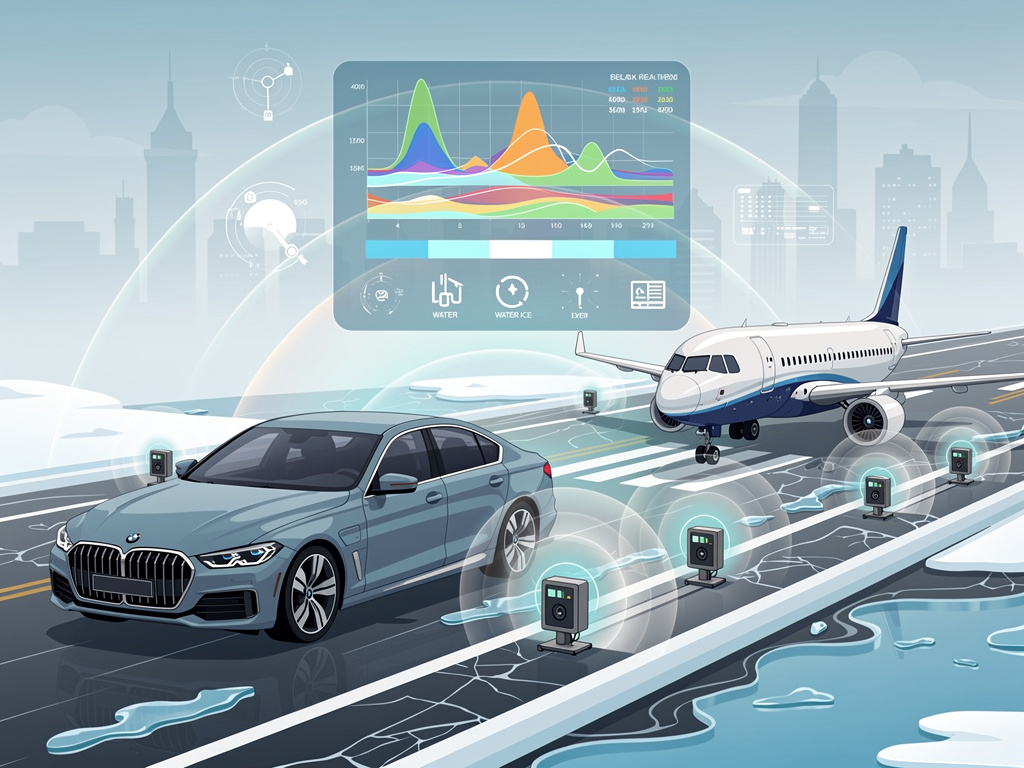
The new sub-terahertz sensors utilize electromagnetic waves to perform remote spectroscopy on road surfaces, allowing them to differentiate between dry asphalt, liquid water, and the nearly invisible black ice. Unlike traditional sensors, which often fail to detect clear ice, this technology provides a predictive safety model that enables vehicles to adjust their settings before traction is lost.
As self-driving technology continues to evolve, the integration of this sensor capability is crucial for the future of autonomous vehicles (AVs). Currently, many AVs are tested in ideal conditions, but to operate safely in colder climates, they must be able to sense and react to varying road conditions with precision. Sub-terahertz sensors promise to provide real-time data that will allow AVs to make micro-adjustments, enhancing safety and operational efficiency.
The implications extend beyond automotive applications. The Federal Aviation Administration (FAA) is also eyeing this technology to improve aviation safety. Runway excursions remain a top concern, and equipping aircraft with these sensors could provide pilots with immediate readings of runway conditions, potentially preventing dangerous incidents during landing.
Moreover, the financial impact of this innovation is substantial. Airlines lose hundreds of millions of dollars each year due to de-icing delays. By employing these sensors, airlines could minimize unnecessary de-icing procedures, thus reducing costs and environmental impact.
In addition to transforming the automotive and aviation sectors, the adoption of sub-terahertz sensors is expected to impact insurance models as well. Accidents caused by black ice may soon shift from being categorized as “at-fault” incidents to scenarios where vehicles could be equipped with technology to detect hazards invisible to the human eye. This shift could lead to new insurance incentives for commercial fleets operating in snowy regions.
However, challenges remain in the path to commercialization. The primary hurdles include cost reduction and ensuring the durability of these sensors in harsh environmental conditions. Researchers are now focused on miniaturizing the technology and developing robust, affordable units for widespread use in vehicles.
As this groundbreaking technology develops, it is clear that the potential for saving lives is immense. The immediate focus will be on integrating these sensors into vehicles and aircraft to drastically reduce the risks associated with black ice and improve overall safety.
Stay tuned for more updates as this story unfolds and impacts the future of road and air travel.