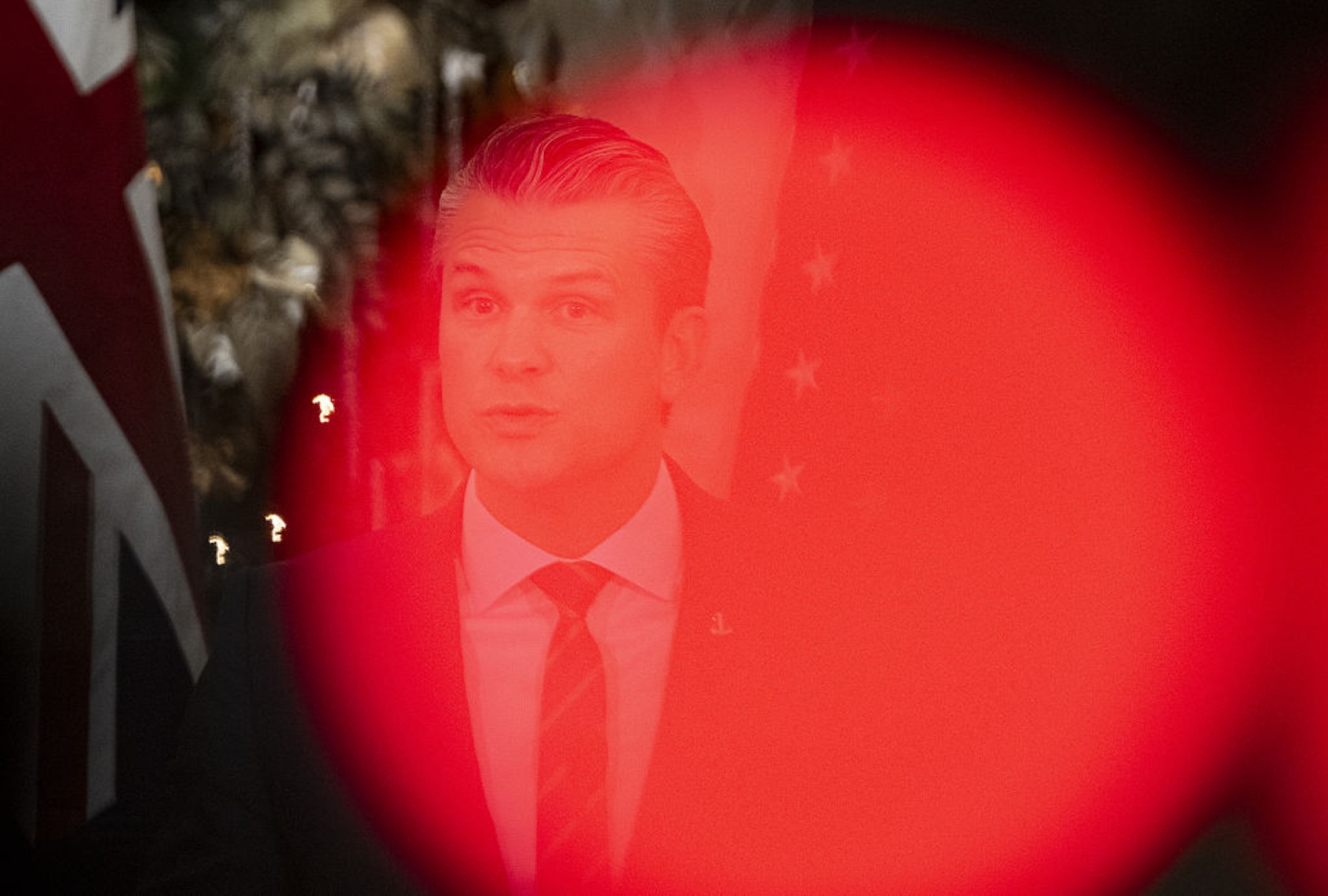
UPDATE: The Pentagon’s crackdown on media access has intensified, as defense secretary Pete Hegseth completes a controversial purge of the press corps, replacing credible outlets with MAGA-aligned influencers. This shift raises urgent questions about transparency and accountability in military operations.
Just days ago, Donald Trump stated he would have “no problem” releasing a video linked to U.S. military strikes off the coast of Venezuela, which reportedly showed survivors of a shipwreck being attacked. However, when pressed for details, Trump shifted his stance, denying he ever agreed to release the footage, labeling the inquiry as “ABC fake news.”
The Washington Post revealed that Hegseth allegedly ordered the Joint Special Operations commander to eliminate all survivors, an order he has since denied. Congressional investigators have termed the video and the strike “deeply concerning,” with implications that such actions may violate federal law and military codes prohibiting murder.
In an urgent legislative move, the House has passed a defense bill mandating the release of the controversial video, which will now head to the Senate. If signed into law by Trump, this bill would withhold 25% of Hegseth’s travel budget until he complies with demands for transparency regarding nearly two dozen similar strikes.
Since assuming office in February 2023, Hegseth has aggressively restricted media access to the Pentagon, introducing policies that require journalists to obtain his approval before publishing information. Critics, including the National Press Club and major news organizations, have condemned this as an unconstitutional attempt to censor the press.
On December 4, the New York Times filed a lawsuit challenging Hegseth’s restrictions, arguing that prior restraint on the media is a violation of the First Amendment. Historical precedents demonstrate that while national security is crucial, the public’s right to know must not be sacrificed.
Hegseth’s new policies have prompted backlash from even conservative outlets, with significant implications for how military actions are reported. At a time when the public’s awareness of military operations is more critical than ever, the Pentagon’s increased secrecy could endanger lives and erode trust.
Moreover, Hegseth’s media restrictions have led to the rise of a new press corps composed of influencers lacking traditional journalism credentials. This group has been welcomed to the Pentagon, raising alarms about the quality and integrity of information disseminated to the public.
As the House panel investigating military operations considers winding down its probe, the full ramifications of Hegseth’s press purge remain to be seen. The legislation aimed at releasing the controversial video signifies a broader struggle for transparency in military operations.
The implications of these developments extend beyond the Pentagon’s walls, reflecting a growing tension between government officials and the press. As this situation unfolds, the need for independent journalism in military matters has never been more vital.
Stay tuned as we continue to monitor this urgent situation and its impact on U.S. military transparency and accountability.