URGENT UPDATE: A shocking look back at Thanksgiving history reveals a time when the holiday was marred by a crime wave: turkey thefts. For decades, farmers in North Dakota and Minnesota faced financial devastation as thieves raided coops, leaving families scrambling for their holiday meals.
New reports uncover that this annual struggle was once a violent affair, with farmers often resorting to guns to protect their flocks. The People’s Press in Geneva, Minnesota, warned as early as 1911: “Turkey thieves are abroad in the land.” The consequences were dire; entire flocks vanished overnight, forcing families to fend for themselves during the holiday season.
In 1924, the Claremont (Minnesota) News detailed a dramatic encounter at the Charlie Darknell farm in Ripley, where a shootout erupted as farmers attempted to defend their birds. The night was dark, and the thieves escaped, but tensions ran high as farmers realized their livelihoods were at stake.
Once a staple cash crop, turkeys were vital for family farms. The Fargo Forum reported in 1927 on a heist that jeopardized the Murphy family’s breeding stock. With the Great Depression looming, turkey thefts became increasingly common, prompting police to implore farmers to report every incident.
Authorities confirmed that organized bands of thieves often used underhanded tactics, with reports of gas or chloroform being employed to incapacitate birds. The Winona Daily News highlighted one notorious group operating around Aneta, North Dakota, in 1923.
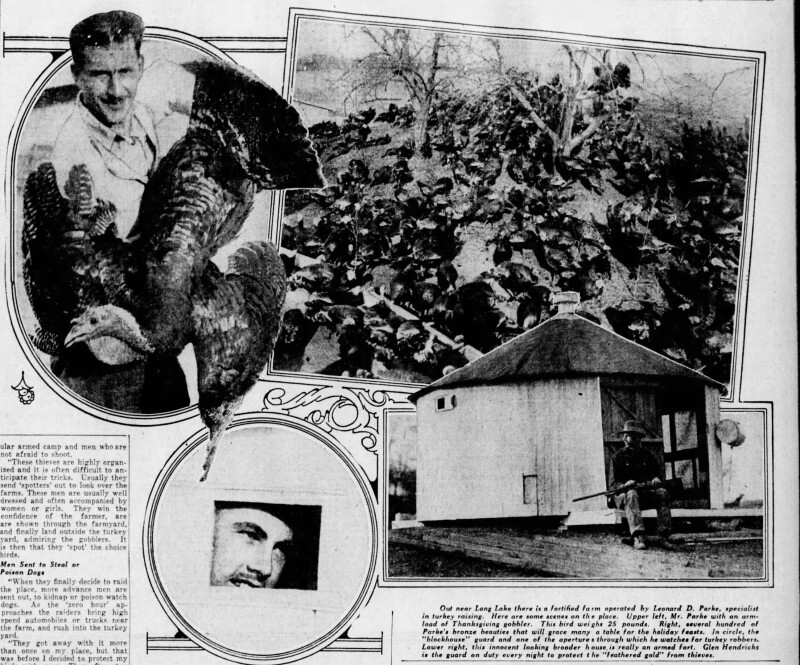
Farmers fought back in creative ways. In 1932, one Golden Valley farmer lost 123 turkeys because he failed to activate his elaborate burglar alarm. Another farmer fortified his property, armed and ready to protect his flock, emphasizing the lengths families would go to ensure a Thanksgiving feast.
Amidst the turmoil, some thieves faced unexpected mercy. In 1933, a South Dakota sheriff paid for stolen turkeys out of his own pocket after the culprits confessed they were hungry. “The county would be better off if he paid for the turkey and released the robbers,” noted the Keister Courier, showcasing the human element behind the crime.
In a twist of bitter irony, farmers like Charles Pollock, who lost 30 turkeys in 1931, expressed a mix of resentment and compassion, wishing the thieves a happy meal.
As Thanksgiving approaches, this historical context serves as a stark reminder of the lengths people once went to secure their holiday traditions. The legacy of turkey thefts has faded with the rise of large-scale poultry farming, but the stories of these desperate times still resonate.
As the holiday season draws near, be sure to reflect on the past—a time when turkey bandits turned Thanksgiving into a battleground. What happens next? With the rise of urban farming and local markets, will tales of poultry theft make a comeback? Only time will tell.