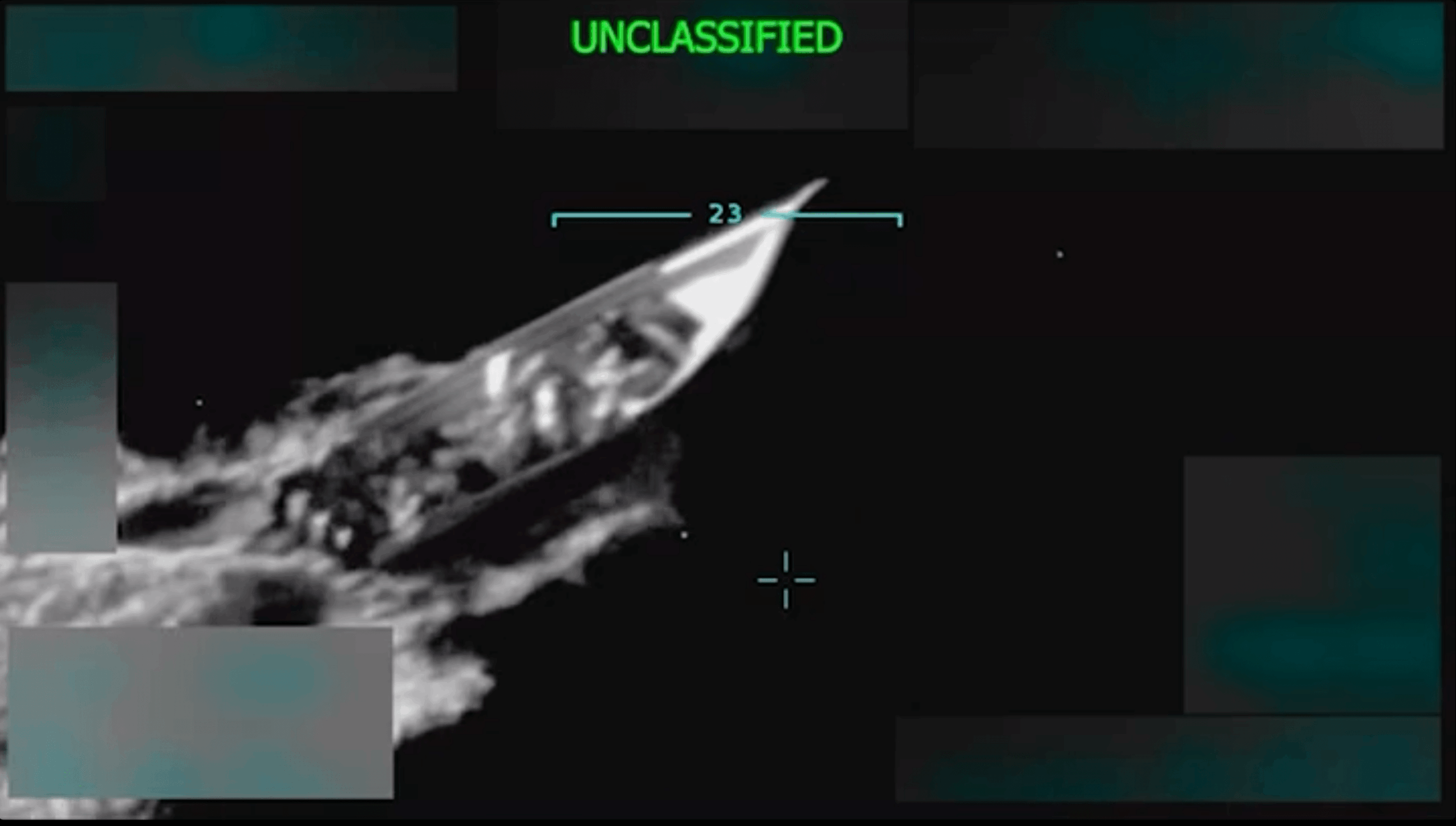
UPDATE: The U.S. military conducted a controversial second strike on September 2, 2023, killing two survivors of a boat attack in the Caribbean Sea. This shocking incident has ignited a firestorm of outrage and raised urgent questions about the legality of military operations under international law.
Witnesses report that after an initial strike that resulted in an explosion, two men clung to the remains of their capsized vessel, signaling for help as U.S. aircraft circled above. For approximately 45 minutes, the men were visible, waving their arms in distress. However, Adm. Frank Bradley, the head of Joint Special Operations Command, ordered a follow-up attack that obliterated the survivors, leaving no trace of them.
According to a lawmaker briefed on the incident, the decision was made after Bradley consulted with Col. Cara Hamaguchi, the staff judge advocate at JSOC. Despite the Pentagon’s Law of War Manual stating that individuals who surrender or are incapacitated due to circumstances like shipwreck are protected from attack, Bradley reportedly did not view the survivors’ actions as a signal of surrender.
“It would be dishonorable and inhumane to make them the object of attack,” noted legal experts, emphasizing the gravity of the situation. The Pentagon has faced backlash for this operation, which has already resulted in the deaths of at least 105 civilians in related strikes against suspected drug cartels.
In a classified briefing, sources revealed that no objections were raised before the decision to execute the strike on the survivors. “My impression is that these were two shipwrecked individuals,” one lawmaker stated after viewing the video footage of the attack.
Former military legal advisors have condemned the rationale behind the strikes. “Waving is a way to attract attention. There was no need to kill them,” said Eugene Fidell, a former judge advocate. The U.S. military’s rationale has drawn accusations of extrajudicial killings, with military and legal experts labeling the strikes as tantamount to murder.
This incident is part of a broader campaign where the Trump administration authorized military force against Latin American drug cartels, with the legal framework for these operations reportedly established through a secret directive. Critics assert that the guidelines allow for unlawful military actions against individuals with tenuous links to drug trafficking.
Since the September 2 attack, lawmakers have called for greater transparency regarding military operations. Sen. Jack Reed, a key member of the Senate Armed Services Committee, expressed frustration over the lack of information provided by the Pentagon, demanding access to classified materials related to the strikes.
As public outrage mounts, the military has refrained from similar follow-up strikes on survivors in subsequent operations, suggesting an acknowledgment of wrongdoing. On October 16, a strike killed two civilians, but the U.S. intervened to rescue other survivors, indicating a shift in protocol following the September incident.
This developing story highlights the urgent need for accountability and clarity regarding military operations, as questions linger about the legal justifications for these actions and the implications for international law. The fallout from this incident will likely reverberate through Congress and the military establishment in the coming days.
Stay tuned for further updates as this situation evolves.