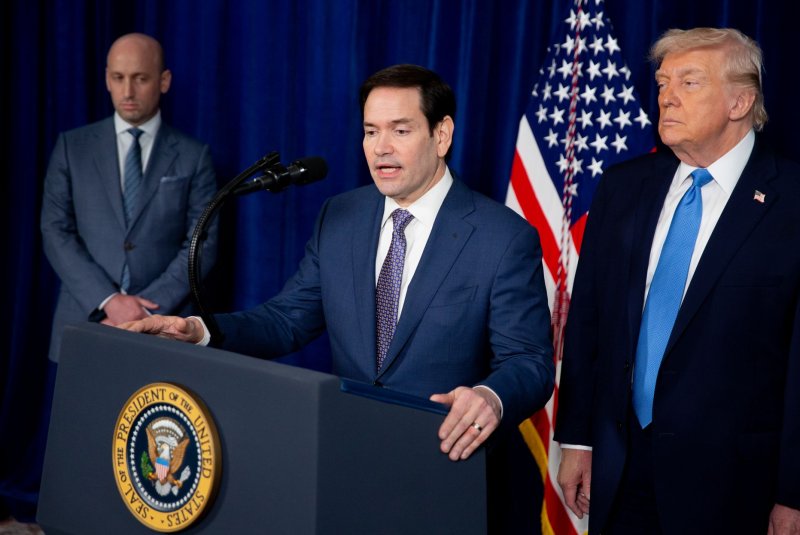
UPDATE: In a critical statement on January 4, 2023, Secretary of State Marco Rubio declared that discussions about elections in Venezuela are “premature” as urgent priorities emerge following the recent capture of Venezuelan President Nicolás Maduro. This announcement comes amidst ongoing U.S. military operations aimed at stabilizing the nation and disrupting drug trafficking networks.
Rubio, speaking to ABC, CBS, and NBC, emphasized that revitalizing Venezuela’s oil industry must take precedence before any electoral discussions. “Our focus is on stopping drug trafficking and ensuring the security of the United States,” he stated, highlighting the urgent need to address the connections between Maduro’s government and Colombian drug gangs.
The Trump administration has confirmed that approximately 15,000 U.S. troops remain stationed offshore, spread across more than a dozen warships in the Caribbean. These military forces are tasked with intercepting drug boats and detaining oil tankers linked to Venezuela. As Rubio noted, this offshore armada serves as a critical leverage point in pressuring the remnants of Maduro’s regime to comply with U.S. demands.
In a recent press conference, Trump reiterated the military’s readiness, indicating that a second strike was planned should Venezuelan forces respond to Maduro’s capture. However, military commanders opted against this action, underscoring a strategic approach to stabilizing the region without escalating tensions further.
Rubio confirmed that the U.S. will maintain its “quarantine” on Venezuelan oil until conditions beneficial to both the U.S. and the Venezuelan people are met. “This leverage remains,” he said, asserting that the ongoing military presence is crucial in achieving long-term results.
While acknowledging the importance of democratic processes, Rubio reiterated that the immediate focus is on dismantling drug trafficking routes and preventing foreign adversaries like Iran, Russia, and China from gaining influence in the Western Hemisphere. He argued that the U.S. does not require Venezuelan oil, questioning why these nations, which are geographically distant, would need access to it.
Maduro and his wife are currently awaiting trial in New York City, indicted alongside four other officials for alleged collaboration with Colombian drug gangs to facilitate cocaine trafficking. This legal action adds urgency to the efforts aimed at disrupting the Venezuelan regime’s connections with organized crime.
As the situation unfolds, Rubio’s remarks emphasize that the U.S. is committed to reshaping Venezuela’s future, prioritizing national security and regional stability over immediate electoral processes. The next steps will focus on dismantling the Maduro government’s illicit networks and ensuring that the region does not become a foothold for hostile foreign powers.
The developments in Venezuela are critical not just for U.S. interests but also for the broader geopolitical landscape in Latin America. As the situation develops, the world watches closely, awaiting further announcements from the Trump administration and its plans to restore order in Venezuela.