UPDATE: A growing cashless economy is leaving vulnerable New Yorkers behind as digital payments surge. New data shows that more affluent residents are increasingly opting for tap-to-pay methods, making life easier for many but exacerbating hardships for those who rely on cash.
According to a 2022 Pew survey, approximately 60 percent of adults with household incomes above $100,000 reported that they do not use cash for any purchases in a typical week. In stark contrast, only 24 percent of those earning under $30,000 can say the same. This disparity highlights a widening gap in accessibility to essential resources in places like New York.
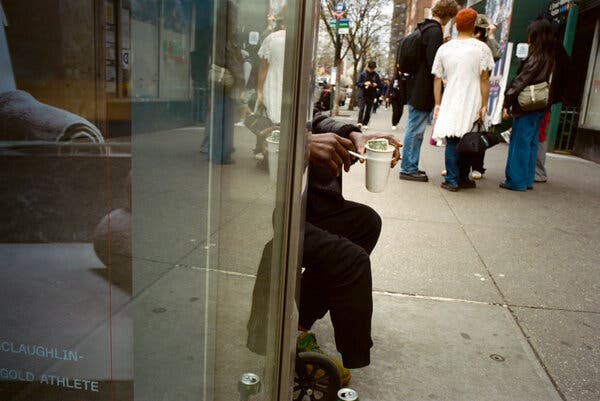
New Yorkers who depend on cash transactions—like street performers, food vendors, and the homeless—are feeling the pinch. For instance, Rob Brender, a 55-year-old disabled man who has been panhandling for nearly a decade, says that his traditional method of collecting change is becoming increasingly ineffective. “Lately, though there seem to be endless shoppers, the cash hasn’t been flowing into my cup,” he lamented.
Brender, who resides at the Creedmoor Psychiatric Center, has seen a significant decline in cash donations. His friend even crafted a sign featuring his Venmo username, but it has yet to attract any attention. “I don’t even know how to access my account,” he admitted, underscoring the growing disconnect between modern payment methods and those who need assistance.
With the rise of mobile wallets and digital transactions, many individuals like Brender are falling through the cracks. As more businesses adopt cashless policies, the question arises: What will become of those who cannot adapt to this new norm? The urgent need for solutions is evident as these vulnerable populations face heightened struggles in an increasingly digitized world.
Authorities and social advocates are now calling for a more inclusive approach to payment options. The rapid shift to a cashless society is not merely a convenience—it poses significant challenges for those on the margins.
As the city embraces a future dominated by digital transactions, the plight of New Yorkers like Rob Brender serves as a poignant reminder of the human impact of economic transformations. What happens next will be critical as stakeholders discuss ways to bridge this growing divide.
Stay tuned for further updates on this developing story.