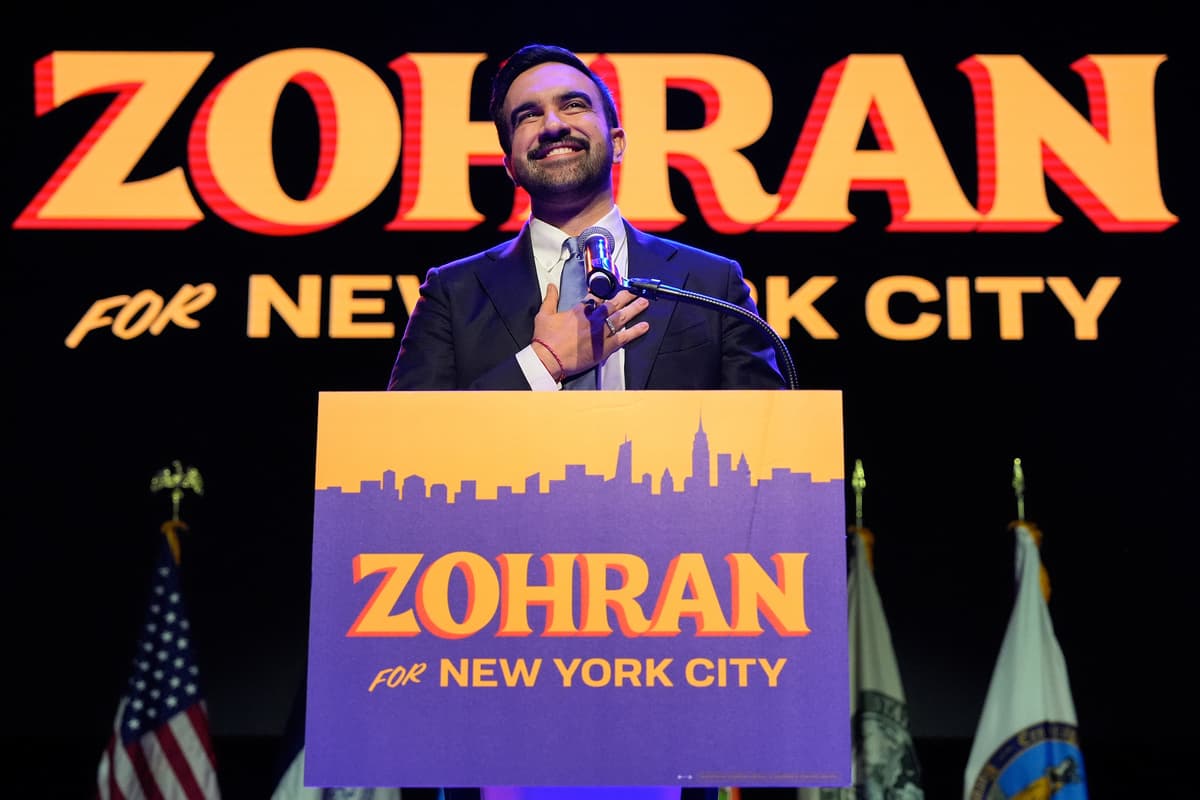
UPDATE: Zohran Mamdani, the newly elected mayor of New York City, is facing intense scrutiny following his reaction to a protest at Park East Synagogue this week. Amid chants of “Death to the IDF,” Mamdani’s office released a statement that is raising eyebrows and sparking debate across the city.
Just hours ago, his press secretary, Dora Pekec, stated that Mamdani “has discouraged the language used” at the protest and “will continue to do so.” This response has been criticized as inadequate in addressing the hateful sentiments expressed at the event, which was organized by the Palestinian Assembly for Liberation.
Mamdani’s comments have heightened concerns regarding his stance on “international law.” His remarks come at a critical time as he prepares to take an oath to “support the Constitution of the United States,” raising questions about his commitment to domestic law versus his apparent focus on international norms. The mayor-elect emphasized that “every New Yorker should be free to enter a house of worship without intimidation,” yet he also suggested that sacred spaces should not be used for activities he deems in violation of international law.
This reference directly targets Nefesh B’Nefesh, a group that supports Americans and Canadians moving to Israel, further complicating his position. The controversy escalates as Mamdani hinted at a plan to order the NYPD to arrest Israeli Prime Minister Benjamin Netanyahu should he visit New York City, citing an arrest warrant from the International Criminal Court (ICC).
Mamdani’s intentions are troubling to many, particularly given that the United States is not a signatory to the Rome Statute, the treaty that established the ICC. His passionate invocation of international law appears more as a political tool against Israel than a commitment to global justice.
Critics point out that Mamdani has not publicly condemned similar actions at other houses of worship, raising questions about the consistency of his stance. He has been spotted at a mosque with controversial figures, including Siraj Wahhaj, linked to the 1993 World Trade Center bombing, which has added to the unease surrounding his leadership.
This situation underscores a growing divide in New York City, where discussions about international law and local governance intersect. Public reactions have ranged from support to vehement opposition, with many New Yorkers demanding clarity on Mamdani’s priorities as he steps into one of the most influential roles in the country.
As the situation develops, all eyes will be on Mamdani’s future actions. Will he clarify his stance on international law and its implications for New Yorkers? How will he balance his views with the need for unity in a city known for its diversity?
Stay tuned for more updates on this evolving story as we continue to monitor Mamdani’s statements and the community’s response.