UPDATE: The U.S. government has just announced a broader strategy to combat violence against Christians in Nigeria, following President Donald Trump’s military threat against Islamic militants. This urgent initiative signals a commitment to work closely with Nigeria’s government to address escalating violence.
Recently, a State Department official confirmed that the approach encompasses more than military action, aiming for a comprehensive strategy that includes diplomatic tools, potential sanctions, and intelligence sharing with Nigerian authorities. This comes as Trump warned of possible military intervention, stating that the U.S. could go in “guns-a-blazing” to eliminate threats.
Defense Secretary Pete Hegseth met with Nigeria’s national security adviser, Mallam Nuhu Ribadu, to discuss collaborative efforts to end the violence. Hegseth emphasized the Pentagon’s commitment to working aggressively with Nigeria, posting on social media about their meeting and the need for urgent action.
Trump’s comments earlier this month indicated he might cut off assistance to Nigeria if the violence continues, which he described as a “disgrace.” His remarks come amid a series of attacks on schools and churches, with both Christians and Muslims suffering from the ongoing conflict.
“I’m really angry about it,” Trump said on the “Brian Kilmeade Show” on Fox News Radio, criticizing the Nigerian government’s response.
The violence has garnered global attention, with figures like rapper Nicki Minaj speaking out at a U.N. event, asserting that no group should face persecution for their beliefs. The Pentagon’s recent focus on Nigeria aligns with Trump’s designation of the country as “a country of particular concern” regarding religious freedom, which opens the door for potential sanctions.
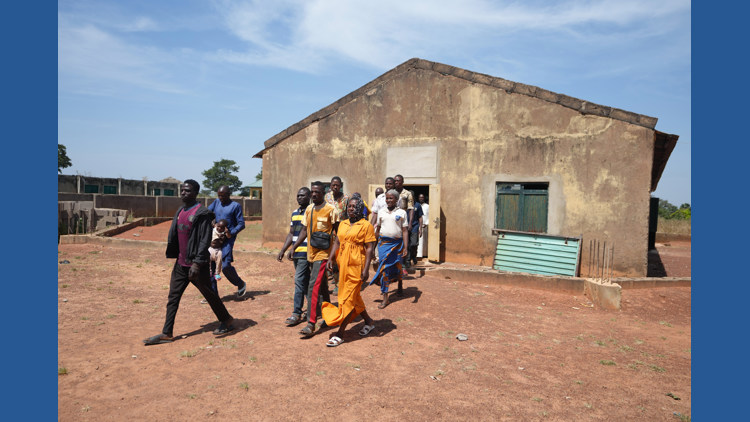
Experts highlight the complexity of the situation, noting that militant groups like Boko Haram are responsible for violence against both Christians and Muslims. Conflicts between predominantly Muslim herders and mostly Christian farmers exacerbate the instability, alongside criminal gangs motivated by profit. Recent mass abductions from schools underline the urgent need for intervention.
As U.S. military options are considered, officials stress the importance of a comprehensive plan that encompasses economic development, interfaith partnerships, and better policing. Hegseth’s remarks reflect a shift towards a multifaceted approach rather than relying solely on military intervention.
However, experts warn that any military action must be carefully coordinated with the Nigerian government to prevent unintended consequences. Judd Devermont, a senior adviser with the Center for Strategic and International Studies, cautioned that military strikes alone would likely fail to address the root causes of the violence.
“Nigeria’s struggles with insecurity are decades in the making,” Devermont stated, emphasizing the need for a long-term strategy. The Nigerian government has expressed a willingness to cooperate but firmly rejected the idea of unilateral U.S. military intervention.
The situation remains fluid as international attention grows and U.S. officials explore their next steps. With the security landscape in West Africa evolving, the upcoming actions could have significant implications for both Nigeria and neighboring countries.
As the U.S. contemplates its role, the need for immediate action is clear. The violence in Nigeria will not be resolved overnight, and the international community is watching closely as events unfold.