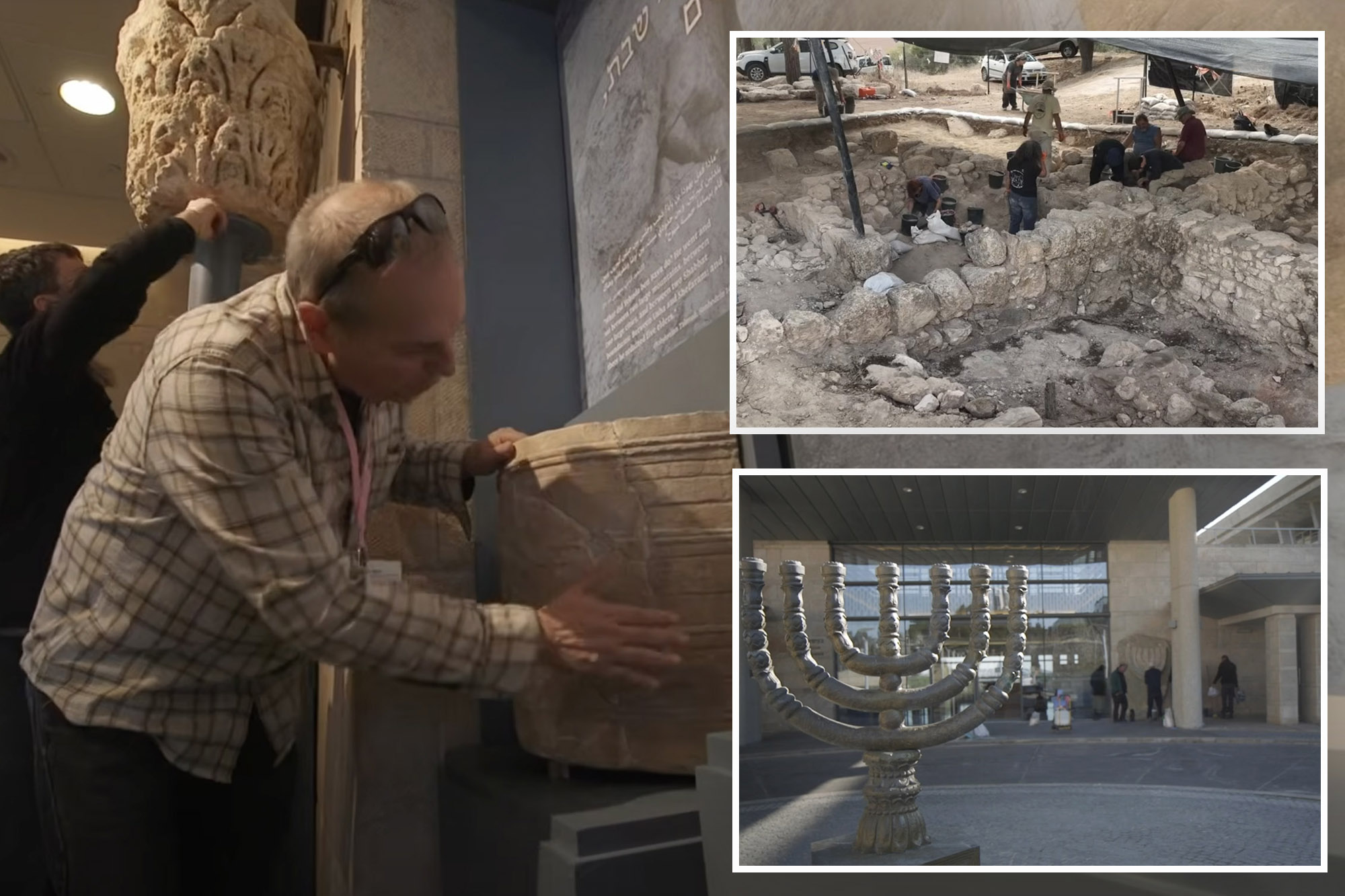
A significant archaeological discovery, a large stone storage vessel dating back nearly 1,800 years, is currently on display at the Knesset in Israel. This exhibition commemorates the Knesset building’s 60th anniversary and features artifacts that highlight the historical continuity of Jewish governance. The vessel, measuring approximately 80 centimeters (31.5 inches) in height and 50 centimeters (19.5 inches) in diameter, was uncovered at the Pundaka de Lavi site, located in the Lavi Forest near the Golani Junction by the Israel Antiquities Authority and KKL-JNF.
During the Roman period, stone vessels were integral to Jewish life, as they could not become ritually impure under Jewish law, unlike pottery. Noam Zilberberg, the excavation director, described these sizable vessels as “quite rare,” underscoring their historical significance.
Exhibition Celebrates Jewish Leadership and Heritage
The exhibition opened on Monday in conjunction with the Knesset’s annual Tu B’Shevat celebration. It explores the evolution of Jewish leadership institutions from the Great Assembly and the Sanhedrin to the modern Knesset. Alongside the stone vessel, it showcases artifacts from various archaeological sites in Jerusalem and Galilee, including a rare Hebrew inscription linked to the Sanhedrin, coins from the ancient Jewish city of Sepphoris/Tzipori, and an 1,800-year-old basalt door adorned with a menorah from Tiberias.
Organizers emphasize that these displays forge connections between archaeological findings and the enduring traditions of Jewish governance and democracy. Knesset Speaker Amir Ohana remarked, “The Knesset building marking 60 years is another link in a long chain of sovereign Jewish leadership, which was severed in exile and renewed with the establishment of the State of Israel.” He added that two millennia of Jewish life in exile did not extinguish the dream of sovereignty realized with the establishment of modern Israel.
Encouraging Public Engagement
Heritage Minister Rabbi Amichai Eliyahu expressed that the exhibit “bridges in a deeply moving manner our ancient past and our present of regained sovereignty.” He highlighted that the unique archaeological findings testify to the profound roots of the Jewish people in their land and the continuity of their heritage. Eliyahu encouraged all citizens of Israel to visit the exhibition, emphasizing the deep connection between the nation’s glorious past and the vibrant heritage that continues to thrive in the State of Israel.
This exhibition not only serves as a reflection of history but also as a reminder of the rich cultural and political legacy that continues to shape contemporary Israeli society. Visitors can engage with these artifacts and appreciate the significance they hold in the narrative of Jewish governance throughout history.