Bac Ninh, a city in northern Vietnam, is experiencing a significant transformation as it emerges as a key manufacturing hub, largely due to shifting global trade dynamics. The region has seen a surge in investment, particularly from companies relocating from China, spurred by U.S. tariffs imposed under former President Donald Trump. This shift has positioned Bac Ninh as one of the busiest factory zones in Vietnam, reflecting the area’s evolution from its agricultural roots to a critical player in the global supply chain.
Historically known for its rice fields and traditional folk songs, Bac Ninh’s industrial growth began in earnest around 2008 when Samsung established its first phone factory there, solidifying Vietnam’s status as its largest offshore manufacturing base. Recently, the influx of Chinese companies has accelerated as they seek to diversify their operations amid ongoing trade tensions with the United States. This move has allowed these firms to tap into Vietnam’s burgeoning electronics supply chain and skilled labor force, bolstered by supportive local governments.
Despite this progress, Bac Ninh faces challenges that could hinder its rapid ascent. Rising labor costs, which have reportedly increased by 10% to 15% since 2024, and worker shortages pose significant obstacles. Peng, who works at a telecom equipment company that relocated from China’s Shenzhen, noted, “It is becoming difficult to recruit workers.” The region’s existing infrastructure is also inadequate to support the demands of this rapid industrialization, causing some companies to reconsider their long-term strategies in Vietnam.
To address these challenges, Vietnamese leaders are investing in infrastructure improvements, including a new highway connection to the Chinese border, which reduces travel times significantly. Additionally, Bac Ninh is expanding its industrial zones to accommodate high-tech manufacturing, including sectors like electronics, pharmaceuticals, and clean energy. On December 19, the city broke ground on a new industrial zone as part of a broader national initiative, which has seen the launch of 234 major projects valued at over $129 billion ahead of the pivotal National Party Congress scheduled for January.
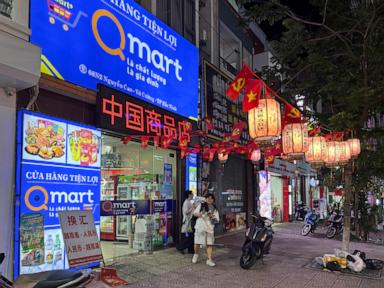
As Bac Ninh’s economy diversifies, the presence of Chinese investment is becoming more pronounced. Local businesses are adapting to this influx, with convenience stores featuring Chinese signage and language schools emerging to help bridge communication gaps. However, as competition for skilled labor intensifies, costs continue to rise, complicating the “China plus one” strategy that many firms are adopting to mitigate risks associated with over-reliance on Chinese manufacturing.
While Bac Ninh thrives, it also grapples with the reality that it cannot completely replace China as the world’s manufacturing powerhouse, given that China’s economy is approximately 40 times larger. Jacob Rothman, CEO of Velong Enterprises, emphasized the challenges of replicating China’s well-established manufacturing ecosystem, stating, “You can’t recreate that overnight.”
Despite these hurdles, Bac Ninh and Vietnam are still attracting considerable foreign investment. As of September 2023, cumulative foreign investment in Vietnam reached $28.5 billion, a 15% increase from the previous year. Nevertheless, some manufacturers are beginning to diversify their operations beyond Vietnam. Brian Bourke, global chief commercial officer at SEKO Logistics, noted that while larger companies can shift production easily, smaller firms might struggle with the financial burden of relocating high-cost equipment.
Vietnam’s ambition is clear. The nation aims to evolve from low-cost manufacturing to producing higher-value goods such as electronics and clean energy solutions by 2045. The government is implementing incentives like tax breaks on imported machinery and discounted rents to encourage modernization among suppliers. Currently, about one-third of factories still rely on non-automated processes, with only 10% utilizing robotics in production.
To reduce reliance on the U.S. market, Vietnam is also exploring new export opportunities in regions such as the Middle East, Latin America, and Africa. The government has instructed overseas trade offices to promote Vietnamese products and gather market intelligence.
As Bac Ninh continues to evolve, its leaders recognize that rising costs and intensified competition will test the region’s ability to sustain its growth. In announcing hundreds of new projects in December, Prime Minister Pham Minh Chinh framed the challenge ahead: Vietnam must strive to “reach far into the ocean, delve deep underground and soar high into space.” This vision underscores the determination to position Bac Ninh and Vietnam as formidable players in the global manufacturing landscape.