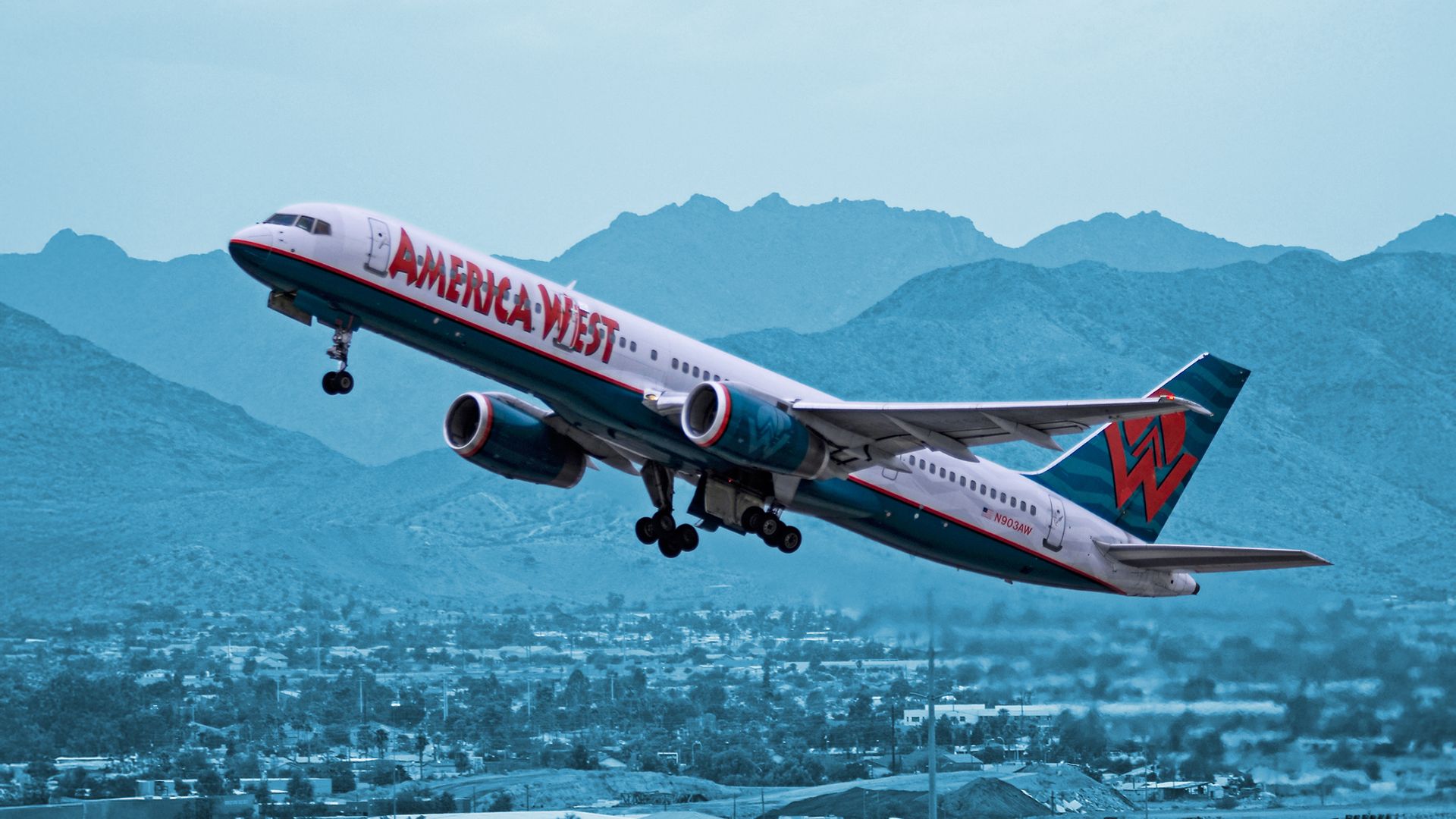
The Boeing 757 stands out among modern narrowbody jets, particularly for its varied wingtip designs. While many contemporary aircraft feature upward-pointing wingtips, the 757 can be seen with both flat and tall blended winglets. This raises an intriguing question for aviation enthusiasts: why did Boeing not incorporate winglets into the 757’s initial design? The answer lies in a combination of technological timing, economic considerations, and evolving market demands.
Understanding the Design Choices of the 757
The primary reason the Boeing 757 was built without blended winglets relates to the timing of its development. When Boeing designed the aircraft in the late 1970s, blended winglet technology was not yet available for large commercial jets. The 757 first took flight in February 1982 and entered service in 1983, at a time when wingtip research primarily focused on angular “canted” winglets. Boeing engineers prioritized a quick market entry for the 757, a replacement for the 727, avoiding unproven and potentially costly technologies.
Boeing’s decision was informed by the context of the era, where fuel prices were low and the need for efficiency improvements was not as pressing. The original design of the 757 was highly regarded for its performance, which included a strong thrust-to-weight ratio, enabling it to operate successfully from shorter runways and at high-altitude airports, such as Denver and Mexico City.
Fuel Efficiency and Performance without Winglets
Despite lacking winglets, the 757 featured one of the most advanced wing designs of its time. Known as a supercritical wing, it was engineered to optimize airflow, minimizing drag and enhancing fuel efficiency. The original 757-200 model achieved a range of approximately 3,700 nautical miles (6,880 km) with a typical passenger load, suitable for transcontinental and many North Atlantic routes. The addition of blended winglets, which became available only in the mid-2000s, offered a modest increase in range to about 3,900 nautical miles (7,250 km).
Initially, the absence of winglets did not hinder the 757’s performance. The aircraft excelled in climb and lift capabilities, making it effective for the routes it was designed to serve. Any modifications to include winglets would have necessitated structural reinforcements, adding weight and complexity that ultimately did not align with Boeing’s vision for the aircraft.
The economic landscape changed significantly as fuel prices surged between 2004 and 2008. This shift prompted airlines to seek every possible advantage in fuel efficiency. The introduction of blended winglets by Aviation Partners Boeing offered a 5% improvement in fuel efficiency, making it a worthwhile investment for airlines operating older 757s.
The Transition to Winglets
The retrofit program for the 757, initiated in 2005, allowed airlines to enhance their existing fleets by adding blended winglets. This modification not only improved fuel efficiency but also extended operational range, enabling airlines to explore new routes. For instance, carriers like Continental Airlines, now part of United Airlines, effectively utilized winglet-equipped 757-200s for services from Newark to regional European destinations such as Lisbon and Porto.
While some aviation enthusiasts might wonder why the 757 does not feature the more dramatic “Split Scimitar” winglets seen on other models, the answer lies in practical considerations. The 757, with its higher stance compared to the Boeing 737, lacks sufficient ground clearance for such designs. Additionally, the structural implications of adding split winglets would not have justified the costs involved, making the refined “scimitar blended winglet” a more suitable option.
The Boeing 757’s Enduring Legacy
Though Boeing ceased production of the 757 in 2004, the aircraft continues to play a vital role in several airline fleets. As of now, Delta Air Lines remains the largest operator, maintaining over 120 aircraft in its fleet, while also emphasizing the 757’s effectiveness for both domestic and certain long-haul flights. Other airlines such as United Airlines and Icelandair also utilize winglet-equipped variants for transatlantic operations, underscoring the 757’s versatility.
In the cargo sector, the 757 has proven to be a valuable asset. Companies like FedEx Express and UPS Airlines rely on its capacity and operational capabilities to serve global logistics. The aircraft’s balance of payload, range, and runway performance allows it to access airports where larger aircraft may struggle.
The narrative surrounding the Boeing 757 and its winglets illustrates not a failure in initial design but rather a successful adaptation to changing market conditions. As airlines face evolving operational challenges, the 757 remains a testament to effective engineering and design. While newer aircraft like the Airbus A321neo and Boeing 737 MAX are gradually replacing the 757 on many routes, the enduring legacy of the 757 with winglets highlights how thoughtful design can extend the life and utility of an aircraft long after production has ceased.