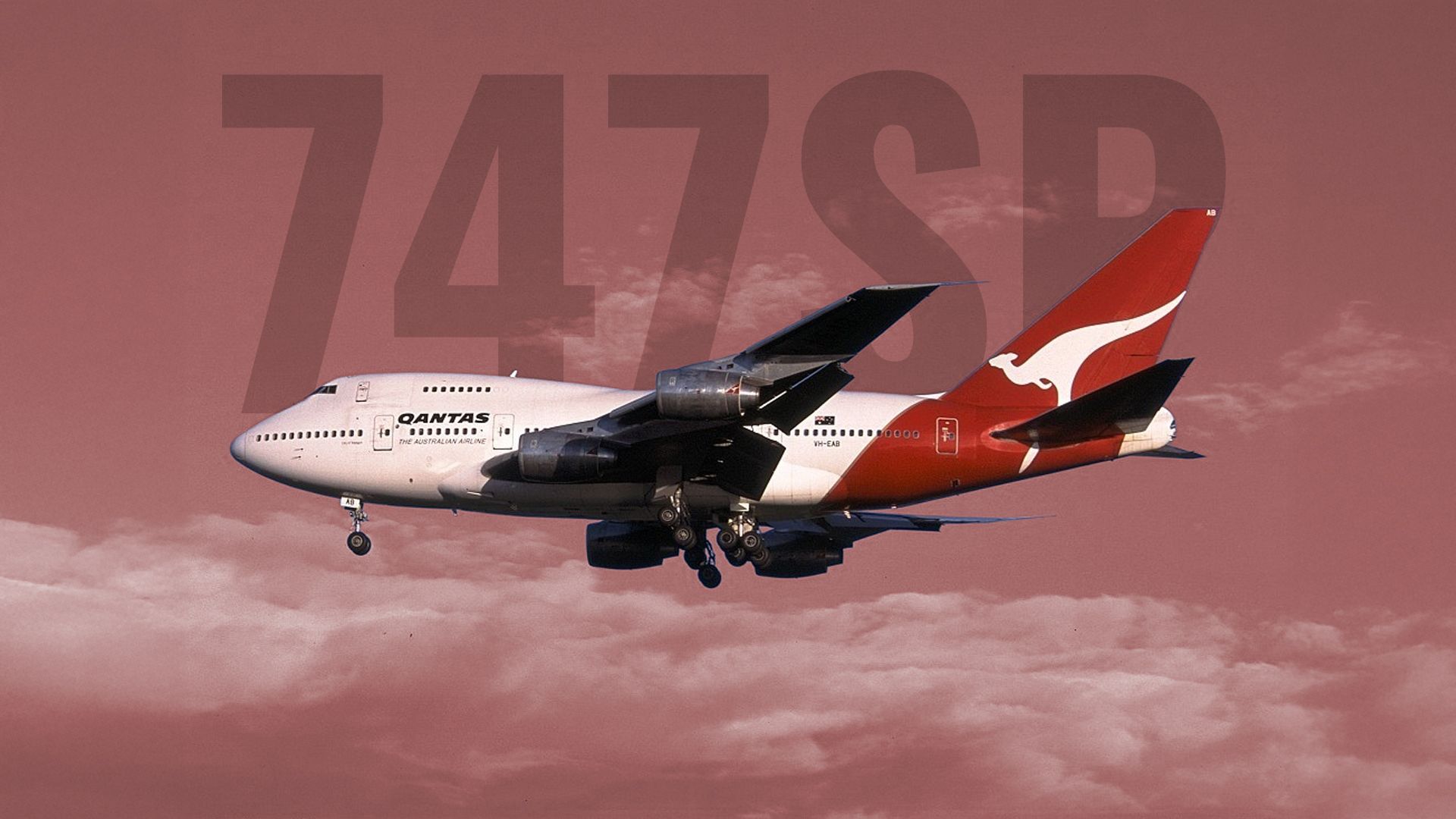
The Boeing 747SP, a unique variant of the iconic 747, was developed in response to specific market demands but ultimately struggled to find its place in a challenging airline environment. Introduced in 1976, this “Special Performance” model was designed to cover long-haul routes, offering enhanced range capabilities compared to its predecessor, the 747-200. Despite its innovative features, the 747SP faced significant hurdles, leading to disappointing sales figures.
Design Innovations and Performance
The Boeing 747SP was a modified version of the original 747-100, with its length reduced from 231 feet 10 inches (70.6 meters) to 183 feet 3 inches (55.85 meters). This adjustment aimed to improve fuel efficiency while maintaining the same wingspan of 195 feet 8 inches (59.64 meters). The design alterations included a redesigned tail and a simpler single-slotted flap system, which contributed to a lower maximum takeoff weight and a higher cruising speed.
One of the most significant advantages of the 747SP was its impressive range, capable of flying up to 6,650 nautical miles (12,325 kilometers). This made it ideally suited for long-distance routes, such as the anticipated nonstop flights between New York City and Tehran, requested by Pan Am and Iran Air. The aircraft’s range and improved field performance appealed to various airlines, particularly Qantas, which utilized the 747SP for routes with challenging conditions, including short runways.
Market Challenges and Economic Factors
Despite its advantages, the 747SP encountered several market challenges shortly after its launch. Boeing expected to sell 200 units based on demand projections; however, it ultimately sold only 45 examples. The timing of the aircraft’s introduction coincided with the 1973 oil crisis, which resulted in soaring fuel prices. This economic shift significantly impacted the airline industry, making fuel efficiency a top priority for airlines.
The 747SP’s four-engine design contributed to higher operating costs compared to its competitors, the McDonnell Douglas DC-10 and Lockheed L-1011 TriStar, both of which utilized a trijet configuration. While Boeing made efforts to reduce the weight of the 747SP, the aircraft still retained much of the structure of the larger 747-100. Consequently, it became less competitive in terms of fuel economy, causing airlines to favor the more efficient options available.
The 747SP was particularly appealing for its superior field performance, but this feature was not enough to offset its high operating costs. As airlines adapted to rising fuel prices and sought to maximize profitability, the 747-200, which continued to evolve with improved engines and capabilities, became a more attractive option for long-haul flights.
In retrospect, the 747SP serves as an example of the complexities involved in aircraft design and market positioning. While it was ahead of its time in some respects, its economic viability was compromised by external factors and competition. The aircraft’s innovative aspects did influence later models, particularly in the design of the upper deck for the 747-300 and 747-400.
The story of the Boeing 747SP illustrates the delicate balance between engineering ambition and market realities, reminding industry stakeholders of the challenges inherent in aviation innovation.