Tensions between the United States and China escalated on Monday as China condemned the U.S. for seizing oil tankers off the coast of Venezuela. This move aligns China with the Venezuelan government, which has been facing increasing pressure from Washington as it seeks to tighten its blockade on Venezuelan oil exports.
During a regular press briefing in Beijing, Lin Jian, a spokesman for the Chinese Foreign Ministry, criticized the U.S. actions as a violation of international law. He stated, “The U.S. practice of arbitrarily seizing other countries’ vessels grossly violates international law.” This statement underscores China’s commitment to supporting Venezuela amidst rising confrontations with the U.S.
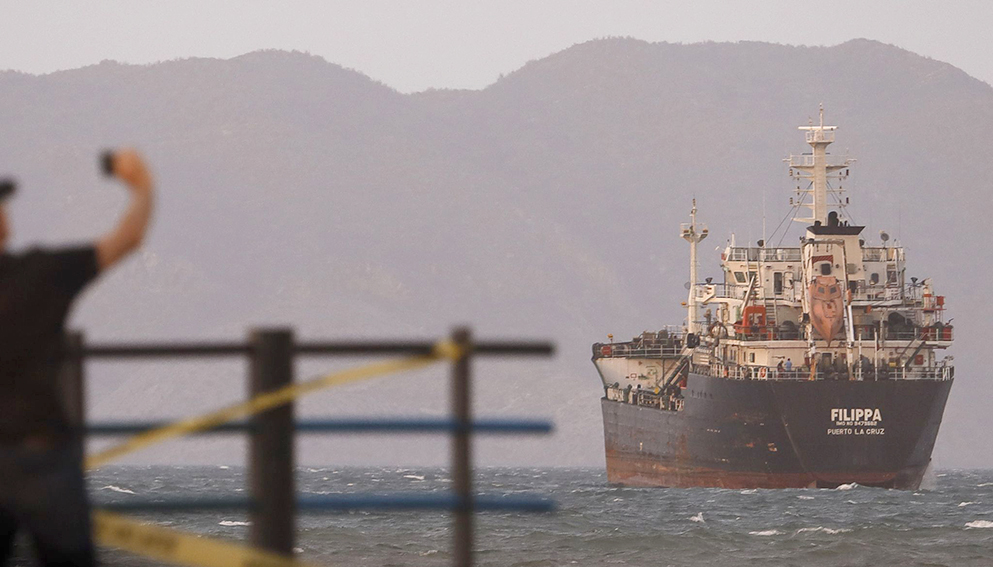
The U.S. has intensified its efforts against Venezuela, pursuing a third oil tanker as part of a broader strategy originally set in motion by the Trump administration. The objective is to cut off a crucial economic lifeline for Venezuela and to further isolate President Nicolás Maduro’s government.
China’s support for Venezuela was evident in Lin’s remarks, where he emphasized that Venezuela “has the right to independently develop mutually beneficial cooperation with other countries.” He further criticized any actions that “infringe upon other countries’ sovereignty and security, and all acts of unilateralism or bullying.”
Impact on Venezuelan Oil Exports
The U.S. seizure of tankers is part of ongoing efforts to enforce sanctions designed to undermine Petróleos de Venezuela SA, the state-owned oil company that predominantly ships its cargo to China. This oil is often transported using dark-fleet tankers—older ships with unclear ownership that transport sanctioned oil from Venezuela, as well as from countries like Iran and Russia.
China’s backing of Venezuela is significant, especially as it highlights the geopolitical complexities surrounding oil exports in the region. The U.S. blockade is attempting to restrict these exports, which are essential for Venezuela’s economy, while China’s involvement suggests a continued partnership that counters U.S. influence.
As the situation develops, the implications for international relations and global oil markets remain to be seen. China’s support for Venezuela reflects a strategic alignment that may further complicate U.S. efforts in the region.
In conclusion, the exchange between these two global powers illustrates the ongoing geopolitical struggle surrounding energy resources and national sovereignty. China’s strong denunciation of U.S. actions indicates its commitment to supporting Venezuela, potentially raising tensions further on the international stage.