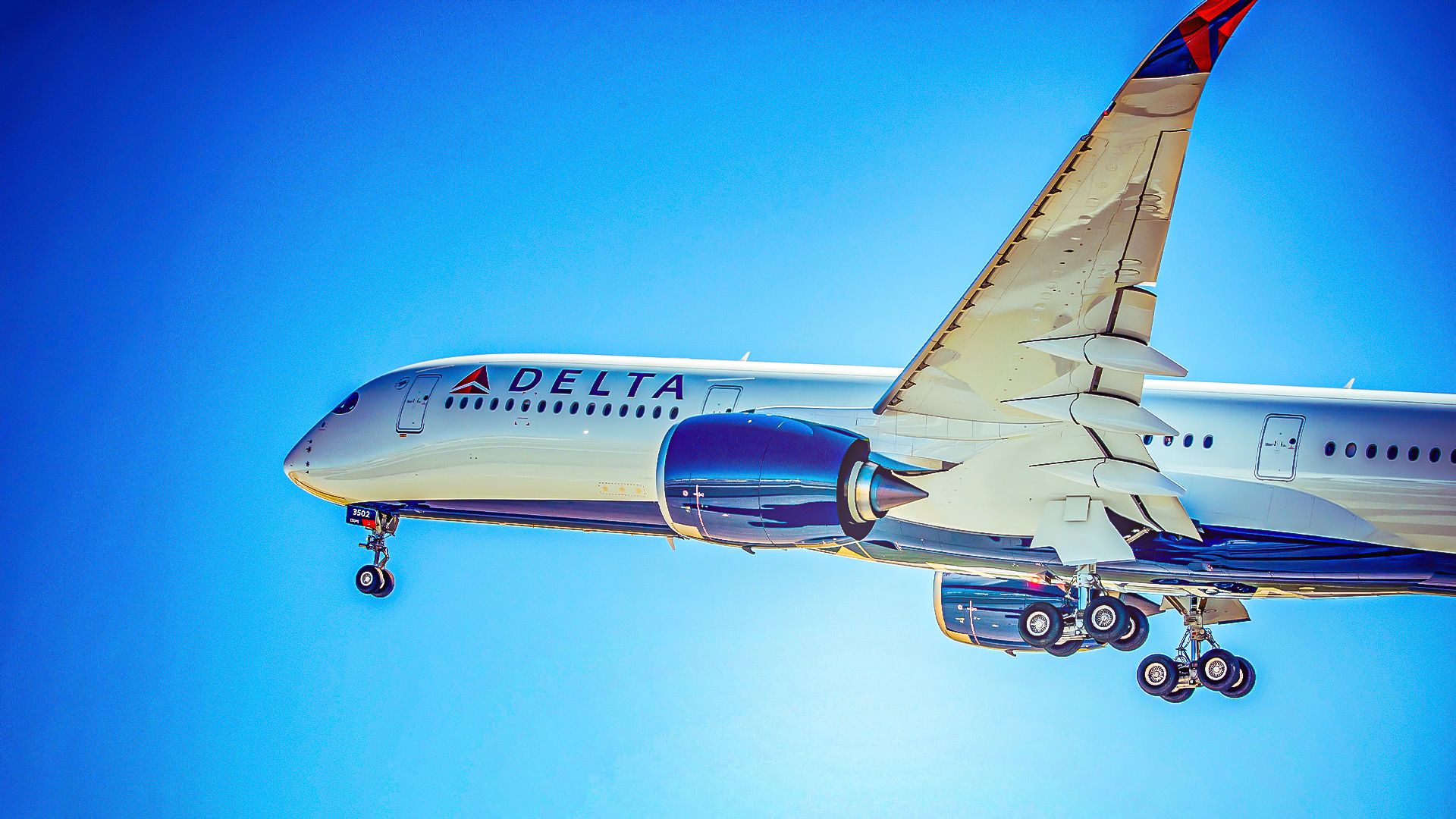
In 2026, Delta Air Lines will make aviation history by becoming the first US airline to operate the Airbus A350-1000, a significant milestone in its long-haul fleet evolution. This decision marks a decisive shift in Delta’s operational strategy and demonstrates its commitment to enhancing service quality while meeting rising international competition. The A350-1000 is designed for high-capacity, long-range routes and will enable Delta to standardize premium offerings across its international flights.
The introduction of this aircraft comes at a crucial time, as Delta adapts to changing passenger demands, increasing operational costs, and the need for flexibility in a dynamic global market. With the A350-1000, Delta aims to improve fuel efficiency, reduce carbon emissions, and enhance operational reliability, all while reinforcing its reputation for high-quality service.
Strategic Implications of the A350-1000
Delta’s selection of the A350-1000 reflects a broader shift in fleet preferences among US airlines. Historically, American carriers have favored Boeing aircraft for long-haul operations, notably the 777 and 787 families. By opting for the Airbus platform, Delta signals a strategic pivot towards operational efficiency and modern fleet management.
The A350-1000’s advanced design offers numerous advantages, including exceptional fuel efficiency and extended range capabilities. These features make the aircraft a natural replacement for older models such as the Boeing 767 and certain variants of the 777. Its innovative aerodynamics and Rolls-Royce Trent XWB-97 engines allow Delta to operate high-demand routes more cost-effectively than with aging platforms.
Furthermore, the A350-1000 fills a critical gap in Delta’s network by offering higher passenger and cargo capacity than the A350-900, without the complexities associated with ultra-large aircraft like the A380. This balance will enable Delta to increase seat availability on major international routes while maintaining the flexibility to serve less-trafficked markets efficiently.
Enhancing International Network Capabilities
The A350-1000 will significantly bolster Delta’s international network, particularly on transatlantic routes from major hubs such as Atlanta, Detroit, and New York City. With its increased seating capacity and superior fuel efficiency, the aircraft allows Delta to provide more nonstop services on high-demand routes, catering to both leisure and business travelers.
In transpacific markets, where payload capability and fuel efficiency are paramount, the A350-1000 is poised to excel. The aircraft’s performance is well-suited for routes to Asia, where demand for both passenger and cargo transport is high. Deploying this aircraft will enable Delta to maximize revenue potential while delivering the comfort expected from ultra-long-haul flights.
The A350-1000’s specifications, such as its length of 242 feet and a maximum takeoff weight of 679,000 pounds, showcase its capacity for high-demand international operations. Moreover, its improved cabin features are expected to enhance the passenger experience significantly.
As the first US airline to introduce the A350-1000, Delta is set to gain a competitive edge over rivals like United Airlines and American Airlines, which predominantly utilize Boeing widebodies. Delta’s choice emphasizes its commitment to operational efficiency, fuel economy, and passenger satisfaction.
Delta’s decision to integrate the A350-1000 into its fleet underscores its commitment to sustainability. The aircraft’s lower fuel consumption relative to older widebody types contributes to a reduced carbon footprint, aligning with Delta’s public pledge to minimize its environmental impact.
The A350-1000 not only enhances operational efficiency but also positions Delta for sustained growth in a competitive landscape. By investing in proven, fuel-efficient technology, Delta reinforces its market position while supporting its environmental goals.