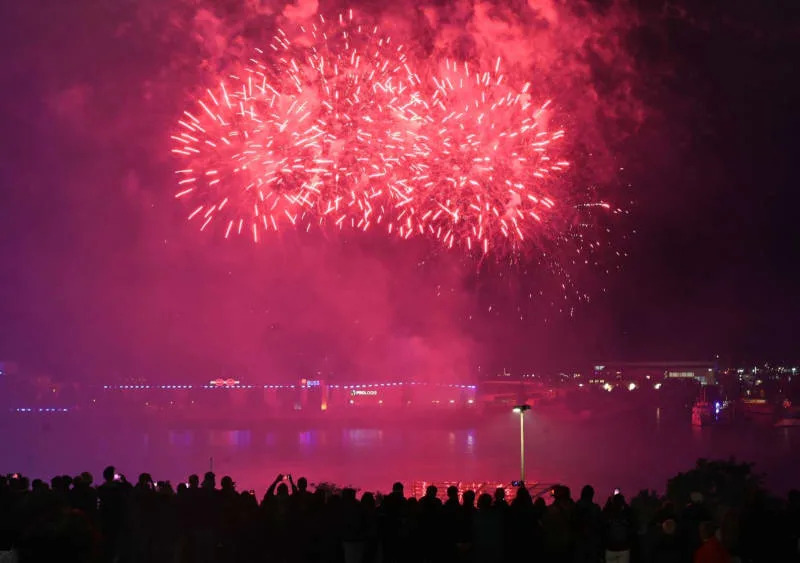
Demand for New Year’s Eve fireworks in Germany is experiencing a notable increase, as highlighted by industry leaders amid growing calls for stricter regulations. According to Germany’s largest fireworks manufacturer, WECO, the availability of fireworks, including rockets and firecrackers, is projected to rise by approximately 10% compared to the previous year. This trend reflects a broader growth within the pyrotechnics sector, with rival manufacturer COMET also reporting a moderate increase in supply.
The German Association of the Pyrotechnics Industry anticipates higher overall availability of fireworks leading up to the New Year celebrations. Fireworks can be purchased in Germany from December 29 to 31. Although unsold merchandise is typically returned to manufacturers, WECO noted that the return rate last year was lower than expected, indicating strong consumer demand. The company, which employs around 260 staff at its facilities in Eitorf and Kiel, produces roughly 15% of its products domestically, sourcing the remainder from China. In the 2023-24 fiscal year, WECO’s turnover reached over €136 million (approximately $160 million).
The trend towards combined fireworks displays, where a single fuse ignites a series of fireworks for several minutes, is gaining popularity, according to Klaus Gotzen, head of the pyrotechnics sector association. This innovation may be appealing to consumers looking for more elaborate experiences during celebrations.
Despite the rising enthusiasm for fireworks, opposition remains robust, particularly from animal welfare advocates and environmental groups. Concerns have been raised about the impact of fireworks on wildlife, with animals, including birds, becoming frightened and depleting their energy reserves during critical winter months. In major cities like Berlin, New Year’s celebrations are often likened to chaotic scenes reminiscent of war zones. Environmentalists also highlight the debris created by fireworks as a significant concern, along with the unnecessary consumption of resources.
The GdP police union has joined calls for a fireworks ban, citing increased incidents of police officers being attacked with fireworks during celebrations. This contentious issue has led to ongoing debates among the interior ministers of Germany’s 16 states, who have yet to reach a consensus on implementing a nationwide ban. A recent court decision also overturned a prohibition on private fireworks displays on the North Sea island of Föhr.
Amidst this backdrop, WECO’s head of sales, Oliver Gerstmeier, argues that the growing demand for fireworks reflects a public desire to continue traditional celebrations. “Ringing in the New Year with a colorful firework is a beautiful thing for many people,” he stated. “One should respect that instead of discrediting it with repeated debates on a ban.” The fireworks industry maintains that these displays are a cherished component of New Year’s festivities in Germany, and that incidents often attributed to fireworks can be traced back to a small number of troublemakers in select urban areas.
As the New Year approaches, the debate surrounding fireworks in Germany continues, balancing a long-standing tradition with the growing concern for public safety and environmental impact.