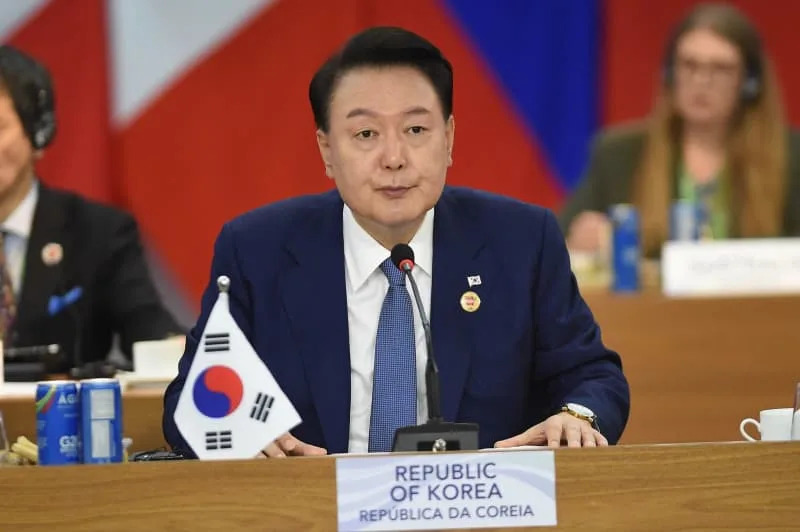
Former South Korean President Yoon Suk Yeol faces serious accusations from special investigators regarding his alleged orchestration of a martial law declaration in December 2024. According to special prosecutor Cho Eun Suk, Yoon meticulously plotted to provoke a military response from North Korea as a pretext for imposing emergency rule within the country. The revelations come at a time when Yoon is on trial, facing charges that could lead to severe consequences, including insurrection.
On the evening of December 3, 2024, Yoon unexpectedly announced martial law, which sent shockwaves through South Korea’s political landscape. The declaration was officially justified by a dispute over the national budget, but Yoon claimed it was necessary to protect the nation from opposition forces, which he accused of acting against the state and being influenced by China’s Communist Party. No evidence has been presented to substantiate these claims.
The investigation led by Cho Eun Suk indicates that Yoon had been planning the imposition of martial law since at least October 2023. Allegations suggest that Yoon and his then-defence minister organized a covert drone operation that entered North Korean airspace, aiming to provoke a military response that would justify the declaration of emergency rule. However, North Korea did not react militarily to this operation.
As the political crisis unfolded, South Korea transitioned to new leadership. Since June, the country has been under the administration of President Lee Jae Myung, a centre-left politician and long-time rival of Yoon. The current government has faced the challenge of stabilizing a nation grappling with the implications of Yoon’s controversial actions.
Yoon’s trial is closely watched, given the gravity of the charges he faces. Insurrection is classified as a serious offense under South Korean law, with potential penalties that include the death sentence. The ongoing proceedings will not only determine Yoon’s future but may also have lasting effects on South Korea’s political climate.
As the investigation continues, the nation remains vigilant, reflecting on the broader implications of leadership and governance in a complex geopolitical landscape.