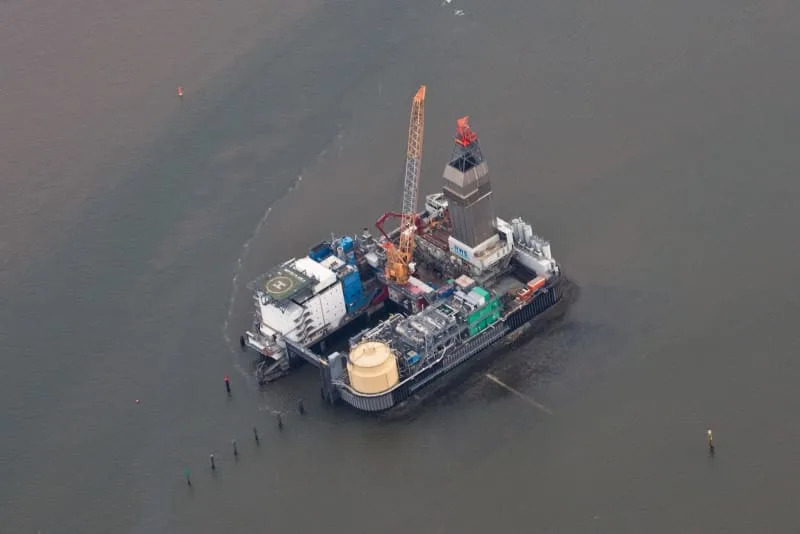
A state court in Germany has ordered a halt to oil drilling in the northeastern Wadden Sea, siding with an environmental group that argued a mandatory nature impact assessment had not been conducted. The decision, issued by the Schleswig-Holstein Administrative Court, stops operations at the Mittelplate drilling platform until further notice.
The court’s ruling follows a lawsuit filed by the German Environmental Aid Association (DUH), which contended that the platform lacked an enforceable production permit. A court representative stated that an inventory check is required every two years, but the necessary assessment mandated by the Flora-Fauna-Habitat Directive (FFH) had not been completed. Consequently, the court prohibited production on the platform.
According to the court, an appeal by the operator, Wintershall Dea Deutschland, does not have suspensive effect, meaning that the halt on production remains in place regardless of the operator’s objections. DUH has hailed the ruling as a significant victory for the conservation of the Wadden Sea, which is noted as Germany’s largest World Heritage Site.
Sascha Müller-Kraenner, Federal Executive Director of DUH, emphasized that the region should not be exploited without a comprehensive analysis of the environmental implications tied to oil production. He characterized the drilling platform as outdated and expressed concern about the increasing risk of accidents.
A spokesperson for Wintershall Dea Deutschland responded to the court’s decision, stating that the company plans to review the ruling carefully. The spokesperson asserted that the main operating plan for the Mittelplate drilling and production platform was approved in accordance with all relevant legal requirements. They also pointed out that the facility has always operated under stringent government supervision, adhering to existing regulations. Since its inception in 1987, the platform has safely produced over 40 million tons of oil, according to the company.
This ruling reflects a growing emphasis on environmental assessments in the context of energy production, particularly in sensitive areas like the Wadden Sea, known for its rich biodiversity. As the legal proceedings unfold, the future of oil production in this ecologically important region remains uncertain.