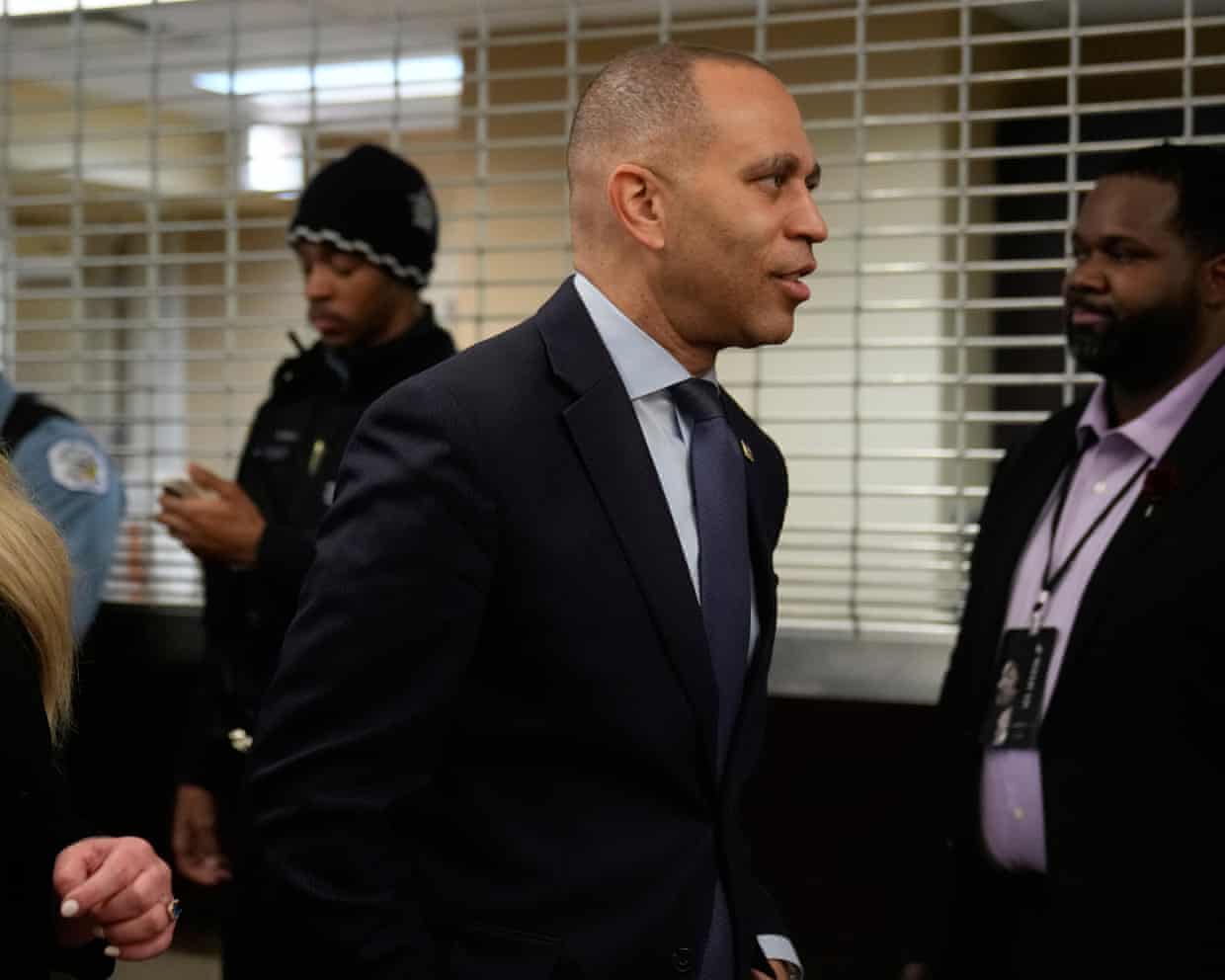
The leadership change at the Department of Homeland Security (DHS) is insufficient to resolve ongoing issues related to government funding and accountability, according to Hakeem Jeffries, the House Minority Leader. Jeffries emphasized the need for a thorough reevaluation of the department’s practices, particularly concerning the operations of Immigration and Customs Enforcement (ICE).
During a press conference, Jeffries stated, “We want ICE to conduct itself like other law enforcement agencies, not use tax dollars to kill American citizens.” This statement reflects a growing concern among lawmakers regarding the agency’s enforcement methods and their implications for the American public.
The DHS has faced increasing scrutiny over its funding and operational strategies, especially in the context of ongoing debates about immigration and national security. Jeffries’ remarks come at a time when the government is grappling with budgetary constraints that have led to discussions about potential shutdowns.
Calls for Comprehensive Reform
Jeffries articulated that merely changing leadership within the DHS does not address the fundamental issues at play. He urged Congress to take a more active role in scrutinizing the agency’s budget and operational directives. The emphasis, he indicated, should be on ensuring that public funds are managed wisely and ethically.
The House Minority Leader’s comments resonate with a segment of the population that fears the repercussions of aggressive immigration enforcement tactics. Critics argue that such methods not only affect undocumented immigrants but also have broader implications for civil liberties and community trust in law enforcement.
Jeffries highlighted the importance of transparency and accountability, suggesting that legislative action is necessary to reshape ICE’s mandate and operational protocols. He believes that reforming these practices is critical to restoring public confidence in the agency.
Political Landscape and Future Implications
As discussions about the DHS continue, the political landscape remains fraught with tension. The current focus on immigration policy and funding has become a central issue in the broader context of U.S. politics. The ongoing negotiations among lawmakers may significantly influence how the DHS operates moving forward.
The upcoming weeks will be crucial as both parties work to address the government funding bill. Jeffries has made it clear that the Democratic leadership will not support measures that fail to prioritize accountability within the DHS and ICE.
This situation reflects a broader debate about the role of government agencies in enforcing laws and protecting citizens. With an eye on the upcoming legislative sessions, Jeffries’ comments may serve as a rallying point for advocates calling for reform in federal immigration policy and the operations of law enforcement agencies.
In conclusion, the leadership changes at the DHS are only a small part of a much larger conversation about accountability, ethics, and the appropriate use of taxpayer dollars. As the political landscape evolves, the call for comprehensive reform remains more pertinent than ever, particularly regarding the actions and oversight of ICE.