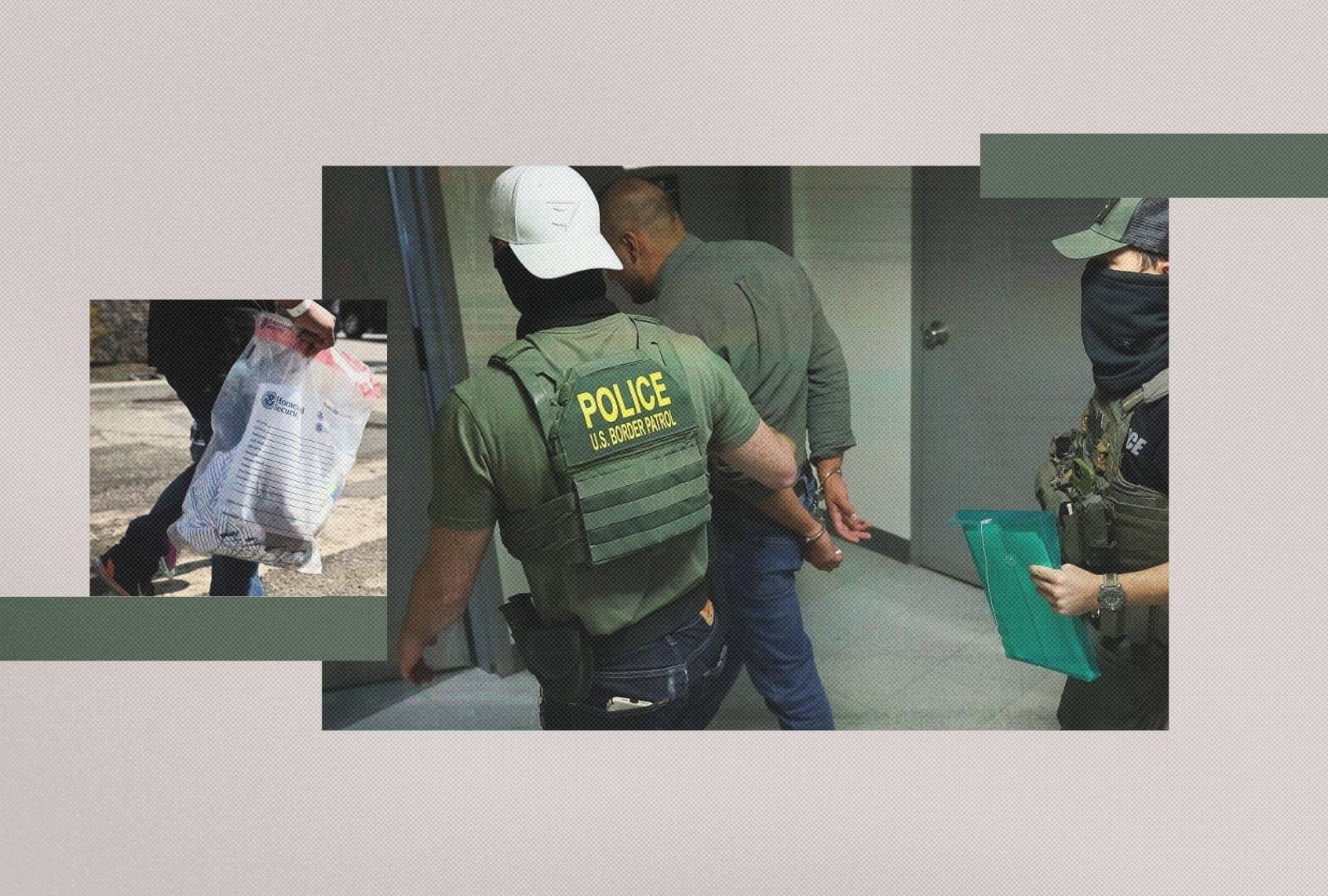
Many immigrants released from detention facilities operated by Immigration and Customs Enforcement (ICE) and Border Patrol face ongoing challenges as their personal belongings remain unaccounted for. Items such as government documents, medical devices, and personal effects often go missing after confiscation, complicating the lives of those who have already endured significant hardship.
According to attorneys and previously detained immigrants, ICE and Border Patrol agents rarely admit to mishandling these items. Instead, they often claim that the belongings have been lost. Mo Goldman, an immigration attorney based in Arizona, noted that this issue has persisted for years and has intensified with recent mass arrests. “Negligence on the part of the officers can certainly be a problem,” Goldman stated. “But it also seems somewhat intentional. Why wouldn’t you provide people their personal documents when they get released?”
The consequences of losing identification can be severe. Federal law mandates that non-citizens carry proof of their lawful status, yet without their documents, individuals may find themselves vulnerable to further arrests. Goldman recounted a case in which a woman’s family heirloom necklace was never returned, illustrating the emotional toll alongside the legal implications of lost property.
While ICE’s publicly available guidance from 2011 suggests that confiscated belongings should be stored securely, the reality is often quite different. Immigrants may be transferred across states—arrested in New York, processed in New Jersey, and flown to a detention center in Louisiana—resulting in their possessions being misplaced or discarded during transit.
A recent federal class-action lawsuit revealed that a group of refugees arrested in Minnesota and flown to Texas were released without any documents. One immigrant, who sought political asylum in the United States and was detained from August 2021 to February 2022, shared his experience of losing critical documents. After being detained, he had to wait a month for the return of his identification, which delayed his asylum hearing. “I gave them my social security card, work permit, and driver’s license, and they never returned it to me,” he recalled.
This lack of documentation severely affected his ability to work and earn a living. When he tried to obtain a new ID from the local department of motor vehicles, officials informed him that he could not do so without presenting his old ID, which ICE still had not returned. The process of replacing these crucial documents can be both expensive and time-consuming, often costing hundreds of dollars.
Legal challenges have emerged as some attorneys confront ICE over unreturned belongings. Despite court rulings favoring immigrants, compliance from the government remains inconsistent. Goldman noted the financial burden this places on individuals, citing a client who faced nearly $4,000 in fees related to recovering an impounded vehicle after ICE had failed to return his belongings.
Delia Salvatierra, another immigration attorney, emphasized that the struggle to reclaim personal items has a detrimental effect on the ability of legal advocates to assist migrants effectively. “It would behoove the government to return them to the status they had at the time prior to being arrested,” she stated. “These things are important. They have to work, they have to drive, they need some kind of security.”
Despite the efforts of legal professionals and community organizations, many immigrants remain without the essential items they need to rebuild their lives. The sheer volume of arrests and potential abuses complicates the situation, leaving numerous individuals to walk away from family heirlooms and critical documents.
As these challenges persist, the call for accountability from ICE and Border Patrol grows louder, highlighting the pressing need for reforms that ensure the protection of immigrants’ rights and belongings.