Tensions in the Middle East have escalated as Iran’s Foreign Minister, Abbas Araghchi, warned on Wednesday that the country has put its “fingers on the trigger.” This statement comes as the United States has increased its military presence in the region, raising concerns about the potential for conflict. The warning coincides with threats from the U.S. to take swift and violent action against Iran if necessary.
Araghchi emphasized that Iran’s armed forces are prepared to respond “immediately and powerfully” to any aggression. He noted that following last year’s brief conflict with Israel, which also drew in the U.S., Iran is now more equipped to deliver a forceful response. According to Ali Vaez, the Iran project director for the International Crisis Group, the current situation is critical. “The threat of a massive Iranian retaliation should be taken seriously,” he stated, highlighting Iran’s precarious position and its potential for unpredictable actions.
On the political front, former U.S. President Donald Trump reiterated his administration’s stance, indicating that American military strikes could be imminent unless Iran agrees to relinquish its nuclear ambitions. Earlier this month, Trump expressed support for Iranian civilians amidst ongoing protests against the regime, although he later suggested that he would refrain from direct intervention. Human rights organizations report that the death toll from the regime’s crackdown on dissent may be in the thousands.
Despite ongoing tensions, officials indicate there has been little progress in negotiations between the U.S. and Iran. This stalemate has prompted Gulf nations to seek diplomatic solutions to defuse the situation. In a notable statement, Saudi Crown Prince Mohammed bin Salman declared that Riyadh would not permit the U.S. to use its airspace or territory for any military operations against Iran.
The U.S. has outlined three key demands for Iran: a permanent halt to uranium enrichment, limitations on its ballistic missile capabilities, and a cessation of support for the so-called Axis of Resistance, a coalition of groups opposing U.S. interests in the region. There is currently no indication that Tehran is willing to comply with these conditions.
In a congressional hearing on Wednesday, U.S. Secretary of State Marco Rubio described the military buildup as a necessary measure to protect American troops, numbering between 30,000 and 40,000 stationed across various facilities in the Middle East. Rubio pointed out that these troops are within range of thousands of Iranian unmanned aerial vehicles (UAVs) and short-range ballistic missiles, which pose a direct threat to their safety.
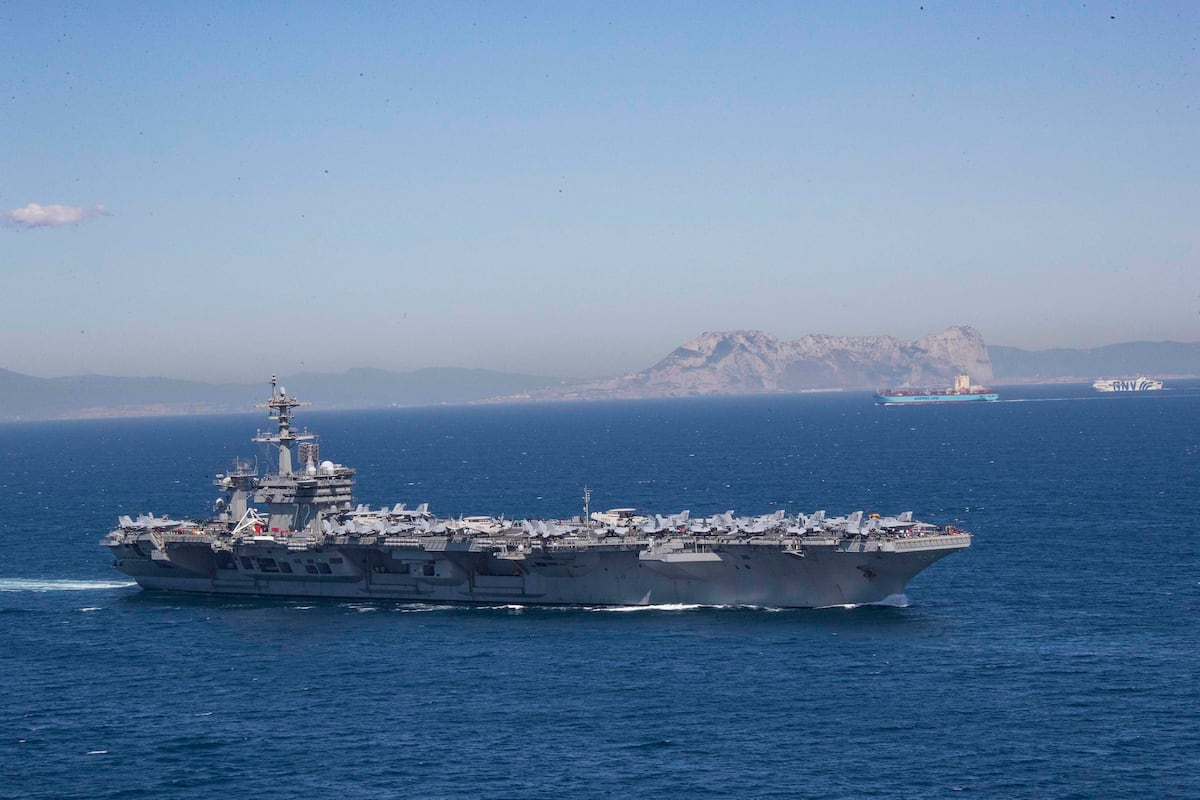
The centerpiece of the American military deployment is the aircraft carrier USS Abraham Lincoln, which has recently entered the area of responsibility for U.S. Central Command. Additionally, the U.S. has sent other military assets, including warships and the F-15E Strike Eagle fighter jet, to bolster its presence in the region.
Iran has reportedly enhanced its naval and missile capabilities with the objective of targeting U.S. warships, according to Vaez. He noted that these capabilities were not utilized in last year’s conflict, leaving them intact and ready for potential confrontation. “The U.S. can no doubt defeat Iran, but it will come with the kind of price tag that so far the president has demonstrated he’s reluctant to pay,” Vaez concluded, underscoring the high stakes involved in any military engagement.
As the situation develops, both nations seem entrenched in their positions, and the potential for miscalculation remains a significant concern for regional and global stability.