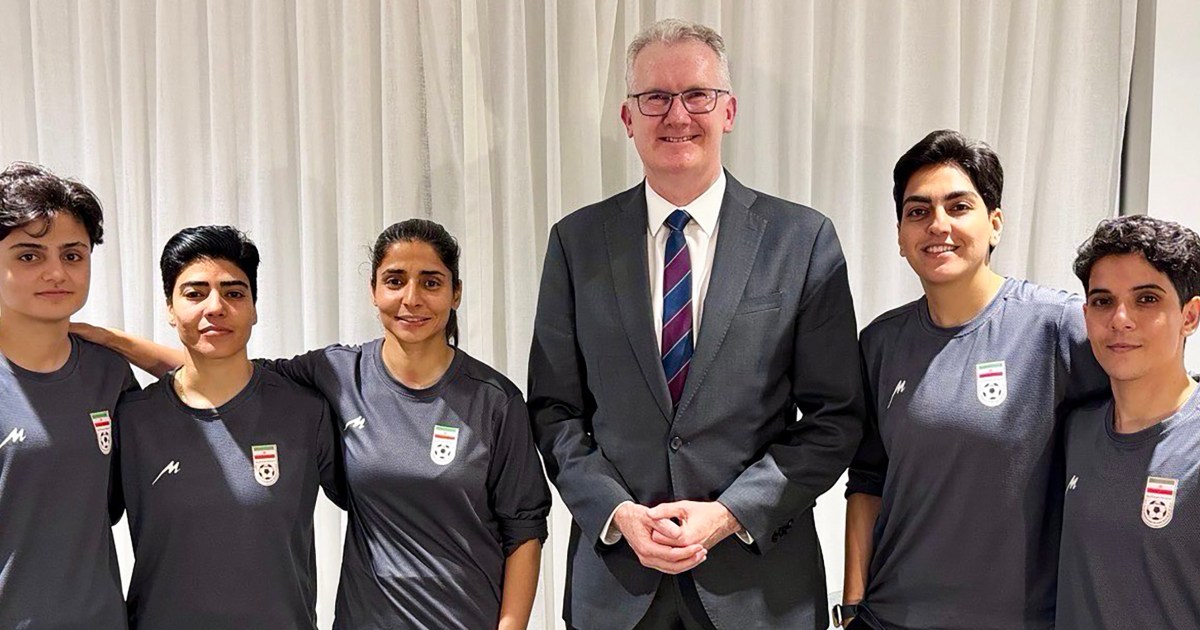
Only two of the seven members of the Iranian women’s soccer team remain in Australia after five players withdrew their asylum claims and chose to leave. This shift follows a series of complex and emotionally charged decisions surrounding their safety and future.
Home Affairs Minister Tony Burke stated on September 24, 2023, that the Australian government had worked to present the players with “genuine choices.” He emphasized that while opportunities were offered, the players faced overwhelming pressure in making these difficult decisions. Initially, six players and one support staff member accepted humanitarian visas to stay in Australia, while the remaining Iranian contingent departed from Sydney to Kuala Lumpur, Malaysia, last week.
The players’ safety concerns escalated after a notable incident at the Asia Cup match against South Korea. The team chose not to sing the national anthem just days after the United States and Israel initiated military actions against Iran, which contributed to the death of Supreme Leader Ayatollah Ali Khamenei. Following this, the women faced severe backlash in Iranian state media, being labeled as “traitors.” They subsequently sang the anthem in their subsequent matches but have not publicly commented on the war or their earlier actions.
The five players who retracted their asylum claims are now expected to reunite with the rest of their team in Malaysia, where they have been staying amidst ongoing strikes impacting their homeland. Initially, Australian officials, including Burke, celebrated the players’ decisions to seek asylum as brave. They described emotional meetings with team members as they prepared to leave Australia.
Despite this support, Iranian communities in Australia have voiced concerns about potential government pressure on the players, particularly regarding their relatives still in Iran. Shahram Akbarzadeh, a professor at Deakin University specializing in Middle Eastern studies, commented on the situation, suggesting that while there could be repercussions for those who sought asylum, it is unlikely that their lives would be at risk. He stated, “Their life is not going to be dangerous. The regime will be embarrassed by this episode.”
In recent days, Iranian state media has moderated its rhetoric toward the women, indicating that they would be welcomed back home. The semi-official Tasnim News Agency reported that the five players were “returning to the warm embrace of their family and homeland,” framing their departure as a “disgraceful failure” of the American-Australian endeavor.
The Iranian Football Association has also announced that the team is expected to leave Malaysia for Tehran soon, reuniting with their families. Australia’s Assistant Immigration Minister Matt Thistlethwaite described the circumstances surrounding the Iranian players as “very complex.” He reiterated the government’s respect for the personal decisions made by those choosing to return and expressed ongoing support for the two remaining team members in Australia.
As this situation unfolds, it highlights the intricate interplay of personal choice, political pressure, and the challenges faced by athletes in a global context.