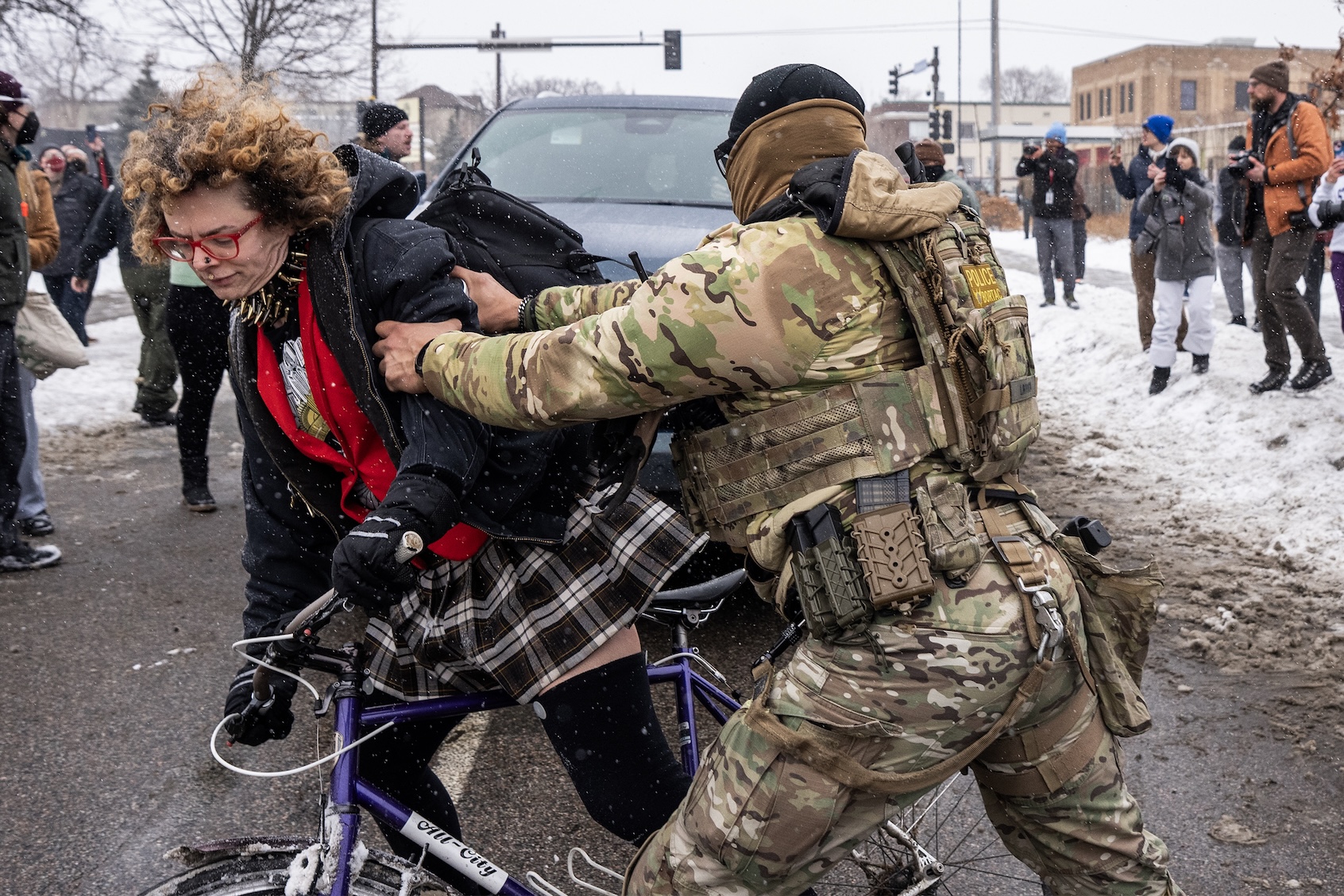
A federal judge in Minnesota heard arguments on January 26, 2026, as the state sought a temporary restraining order against the Trump administration’s immigration enforcement actions. The administration has deployed approximately 3,000 immigration agents to Minnesota, prompting state attorneys to argue that this federal presence constitutes an unconstitutional occupation under the 10th Amendment.
In the case of Minnesota v. Noem, the state contends that the federal government is overstepping its authority by encroaching on state police powers. Attorneys assert violations of the 10th Amendment, which reserves certain powers for the states. They also cite the equal sovereignty principle, which mandates that states must be treated equally by the federal government. Additionally, claims under the First Amendment and the Administrative Procedure Act have been made, alleging arbitrary and capricious government actions.
Andrea Katz, a law scholar at Washington University in St. Louis, discussed the legal implications of the case. Katz explained that the 10th Amendment arguments are largely unprecedented, as they challenge the federal government’s ability to enforce immigration laws within state borders.
The core issue centers on when federal law enforcement actions cross the line into state jurisdiction. Judge Kate M. Menendez appears cautious about addressing this delicate balance of federal and state power. Existing case law related to the 10th Amendment, particularly the anti-commandeering doctrine, suggests that the federal government cannot compel states to enforce federal laws against their will. However, Minnesota’s argument diverges from established norms by asserting that federal agents are unlawfully enforcing immigration laws.
Katz points out that invoking the 10th Amendment in this context is unconventional. The arguments hinge on the state’s claim that federal agents are infringing on its police powers. She notes that such an argument may not be well-received in court, given the lack of precedents supporting this interpretation of the 10th Amendment.
The Trump administration has dismissed Minnesota’s legal theories, asserting that they are acting within their authority. Katz refers to historical cases where the Supreme Court attempted to delineate core state powers, but those efforts have been complicated by rulings like Garcia v. San Antonio Metropolitan Transit Authority, which effectively limited the judiciary’s role in defining state powers.
The outcome of this case could have significant repercussions. Minnesota has already initiated a related case, Tincher v. Noem, alleging that ICE agents have violated state and individual rights. Preliminary relief was granted in that case, although Judge Menendez’s order is currently on hold pending appeal.
One of Minnesota’s arguments involves the equal sovereignty principle, which emerged from the Supreme Court’s ruling in Shelby County v. Holder. In that 2013 decision, the Court ruled against provisions of the Voting Rights Act that treated states differently based on historical discrimination. Chief Justice John Roberts emphasized that the government cannot impose different standards on states, a principle Minnesota now seeks to apply to federal immigration enforcement.
Katz cautions that enforcing the equal sovereignty principle in this context could have broader implications, potentially limiting the federal government’s ability to respond to various situations, including natural disasters.
As the legal landscape evolves, the implications of this case reflect the tension between state and federal powers in the United States. Katz notes that the second Trump administration demonstrated a highly organized approach to exerting federal authority, which raises questions about how the courts will respond to such actions.
The current climate suggests a potential shift in judicial attitudes toward executive power. Federal courts traditionally defer to the executive branch, but indications of skepticism toward official accounts of events may signal a changing dynamic in the judiciary.
In conclusion, the Minnesota lawsuit raises fundamental questions about the balance of power in the U.S. legal system, particularly concerning immigration enforcement. As the case unfolds, it will be closely monitored for its potential to redefine the limits of federal authority in relation to state sovereignty.