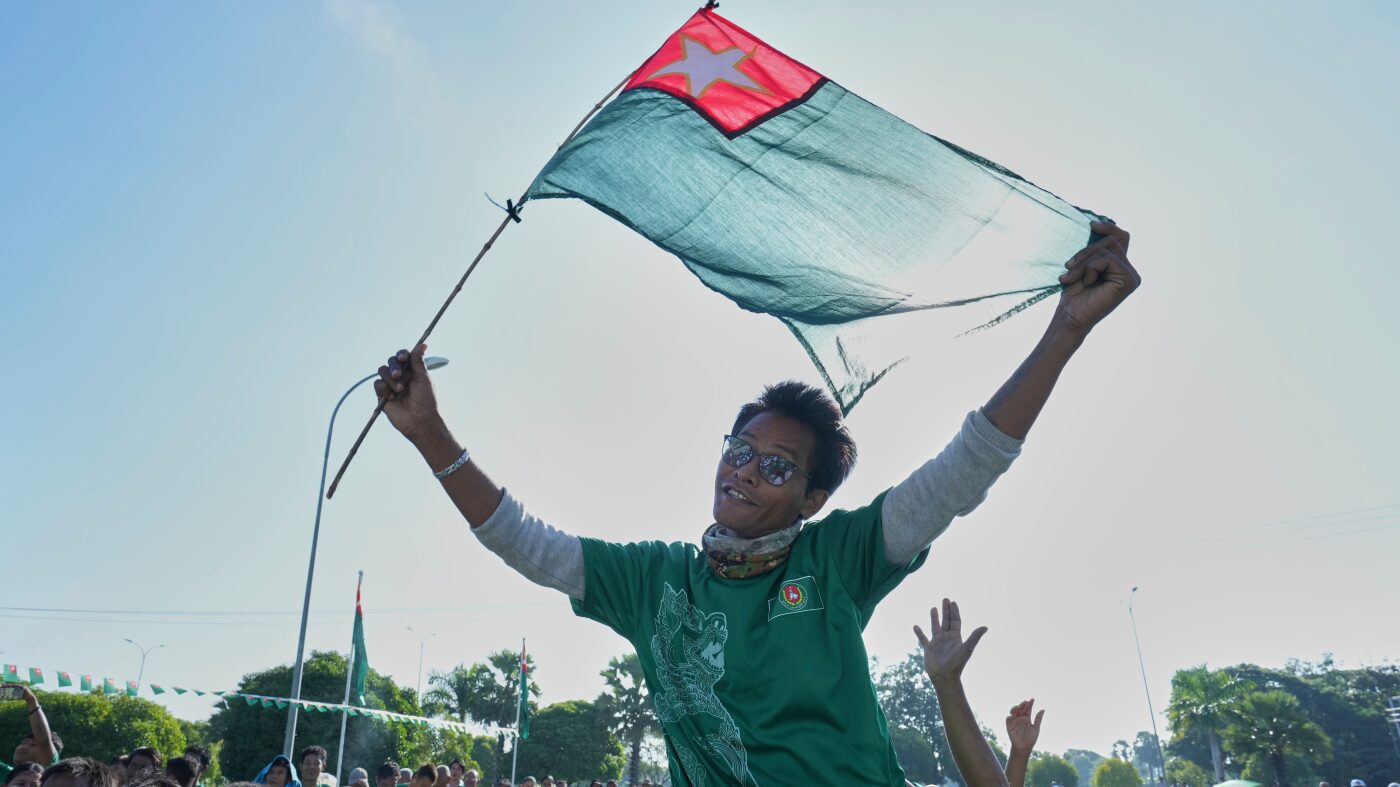
Myanmar’s military government has announced plans for staggered general elections, starting on December 28, 2023, and concluding in late January 2024. This initiative aims to restore stability and mitigate the junta’s international diplomatic isolation, despite ongoing civil unrest that has plagued the nation since the military coup in February 2021. The elections will take place under the shadow of a brutal civil war, characterized by widespread violence and repression.
The junta’s strategy includes a new law that penalizes what it terms “interference” in the electoral process. Human Rights Watch reported in November that nearly 100 individuals had already been detained under this law, a figure that has since more than doubled. Many detainees face severe penalties for social media posts criticizing the elections, raising concerns about the legitimacy of the voting process.
At a recent summit of the Association of Southeast Asian Nations in Malaysia, United Nations Secretary-General António Guterres expressed skepticism about the fairness of the upcoming elections. He noted, “Is there anyone who believes that there will be free and fair elections in Myanmar? It is quite obvious that… the conditions for free and fair elections are not there.” The military’s efforts to tighten control come as it seeks to ensure a favorable outcome, potentially favoring its proxy party, the Union Solidarity and Development Party (USDP), which was defeated by the National League for Democracy (NLD) in the 2020 elections.
The NLD, led by Aung San Suu Kyi, is banned from participating in this electoral process, and many of its leaders remain imprisoned. Speculation regarding Suu Kyi’s well-being has increased, with her son, Kim Aris, expressing fears for her life. The military has intensified its military campaign to regain territory lost to opposition forces, bolstered by improvements in strategy and technology, including the deployment of drones.
China has emerged as a significant backer of the junta, viewing the military as a stabilizing force against the chaos that threatens its economic interests in the region. According to Yun Sun, director of the China program at the Stimson Center, Beijing’s support stems from concerns over its infrastructure projects in Myanmar, particularly the China-Myanmar economic corridor. “When the country is in a civil war, the China-Myanmar economic corridor leads to nothing,” she noted.
The junta’s military successes in recent months have further complicated the situation. Security analyst Morgan Michaels pointed out that the regime has regained strategic ground, aided by a conscription campaign and improved military organization. He observed that the opposition forces, while still committed to their cause, are fragmented and struggling with internal challenges.
Amid this backdrop of conflict, fatigue is setting in among some of the younger fighters who initially joined the armed struggle. Analyst Min Zaw Oo noted that many are seeking refuge in neighboring countries, indicating a shift in the resolve of some who once stood against the military. Despite these challenges, others remain determined. Rebel commander Ko Ta Mar, who once practiced medicine, articulated a commitment to the fight against the junta, likening the proposed elections to “injecting steroids into a patient” that merely masks deeper issues.
Longtime Myanmar analyst David Mathieson remarked that the shadow National Unity Government, a remnant of the ousted government, is losing credibility among citizens. “There’s a growing sense of look, it’s not about the elections, it’s about what kind of regime comes afterwards,” he stated. Many citizens are prioritizing stability over democratic ideals, potentially facilitating the military’s efforts to enhance its domestic and international standing.
As the first round of elections approaches, the military’s gamble hinges on its ability to project a semblance of order amidst chaos, even as the prospects for genuine democratic governance remain bleak. The second and third rounds of voting are scheduled for January 2024, with global observers closely monitoring the situation.