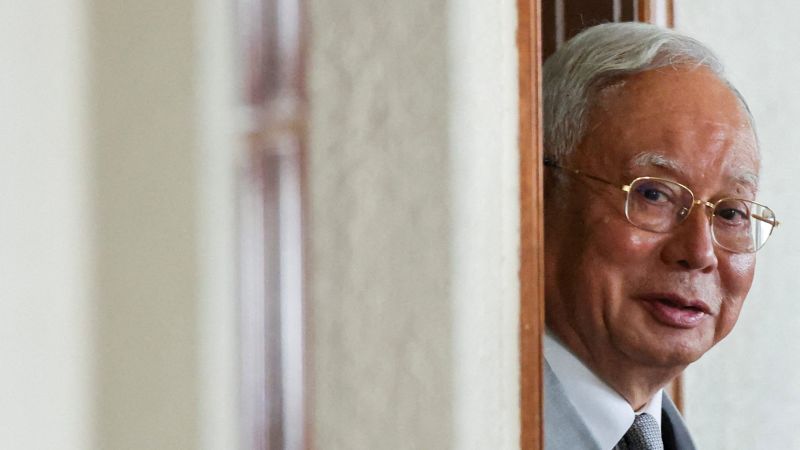
Former Malaysian Prime Minister Najib Razak was found guilty of abuse of power on March 15, 2024, in a significant ruling related to the ongoing 1Malaysia Development Berhad (1MDB) scandal. This trial is the largest to date concerning the alleged misappropriation of billions from the state fund that Najib co-founded in 2009. The judge has yet to finalize the full verdict and sentencing, which could have profound implications for Malaysia’s political landscape.
Investigators from Malaysia and the United States estimate that at least $4.5 billion was stolen from 1MDB, with over $1 billion reportedly linked directly to Najib’s accounts. He has faced four counts of corruption and 21 counts of money laundering for allegedly receiving illegal transfers amounting to more than 2.3 billion ringgit (approximately $569.45 million) from 1MDB.
In his remarks, Judge Collin Lawrence Sequerah stated that the evidence against Najib was “cold, hard and incontrovertible,” indicating clear abuse of power associated with his position at 1MDB. Najib has consistently denied any wrongdoing, asserting that the charges were a politically motivated witch hunt. He could face maximum sentences ranging from 15 to 20 years for each charge, along with potential fines totaling up to five times the value of the alleged misappropriations.
Since August 2022, Najib has been serving a separate 12-year prison sentence after Malaysia’s highest court upheld a conviction for corruption related to illicit funds from 1MDB. Last year, a pardons board halved that sentence, which has since drawn public scrutiny.
The connection between Najib and Jho Low, a financier implicated in the scandal, was central to the verdict. Judge Sequerah noted that evidence suggested Najib had an “unmistakable bond and connection” with Low, who acted as his “proxy and intermediary” in 1MDB dealings. Low, currently a fugitive, has been indicted in the United States for his role in the scandal but denies all allegations against him.
Najib has maintained that he was led to believe the funds deposited into his accounts were donations from the Saudi royal family. However, the judge dismissed this narrative as “implausible,” stating that the documentation provided by Najib lacked verification and was likely forged. “The irresistible conclusion is that the Arab donation narrative is not meritorious,” Sequerah stated, emphasizing that the evidence pointed directly to 1MDB as the source of the funds.
The verdict arrives at a politically sensitive time for Malaysia, particularly for Prime Minister Anwar Ibrahim. Just days before the ruling, Najib’s request to serve his sentence under house arrest was denied, sparking renewed tensions within the ruling coalition. Najib’s party, the United Malays National Organisation (UMNO), previously opposed Anwar in the 2022 elections but formed a coalition government following a hung parliament.
Some UMNO leaders expressed dissatisfaction with the court’s decision regarding Najib’s incarceration, with social media posts from members of Anwar’s coalition celebrating the ruling further intensifying the situation. In response, Anwar called for calm, urging all parties to accept the court’s decision with “full patience and wisdom.”
As the legal proceedings continue and the political ramifications unfold, Najib’s case remains a critical test for Malaysia’s judicial independence and governmental stability.