NATO is poised to engage in potential Arctic operations, although no formal planning has commenced due to a lack of political guidance. This statement was made by Gen. Alexus Grynkewich, the Supreme Allied Commander Europe, following a meeting of NATO’s senior military leaders in Brussels on March 15, 2024. Grynkewich emphasized that while discussions about an Arctic mission are ongoing, NATO is currently focused on organizational logistics rather than implementation.
During the press briefing, Grynkewich remarked, “We’re aware of discussions about this, of course, and therefore we’re doing some thinking about how we would organize for it, but no planning has started yet.” He noted that NATO’s military headquarters possesses significant expertise that could be leveraged for an Arctic mission, which may be referred to as “Arctic Sentry” or another name.
A coalition of European NATO members, including the Nordic nations, the Netherlands, France, and the United Kingdom, have advocated for a stronger NATO presence in the Arctic to enhance security against perceived threats from Russia and China. This push comes in the wake of heightened military activity in the region, particularly from these two nations.
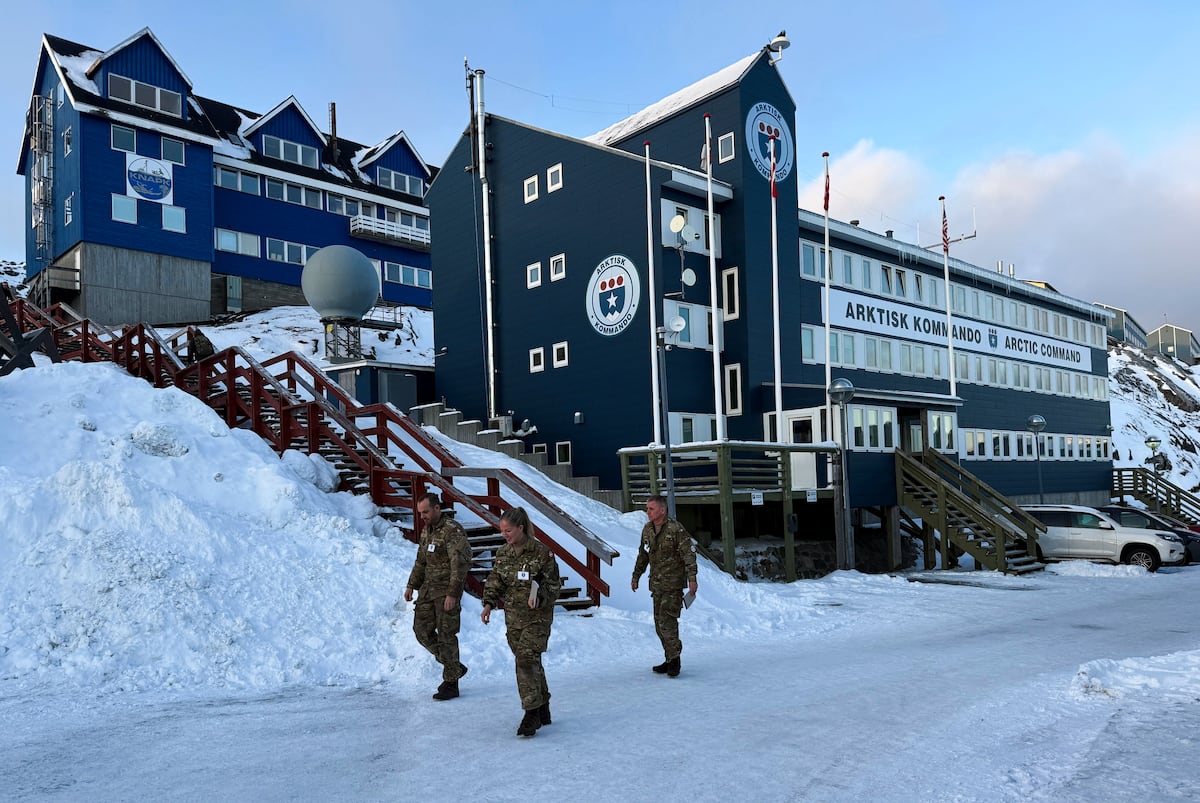
The NATO chiefs of defense meeting occurred against a backdrop of escalating trans-Atlantic tensions. Recently, Denmark reinforced its military presence in Greenland following demands from U.S. President Donald Trump regarding the island’s control. Trump had previously threatened tariffs against allies supporting Denmark’s position but later retracted these threats, citing ongoing negotiations.
Grynkewich explained that the meeting focused solely on military strategies for ensuring defense and deterrence within the Euro-Atlantic area. He remarked, “We, of course, are aware of the political discussions that are going on, but there was never a military dimension to those discussions that made its way down to us.”
In a lighter tone, Adm. Giuseppe Cavo Dragone, chair of the NATO Military Committee, described the meeting as “totally uneventful from this point of view, and totally swift.” Cavo Dragone added that NATO is awaiting specific directions regarding their Arctic involvement. “Once there is, we will start doing our business, which is the military planning and whatever is necessary to fulfill and to honor the guidance we still have to receive,” he stated.
The changing climate is transforming accessibility to the Arctic, making control over maritime routes increasingly vital for NATO and countries with ongoing maritime deterrence capabilities. Adm. Pierre Vandier, Supreme Allied Commander Transformation, highlighted the importance of considering “space and ballistic issues,” as global threats necessitate forward-thinking strategies.
Greenland’s strategic location is significant due to the Pituffik Space Base, where the U.S. operates radar systems as part of its missile early-warning infrastructure. The Arctic serves as a crucial corridor for missile trajectories from Russian launch sites to North America.
Grynkewich expressed concern over the growing collaboration between Russia and China in Arctic operations, noting increased maritime and aerial joint activities between the two nations in recent years. He reiterated earlier comments made in Sweden, emphasizing that NATO is prioritizing the Arctic and enhancing its operational capabilities in the region.
“Some of the things that we need to do in the Arctic to enhance our security are long lead items, including installation of new sensors and detection capabilities,” Grynkewich explained. He assured that NATO is continuously evaluating its posture to improve security and readiness in the Arctic.
NATO has several exercises planned for the Arctic in the upcoming months, although none will take place in Greenland itself. Grynkewich affirmed that NATO has “plenty of capacity here,” particularly in maritime and air operations, should the alliance be tasked with additional vigilance activities.
In conclusion, Grynkewich underscored the importance of regional allies, stating that Finland and Sweden have military capabilities that significantly contribute to NATO’s northern defense strategy. He expressed confidence in NATO’s readiness for any specific mission or ongoing operations in the Arctic, asserting, “We’re well postured.”