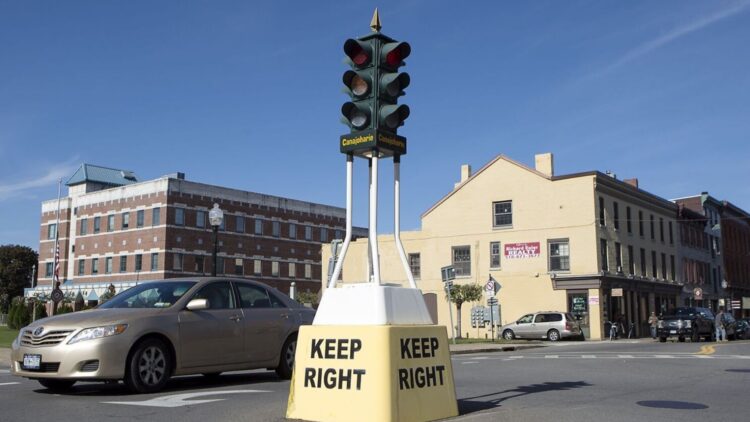
In a surprising twist of urban history, New York City is home to the oldest operating traffic lights in the United States, known as dummy lights. Installed around 1912, these nearly century-old signals are still in use, creating confusion among drivers accustomed to modern traffic control systems.
Traffic regulation in the U.S. has evolved significantly since the early 20th century. Before the advent of electric traffic signals, police officers manually directed traffic at busy intersections. As the volume of vehicles surged, this method became impractical, leading to the installation of the first electric traffic light in the U.S. in 1912. Initially featuring just a green and red light, the system later expanded to include a yellow warning signal, which was introduced in the 1920s.
Preserving Historical Significance
Despite advances in traffic management, several areas in New York still retain these historic dummy lights. Although they pose a safety risk due to their outdated design, local communities advocate for their preservation as symbols of historical significance. In towns like Beacon and Croton-on-Hudson in the Hudson Valley, residents have resisted efforts to remove these lights because they consider them vital to their community’s character.
In Canajoharie, located in the Mohawk Valley, old traffic lights were temporarily removed due to safety concerns over collisions and maintenance issues. However, community pressure led to their reinstatement in May 2023, highlighting the tension between safety and historical preservation.
The presence of these old signals often confuses drivers, particularly those unfamiliar with their operation. The outdated lights, with their less visible designs, increase the risk of accidents. In response to these concerns, local authorities have implemented safety measures. Enhancements include the application of reflective paint, the installation of taller bases, and the addition of warning signs to alert drivers to their presence.
Modernization vs. Tradition
Traffic lights have undergone significant changes over the decades. The introduction of the three-color system in the 1930s established a standardized method for traffic control, with green indicating go, yellow suggesting caution, and red signifying stop. While many cities have phased out older models in favor of more efficient systems, New York’s decision to maintain certain historic lights reflects a broader effort to balance modernization with the preservation of local heritage.
Although the outdated dummy lights operate on a similar color code to contemporary signals, the lack of clarity can still lead to misunderstandings. Unlike the blue traffic lights that remain in use in Japan, which have their own unique signaling system, the ambiguity of these old lights can create uncertainty for drivers.
As New York City navigates the complexities of maintaining its historical identity while ensuring road safety, the future of these iconic traffic lights remains a topic of discussion. Local communities continue to advocate for their preservation, underscoring the importance of history in shaping urban landscapes.