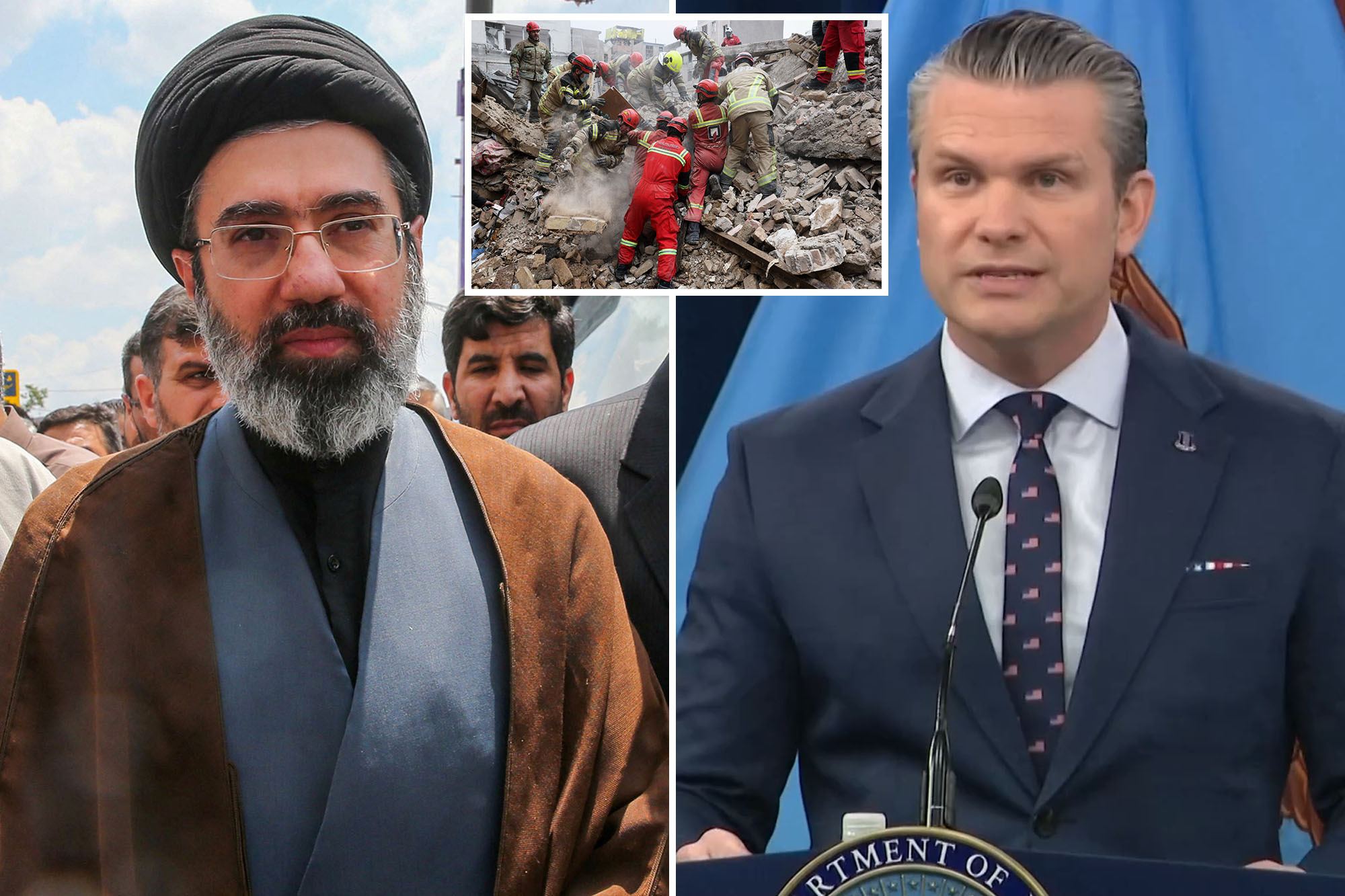
The U.S. Secretary of Defense, Pete Hegseth, made headlines on Friday by criticizing Iran’s leadership, stating that the new Supreme Leader, Mojtaba Khamenei, is “likely disfigured” and that Iranian officials have gone into hiding. During a press conference, Hegseth described the Iranian leadership as “desperate” and “cowering,” likening them to “rats” hiding underground.
Hegseth’s remarks come amid heightened tensions between the United States and Iran. He emphasized the lack of visibility from Khamenei, suggesting that while a written statement was issued, there was no accompanying voice or video message to substantiate it. “We know the new so-called not-so-supreme leader is wounded and likely disfigured,” he asserted, casting doubt on the stability of Iran’s current regime.
Despite Hegseth’s claims, reports from various news outlets indicate that many prominent Iranian leaders were actively participating in events in Tehran. On the same day, videos circulated online showing high-ranking officials, including President Masoud Pezeshkian, Foreign Minister Abbas Araghchi, National Security Adviser Ali Larijani, and Chief Justice Gholam-Hossein Mohseni-Ejei, marching in the streets for Quds Day, an annual event that highlights support for Palestine.
The apparent contradiction between Hegseth’s comments and the visible presence of Iranian leaders raises questions about the accuracy of assessments regarding the Iranian regime’s current state. While the U.S. maintains a critical stance toward Iran, the robust participation of its officials in public demonstrations suggests that the leadership may not be as fractured as suggested.
As tensions continue to escalate, the international community remains watchful. The implications of Hegseth’s statements reflect broader concerns regarding Iran’s internal stability and its relationships on the global stage. The U.S. administration’s comments may influence diplomatic efforts and public perceptions in the region, further complicating an already delicate situation.
In a landscape marked by uncertainty, the situation in Iran remains a focal point of interest for both regional and global actors. Further developments are anticipated as the dynamics of power and leadership in Tehran evolve.