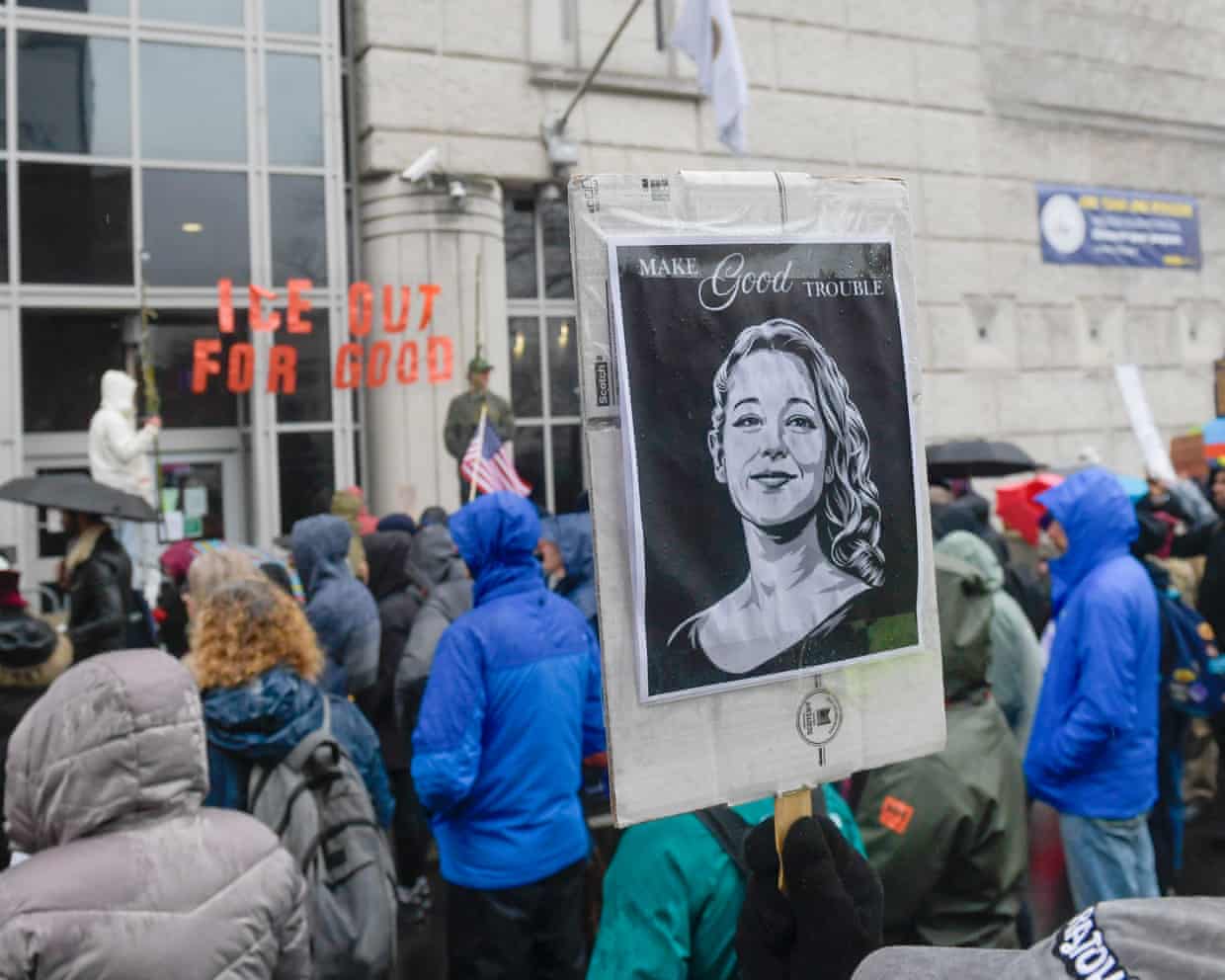
Demonstrations unfolded across the United States over the weekend, condemning the killing of Renee Nicole Good by Immigration and Customs Enforcement (ICE). On March 15, 2024, hundreds gathered in Philadelphia and other cities, demanding the agency’s removal from American communities and an end to U.S. military interventions in Venezuela. These protests were part of a larger movement, with over a thousand events planned nationwide in response to escalating tensions surrounding immigration enforcement.
In Philadelphia, two distinct marches made their way from city hall to the federal detention center. The morning protest, organized by the No Kings coalition, featured a predominantly older, white demographic. In contrast, the afternoon gathering, led by the local chapter of the Democratic Socialists of America (DSA), attracted a more racially diverse crowd, many wearing keffiyehs and N95 masks. Despite their different compositions, both groups united under a common cause.
“From Venezuela to Minneapolis, all we’re seeing is a regime that is scrambling, willing to kill its own citizens, willing to kill foreign citizens, to maintain its power,” remarked Deborah Rose Hinchey, co-chair of the city’s DSA chapter. The protests followed the tragic shooting of Good in Minneapolis, which had intensified public outrage against ICE.
The demonstrations were fueled by a series of recent incidents involving ICE, including three shootings in a single week. Good’s death, which occurred shortly after the Trump administration’s controversial move against Nicolás Maduro, Venezuela’s president, has prompted an outpouring of anger and calls for justice. The DSA had declared March 15 a national day of action, coinciding with events organized by groups such as Indivisible and the American Civil Liberties Union (ACLU).
In cities like Boston, San Francisco, and Portland, protesters displayed similar fervor, chanting slogans such as “Fuck ICE” and calling for accountability. The Minneapolis protests saw large crowds demanding justice for Good, with some attendees numbering in the thousands. Local lawmakers, including Ilhan Omar and Tim Walz, attempted to gain access to the ICE facility in Minneapolis but were denied entry, raising further questions about transparency and accountability within the agency.
Tensions escalated in Hartford, Connecticut, where vehicles suspected to be operated by ICE agents reportedly drove into a crowd of protesters, resulting in arrests. In Minnesota, clashes between law enforcement and demonstrators led to multiple arrests, including 30 individuals accused of property damage during Friday night protests.
In Philadelphia, police did not intervene during the protests, which allowed for a peaceful expression of dissent. Participants expressed concern about the broader implications of ICE’s actions. Anna, a history teacher, noted the impact of Good’s death on her predominantly Black student population. “They see this and realize there’s just another force out there,” she said, highlighting the pervasive anxiety surrounding systemic violence.
Longtime activist Ellen shared her frustration over ICE’s historical actions in Philadelphia, stating, “It’s been years and years since they have been committing outrageous acts against our friends and neighbors.” The feelings of outrage were echoed by Mary, who connected her Jewish heritage and Holocaust studies to the current climate of political violence.
Protesters criticized the allocation of funds towards immigration enforcement, emphasizing the need for resources to address basic human needs such as housing and healthcare. “Until we have every child fed and housed, there’s no reason to put any money into immigration enforcement,” stated Cara, a participant in the Philadelphia march.
The stark contrast between government spending on immigration enforcement and social services has become a focal point for many activists. Francesca, a DSA member, articulated the growing discontent, saying, “Things are piling up… there’s only so much people can take of this.”
Organizers of the protests believe that the ongoing violence and perceived injustices will continue to galvanize public dissent. “The more the American public sees exactly what this totalitarian dictatorship and regime is doing, the more we’re going to see days like today… with thousands of people in the street,” Hinchey concluded, reinforcing the notion that activism will persist as long as these issues remain unresolved.