Nationwide protests in Iran against the ruling theocracy have intensified, leading to a reported death toll of at least 116 individuals as of Sunday, according to activists. Demonstrations have spread across major cities, including the capital, Tehran, and Mashhad, marking more than two weeks of unrest sparked by economic grievances and calls for political reform.
With the internet disrupted and phone communications severely limited, monitoring the protests from outside Iran has become increasingly challenging. The Human Rights Activists News Agency, a U.S.-based organization, has reported that over 2,600 protesters have been detained amid escalating violence. Concerns are growing that the lack of information may embolden hard-liners within Iran’s security forces to implement a severe crackdown on dissent.
On social media, U.S. President Donald Trump expressed his support for the protesters, stating, “Iran is looking at FREEDOM, perhaps like never before. The USA stands ready to help!!!” Reports from major U.S. media outlets, including The New York Times and The Wall Street Journal, have indicated that Trump has been presented with military options to respond to the situation, although no final decision has been made.
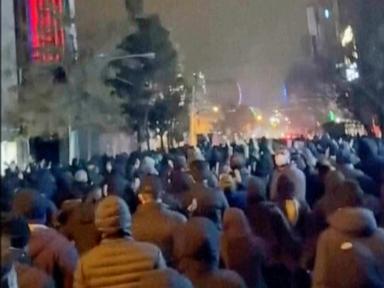
Video footage purportedly originating from Iran shows demonstrators gathering in the northern Tehran neighborhood of Punak. Protesters were seen waving their mobile phones, banging metal objects, and lighting fireworks in defiance of the authorities. In Mashhad, approximately 725 kilometers (about 450 miles) northeast of Tehran, videos depicted clashes between protesters and security forces, with debris set ablaze in the streets.
The protests have also spread to Kerman, located around 800 kilometers (about 500 miles) southeast of Tehran, further indicating the widespread discontent across the nation. As unrest continues, Iranian state television has attempted to portray calm in various cities, excluding major protest locations such as Tehran and Mashhad, while also highlighting pro-government demonstrations in places like Qom and Qazvin.
In a stark warning, Iran’s attorney general, Mohammad Movahedi Azad, declared that participants in the protests would be labeled as “enemies of God,” a charge that carries the death penalty. This statement signals a potential for a heightened crackdown on dissenters, as the Iranian government has restricted internet access and international calls since Thursday.
Exiled Iranian Crown Prince Reza Pahlavi, who has called for protests, encouraged demonstrators to take to the streets and reclaim public spaces using national symbols from the pre-1979 era. His call has resonated with some segments of the population, although it remains unclear whether the support for the shah reflects a desire for his return or a broader rejection of the current regime.
The demonstrations began on December 28, 2023, in response to the collapse of the Iranian rial, which has plummeted to over 1.4 million to $1. The economic crisis, exacerbated by international sanctions related to Iran’s nuclear program, has fueled widespread dissatisfaction with the government.
As the protests continue, the situation in Iran remains volatile, with the potential for further violence as authorities respond to the growing calls for change. The international community watches closely, concerned about the implications for both human rights and regional stability.