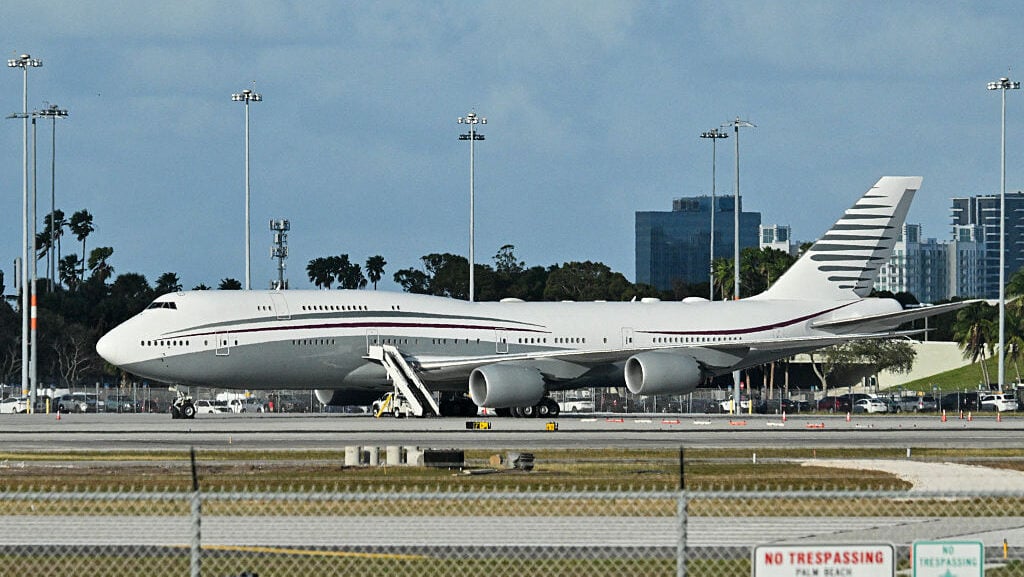
A Boeing 747 jetliner, donated by the Qatari government, is on track to function as an interim Air Force One during the summer of 2026. Officially designated as the “VC-25 bridge aircraft,” this jet was accepted by the U.S. government in May 2023, with modifications commencing in September. The rapid transformation of this aircraft into a flying command center is notable, given the typical timeline for such military upgrades.
According to an Air Force spokesperson, the service is committed to expediting the delivery of the VC-25 bridge aircraft to support the presidential airlift mission. The anticipated delivery date is set for no later than summer 2026. This aircraft will serve as an interim solution while two other 747s, currently being modified by Boeing, face delays.
Context of the Donation and Modification
The Trump administration has positioned the Qatari jet as a necessary stopgap to facilitate presidential travel, particularly as the modifications for the new Air Force Ones are delayed. President Trump has characterized the donation as a “GIFT, FREE OF CHARGE” to the Defense Department, emphasizing the illogicality of declining such an offer. The initial report of the aircraft’s delivery timeline was published by the Wall Street Journal.
Despite the public scrutiny surrounding the donation, including concerns about potential corruption, Trump’s administration has defended the acquisition. The Air Force, meanwhile, has classified much of the work being done on the Qatari aircraft, complicating the transparency surrounding its capabilities and limitations. Defense contractor L3Harris has reportedly been selected to carry out the militarization of the plane, although the company has not confirmed its involvement.
Financial Implications and Future Plans
In a recent congressional testimony, Air Force Secretary Troy Meink estimated that modifications on the Qatari jet would cost “less than $400 million.” This funding is being redirected from the Sentinel Intercontinental Ballistic Missile (ICBM) project. In contrast, Boeing’s contract for the new Air Force Ones is valued at approximately $3.9 billion, with the company facing significant financial setbacks amounting to over $2 billion due to delays associated with this program.
The Air Force’s expectation for the first Boeing jet’s delivery has now been pushed to mid-2028, a delay of nearly four years from initial projections. To support ongoing operations, the service recently announced plans to acquire two additional 747s from Lufthansa for training and spare parts purposes. The existing Air Force Ones, known as VC-25A, have been in service for over 30 years, and their age has led to frequent maintenance issues.
On a recent trip to the World Economic Forum in Davos, Switzerland, an incident involving the VC-25A prompted a U-turn over the Atlantic due to a “minor electrical issue.” Following this, President Trump departed the aircraft and continued his journey on an Air Force C-32.
The transition to using the Qatari 747 as an interim Air Force One highlights both the urgency and complexity of presidential air travel, underscoring the significant operational and financial challenges facing the U.S. Air Force in maintaining a reliable fleet for the president’s use.