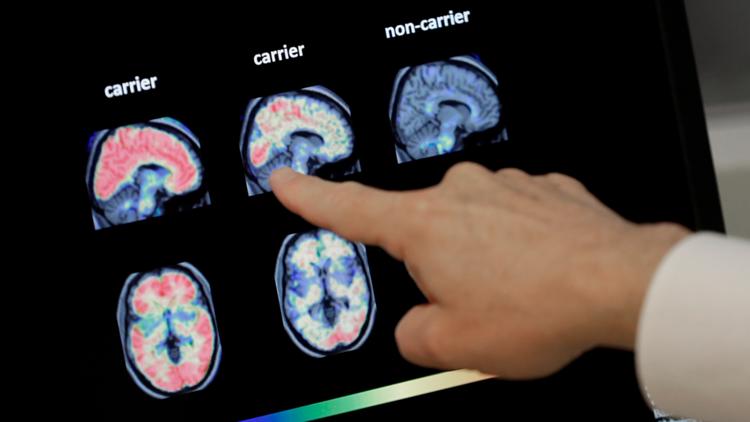
A collaborative study led by researchers at University Hospitals, Case Western Reserve University, and the Cleveland VA has made a significant breakthrough by reversing advanced Alzheimer’s disease in mice. This pioneering research challenges the long-standing belief that Alzheimer’s is irreversible. The findings were published in the journal Cell Reports Medicine.
Researchers achieved full cognitive recovery in mice by restoring the brain’s energy balance, primarily through the manipulation of a cellular energy molecule known as NAD+. This molecule naturally declines with age and drops even more significantly in the brains of Alzheimer’s patients. Dr. Andrew Pieper, director of the Brain Health Medicines Center at University Hospitals and senior author of the study, expressed optimism about the implications of this research. He stated, “The effects of Alzheimer’s disease may not be inevitably permanent. The damaged brain can, under some conditions, repair itself and regain function.”
The team utilized a compound called P7C3-A20, developed in Dr. Pieper’s lab, to stabilize NAD+ levels in two different mouse models of Alzheimer’s disease. The results were notable; not only did the mice halt disease progression, but they also fully recovered their cognitive functions. This approach is particularly unique as it operates independently of current amyloid-targeting therapies that have dominated Alzheimer’s treatment discussions.
Dr. Pieper highlighted the distinctiveness of their method, stating, “It’s independent of the amyloid approach which is being championed right now by a lot of people in the Alzheimer’s community. It could work on its own, potentially, and may also complement existing therapies.”
Unlike over-the-counter NAD+ supplements, which may elevate NAD+ levels to potentially dangerous heights, the compound used in this study stabilizes NAD homeostasis without exceeding normal physiological levels. Dr. Pieper likened this to maintaining a steady gas tank in a car, ensuring the brain remains prepared to handle challenges.
The research team has since established a company named Glengary Brain Health to facilitate the transition of this treatment towards human trials. While the compound has demonstrated effectiveness in mice and has shown no safety issues in studies lasting up to a year in monkeys, it requires further chemical modifications before undergoing human testing. Dr. Pieper anticipates having a version ready for phase one safety trials within approximately 18 months.
The implications of this research extend beyond Alzheimer’s disease. Dr. Pieper suggests that the approach may also be beneficial for various forms of neurodegeneration and dementia, including conditions resulting from traumatic brain injuries. “We view Alzheimer’s as the biggest problem. It’s an emergency, if you will, for our species,” he remarked, emphasizing the urgency of addressing brain health on a broader scale.
Despite the promising results in animal models, Dr. Pieper cautioned that success in mice does not guarantee similar outcomes in humans. He stated, “Alzheimer’s is a uniquely human condition, and we do our best to model it in mice. There is no guarantee that what works in mice is what works in people.”
For individuals at risk of developing Alzheimer’s, Dr. Pieper recommends considering early treatment if the compound receives approval. He stated, “As soon as you know you are at risk for Alzheimer’s disease, it would probably make sense to start taking this.” Early intervention is crucial, as research indicates that the brain constantly works to combat the condition until it ultimately succumbs.
While awaiting potential treatments, Dr. Pieper advises people to adopt lifestyle changes that promote brain health. These changes include getting sufficient sleep, following a Mediterranean or MIND diet, regulating blood pressure, engaging in moderate physical activity, and maintaining social connections. “It’s critically important that we all control our blood pressure within the normal range,” he noted, explaining the significance of the blood-brain barrier for long-term brain health.
Dr. Pieper also emphasized the broader impact of Alzheimer’s on caregivers, stating, “Alzheimer’s and diseases like it affect not just the patient but everyone caring for them. It’s important for caregivers to take care of their own physical and mental health throughout this process.” He recommended resources like Hilarity for Charity, an organization established by comedian Seth Rogen to support caregivers.
This research marks a pivotal shift in the understanding and treatment of Alzheimer’s disease, with Dr. Pieper concluding, “This is the first time anybody’s ever shown that the brain can recover from an advanced dementia-like disease. We’re really excited about what we found.” As the scientific community looks ahead, the potential for new treatments offers a glimmer of hope for those affected by this challenging condition.