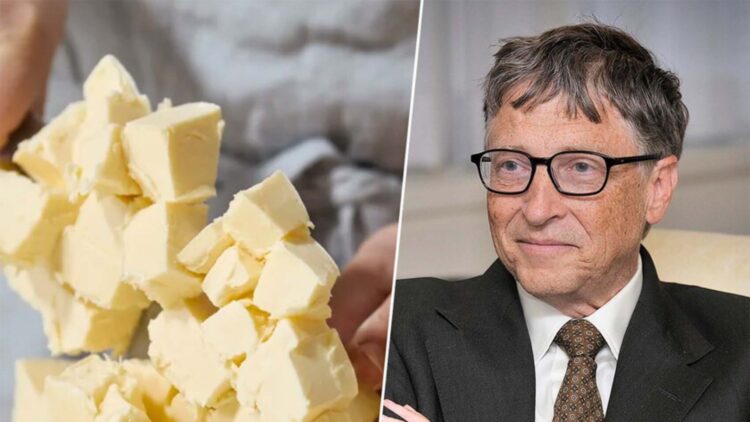
A groundbreaking development in food technology has emerged with the introduction of lab-made butter that claims to replicate the taste and texture of traditional butter, but without the environmental impact associated with conventional dairy farming. This innovative product, developed by the company Savor and backed by Bill Gates and Orca Sciences, utilizes advanced biochemical processes to create edible fats from carbon dioxide (CO2) and hydrogen derived from water.
Innovative Production Process
The production method for this new butter is notable for its sustainability. Researchers from the University of California, Irvine published their findings in the journal Nature Sustainability, revealing that this process emits less than one-third of the CO2 emissions generated by traditional agriculture. Lead author Steven Davis emphasized that this method could significantly reduce greenhouse gas emissions while preserving biodiversity.
According to Davis, the synthesis of food without conventional agricultural materials has the potential to alleviate competition for resources between ecosystems and farming. He explained, “The synthesis of food without agricultural raw materials could prevent enormous amounts of emissions and protect the planet’s biodiverse lands.”
The technology converts CO2 from the atmosphere and hydrogen from water into fats that are chemically identical to those found in traditional butter. This innovative approach eliminates the need for livestock, pasture, and the associated emissions from animal husbandry.
Future Implications and Economic Impact
At present, the technology used to create this lab-made butter is costly. However, researchers are optimistic that as production scales up, the costs will decrease, making it a viable option in the near to medium term. Davis noted that fats can be produced efficiently under high pressures and temperatures, indicating a promising future for this technology.
The potential for such innovations extends beyond butter; Savor is also investigating the production of fats that mimic those found in meat, milk, and palm oil. The overarching goal is to create food products that do not rely on conventional agricultural practices, thereby reducing the environmental footprint of food production.
Gates, a prominent advocate for sustainable food systems, has highlighted the benefits of this method on his blog. He stated that this production technique “does not release greenhouse gases and uses less than one-thousandth of the water required by traditional agriculture.” He asserted that it is a “sustainable, scalable, and delicious” alternative to conventional butter, maintaining that “it tastes just as good as the real thing because chemically, it is.”
As the conversation around sustainable food production continues to gain traction, the emergence of lab-produced butter marks a significant milestone. If successful, it may pave the way for a future where food can be produced without compromising the environment, significantly impacting global food systems and climate change efforts.