The ongoing conflict with Iran is emerging as a significant economic challenge for the United States, complicating the Federal Reserve’s monetary policy decisions. As oil prices surge and supply chains face disruptions, the implications for inflation and the labor market are becoming increasingly complex.
Recent data indicates that gasoline prices have reached their highest level since September 2024, averaging $3.32 per gallon, as reported by AAA. In parallel, U.S. crude oil prices logged their largest weekly gain on record in data dating back to 1983, suggesting that consumers may face even higher costs in the near future. This situation arises as the Federal Reserve grapples with signs of a weakening labor market. According to the Bureau of Labor Statistics, the U.S. economy lost 92,000 jobs in February 2024, with previous months’ data also revised downward by 69,000 jobs.
Rising oil prices and shipping disruptions primarily stemming from the conflict in Iran threaten to exacerbate inflationary pressures, which are already above the Fed’s target of 2%. This scenario presents a classic economic dilemma known as stagflation, where inflation rises alongside slowing growth. Gregory Daco, chief economist at EY, noted that the combination of weak job data and geopolitical instability complicates the Fed’s objectives. “The February report and latest geopolitical developments complicate the Fed’s job by raising risks on both sides of the dual mandate,” Daco stated.
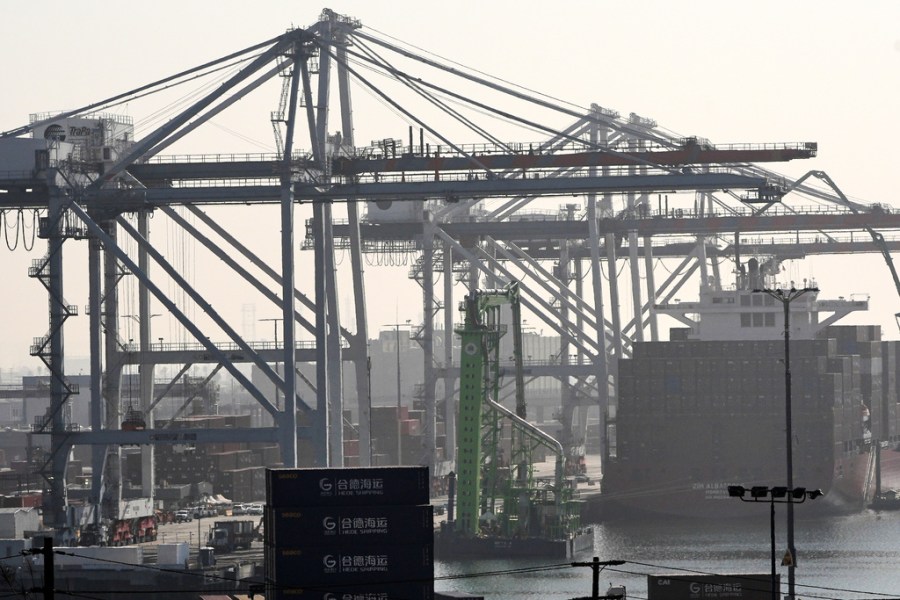
The Strait of Hormuz, a vital shipping route for approximately one-fifth of the world’s oil supply, remains a focal point of concern. Disruptions in this area can have cascading effects on global supply chains, leading to increased freight costs and delayed deliveries of essential goods. Goldman Sachs has indicated that the risks to crude oil prices are growing rapidly. If disruptions continue, prices might exceed $100 per barrel, which would likely translate to higher gasoline costs for consumers.
Typically, every $1 increase in oil prices results in approximately $0.02 to $0.03 per gallon at the pump, highlighting the potential for sustained increases in fuel costs. Stephen Brown, deputy chief North America economist at Capital Economics, emphasized that even if oil prices stabilize, it may be challenging for the Federal Reserve to justify further interest rate cuts without clear evidence that inflation is moving back towards the 2% target.
Policy Responses and Economic Implications
Federal Reserve officials are closely monitoring the evolving situation. San Francisco Federal Reserve President Mary Daly acknowledged that February’s weak job data adds to an already challenging policymaking environment, underscoring the need for a “balance of risks calculation.” Some Fed officials, however, believe that the inflationary impact from the Iran conflict may ultimately be temporary. Federal Reserve Governor Christopher Waller expressed that policymakers are unlikely to overreact to rising gas prices in the short term.
The economic stakes extend beyond just fuel prices. President Donald Trump has made affordability a cornerstone of his agenda, and a significant rise in inflation could hinder his message as the November midterm elections approach. Lower gas prices had previously provided relief to consumers grappling with rising costs for essentials like groceries and housing. As Trump attempts to stabilize oil markets with proposals for maritime risk insurance and naval escorts through the Strait of Hormuz, these measures have yet to alleviate market volatility.
In a recent interview, Trump stated, “I don’t have any concern about it. [Gas prices] will drop very rapidly when this is over.” Yet, for policymakers, the potential for rising inflation could necessitate maintaining higher interest rates for an extended period, affecting borrowing costs for consumers. Joe Bruselas, chief economist at RSM, remarked that the Fed’s response might face significant pressure, with the risk of stagflation looming large. “The risk of stagflation permeates … and all eyes will continue to be focused on the direction of energy prices.”
The combination of rising energy prices, weakening labor market indicators, and geopolitical tensions signals a turbulent economic landscape ahead. As the Federal Reserve navigates these challenges, the implications for consumers and policymakers alike are profound, indicating that careful monitoring and strategic responses will be essential in the coming months.