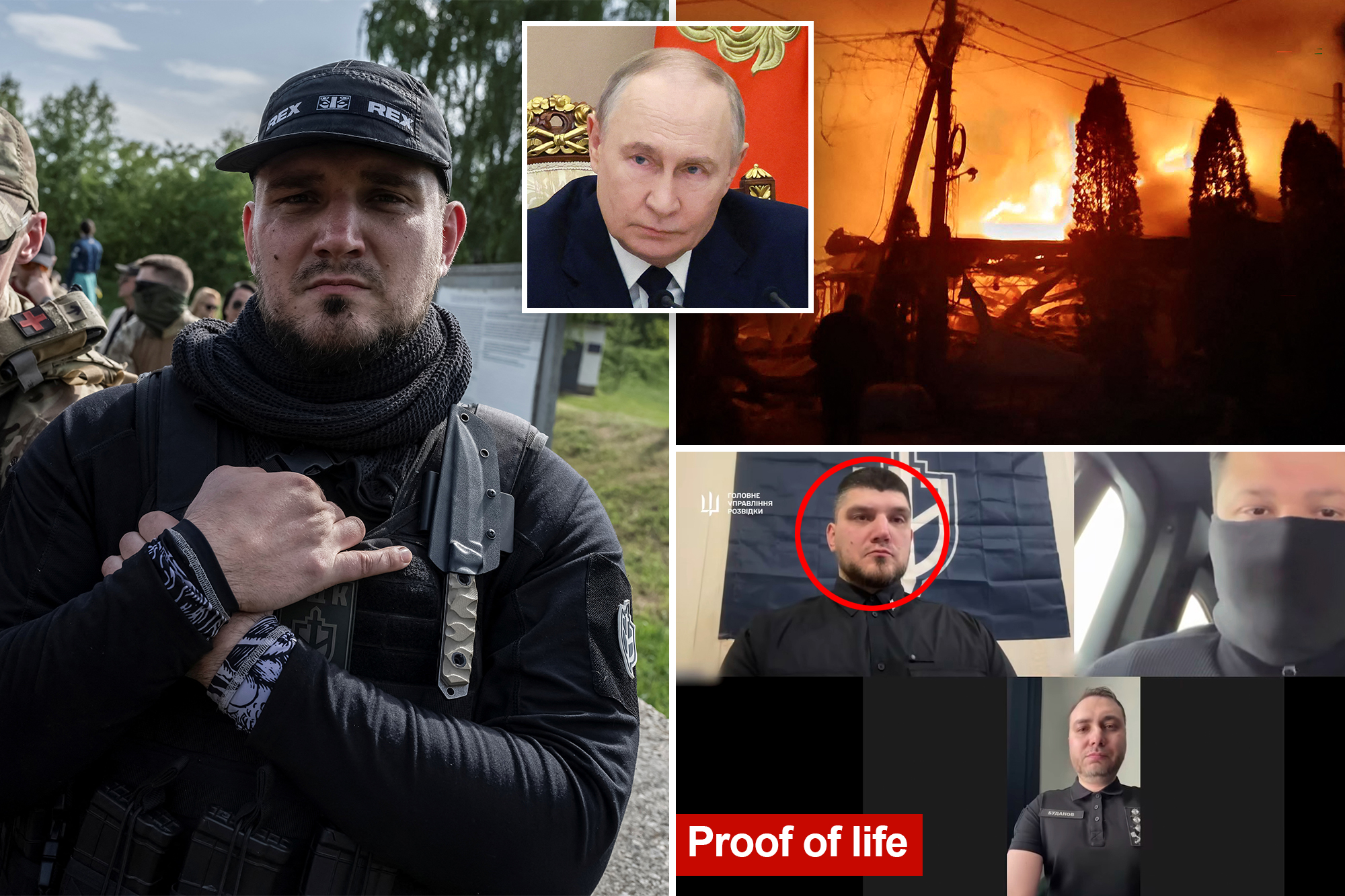
The Kremlin’s hope for a significant victory turned into a costly blunder when a $500,000 bounty it paid for the assassination of a prominent anti-Putin Russian resulted in inadvertently funding the very conflict it seeks to win. Denis Kapustin, known as “White Rex,” was reported dead on December 27, 2022, following an alleged Ukrainian drone strike. Days later, it was confirmed that he was alive, rendering the Kremlin’s payout a direct financial boost to Ukrainian efforts.
Kapustin, a far-right militant and founder of the pro-Ukrainian Russian Volunteer Corps (RDK), had been on Russian intelligence agencies’ radar for years. His organization was established in August 2022 with the goal of overthrowing Russian President Vladimir Putin and promoting peace in Russia. The Russian government had previously issued a bounty on Kapustin, recognizing him as one of its most wanted enemies due to his roles in cross-border raids into Russian territory.
Upon the announcement of his supposed death, the RDK confirmed the news, promising to avenge their leader. “We will definitely take revenge, Denis,” the group stated on Telegram, asserting that his legacy would continue. However, on January 1, 2023, Kapustin re-emerged in a video released by Ukraine’s military intelligence agency, the HUR. General Kyrylo Budanov welcomed him back, noting, “I am glad that the money allocated for your assassination was used to support our struggle.”
The RDK later confirmed that the funds intended for Kapustin’s assassination had indeed been redirected to support their operations. The Ukrainian commander reported that Kapustin remains active in Ukrainian territory, preparing for further missions against Russian forces.
Kapustin, who moved to Germany with his family at the age of 17, relocated to Ukraine in 2017. He played a pivotal role in forming units that later became part of Ukraine’s 3rd Assault Brigade, instrumental in the defense of Kyiv during the early weeks of Russia’s full-scale invasion. The 3rd Army Corps acknowledged their collaboration in the fight against a common enemy, emphasizing Kapustin’s commitment to Ukraine as a place of resistance and freedom.
Russia has labeled the RDK a terrorist organization, sentencing Kapustin in absentia to life imprisonment for charges including treason and terrorism. Despite this, the group has executed significant operations within Russia, including a notable incursion in March 2024, where they engaged Russian security forces and captured soldiers.
At the same time, the ongoing conflict continues to escalate, with Ukraine launching drone attacks across several Russian regions. Reports indicated strikes in Krasnodar, Tatarstan, and Kaluga, targeting energy and industrial sites. In Krasnodar, a fire broke out at the Ilskiy oil refinery, while an energy storage site in Almetyevsk was also hit.
As the new year unfolded, both sides exchanged accusations of civilian attacks. Russia reported a deadly strike on a hotel in occupied southern Ukraine, while Ukrainian officials insisted their strikes focus primarily on military and energy infrastructure. In Kherson, local authorities reported casualties from attacks, including the death of a man and injuries to an elderly woman.
While Russia’s intelligence agencies, including the FSB and GRU, are known for their ruthlessness, Ukrainian intelligence has demonstrated a remarkable ability to outmaneuver them. In November, Ukrainian operatives reportedly used Russian agents against their own interests, leading to significant sabotage operations.
As the conflict approaches its 1,409th day, the dynamics of warfare remain complex. The recent backfire on the Kremlin illustrates the unpredictable nature of the ongoing war, showcasing how intelligence and operational errors can shift the balance in this protracted struggle.