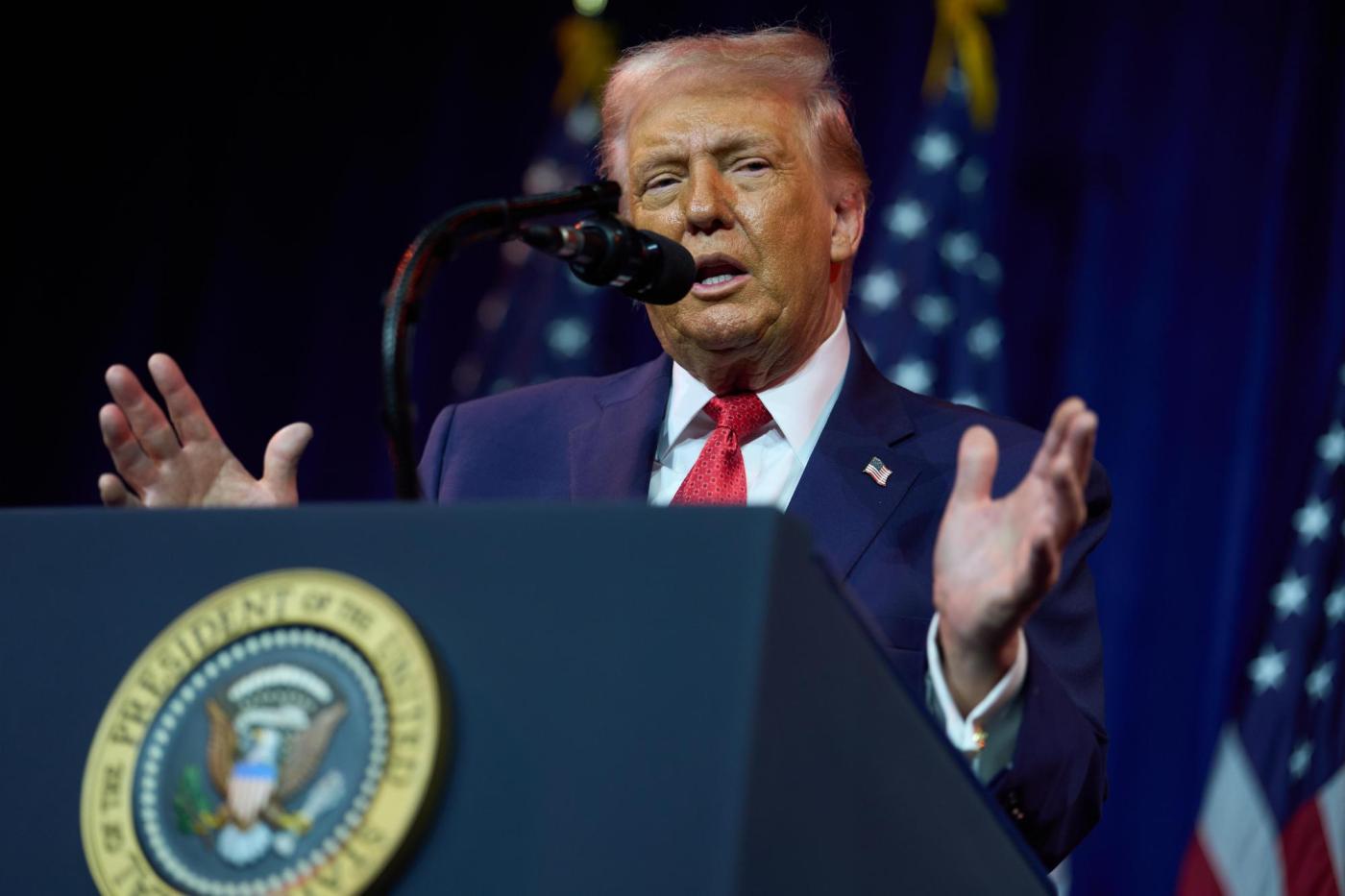
As the Supreme Court prepares to make a significant ruling on tariffs, President Donald Trump is actively promoting his administration’s tariff policies. During a recent retreat with House Republicans, Trump claimed that tariffs have bolstered American national security and generated substantial revenue for the country. He stated, “We’re getting rich because of tariffs, by the way,” and projected that tariffs could bring in over $650 billion soon.
Trump’s enthusiasm for tariffs comes just ahead of the Supreme Court’s decision regarding his authority under the International Emergency Economic Powers Act. The court heard oral arguments in early November 2023 but has yet to announce a ruling date. Analysts speculate that a decision could be forthcoming, possibly as early as this Friday.
Economic Implications of Tariffs
Economists are closely monitoring Trump’s assertions about tariffs and their economic impact. James Knightley, chief international economist at ING, remarked that the President’s push for tariffs appears to be a concerted effort to influence the Supreme Court. Knightley noted that while countries have entered trade agreements with the U.S., the implications of a ruling against the administration could leave many questions unanswered.
“They’re not the people that actually pay the tariff,” Knightley explained, emphasizing that it is the importing U.S. companies that bear this cost. American consumers ultimately face some of these expenses. A recent study by economists from Harvard University and the University of Chicago revealed that 94% of the tariffs are passed on to U.S. firms.
Despite these tariffs, the overall impact on consumer prices has remained limited. The latest consumer price index recorded an annual inflation rate of only 2.7%. The effective tariff rate now stands at about 18%, a significant rise from around 2.5% prior to Trump’s tariff announcements; however, the realized rate is closer to 11%.
Future of Tariffs and Consumer Impact
Concerns persist regarding the potential for importing businesses to find ways to evade tariffs. Knightley suggested that customs officials may be overwhelmed, making it challenging to enforce regulations effectively. Businesses are adapting by altering supply chains to mitigate tariff impacts.
“There is this anxiety about what tariffs mean for household finances and spending power,” Knightley stated. He noted that while economists feared greater repercussions, the actual effects have not been as severe as anticipated.
Federal Reserve Chair Jerome Powell indicated that the inflationary effects of tariffs might peak in the first quarter of 2024 unless new announcements are made regarding additional tariffs. Mark Hamrick, senior economic analyst at Bankrate, described tariffs as a one-time price adjustment for consumers, likening them to a new tax burden on Americans.
“There’s no way that you can construct an argument that says tariffs are a solution for affordability challenges,” Hamrick remarked, highlighting that while the administration emphasizes revenue generation, tariffs ultimately function as a tax.
Both Knightley and Hamrick referenced the potential for $2,000 tariff rebate checks proposed by the administration. However, they expressed skepticism about the feasibility of these checks. Knightley suggested that such rebates would likely be abandoned if the Supreme Court rules against the tariffs, while Hamrick pointed out that Congress controls the purse strings and may not be inclined to issue refunds.
Additional factors are also influencing the affordability landscape for Americans. Knightley noted that lower energy prices and reduced housing rents could ease some financial pressures, although stagnant wage growth might hinder overall improvements in purchasing power. He concluded that while tariffs have not been beneficial for American consumers, they have not been as detrimental as initially feared.
As the nation awaits the Supreme Court’s decision, the ongoing debate over tariffs continues to shape economic discussions across the country.