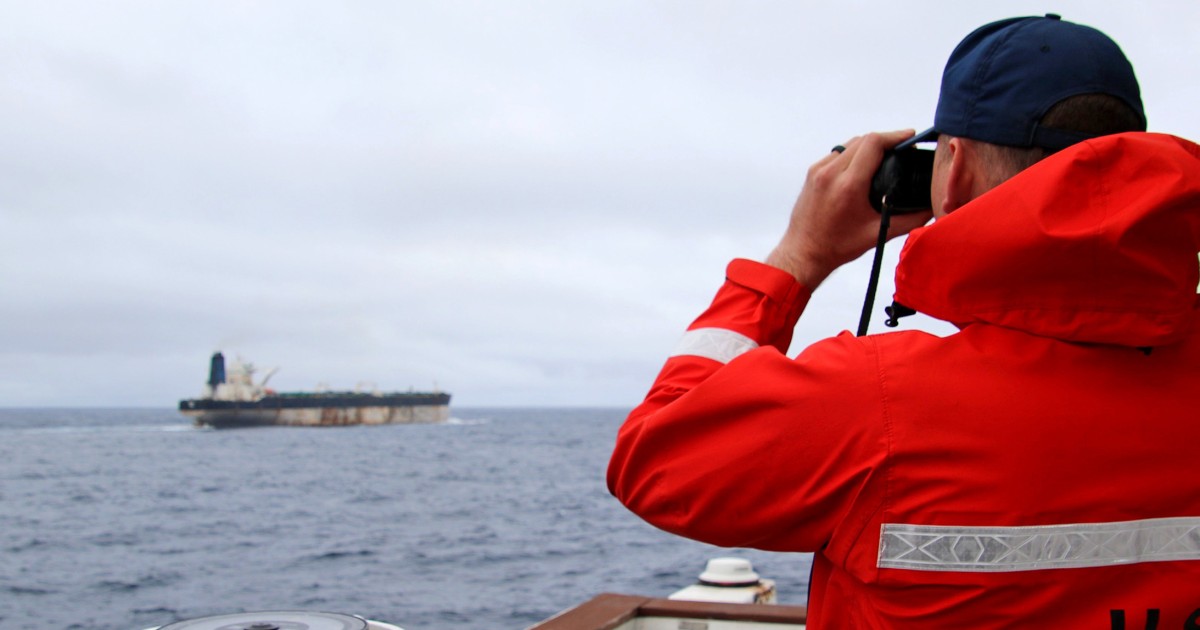
The United States has escalated its pressure on Russia’s economy by seizing the Russian-flagged oil tanker Bella 1 in the North Atlantic. This operation, which began with a high-seas pursuit off the coast of Venezuela, has been condemned by Moscow as a “gross violation” of maritime law. The Russian Foreign Ministry expressed “regret and concern” over the U.S. actions, warning of potential international crisis situations arising from Washington’s decisions.
The seizure of the Bella 1 comes at a time when the Kremlin is navigating a complex geopolitical landscape, particularly in relation to its ongoing conflict in Ukraine. The U.S. operation has highlighted the role of a so-called shadow fleet, which has been instrumental in maintaining Russia’s oil exports despite significant international sanctions. This fleet helps to sustain President Vladimir Putin‘s economy amid ongoing military investments.
Details of the Seizure
The U.S. Department of Justice confirmed the operation took place on Wednesday, following weeks of tracking the vessel. The Bella 1 had allegedly changed its name to Marinera and hoisted a Russian flag after evading a U.S. blockade of Venezuela. According to maritime analysts, the tanker was listed on U.S. sanctions lists since June 2024, serving as a “poster child” for shadow fleet operations. Richard Meade, editor-in-chief of Lloyd’s List Intelligence, described its operations as emblematic of the shadow fleet’s activities, which often involve using false identities and engaging in ship-to-ship transfers to obscure the origins of the oil.
The International Maritime Organization’s ship registry indicates that the tanker is owned by Burevestmarine LLC, a company based in Russia’s Ryazan region. The company is registered in Russia’s state commercial registry with Ilya Bugai listed as its director. Attempts to reach Bugai for comment were unsuccessful.
Impact on Russian Oil Exports
Russia has increasingly relied on its shadow fleet to sell discounted oil to allies, which is vital for sustaining its economy amid ongoing sanctions following its invasion of Ukraine. The Kyiv School of Economics recently reported that in November alone, 173 tankers from the shadow fleet departed Russian ports, engaging in cargo transfers at sea. Ukrainian President Volodymyr Zelenskyy has long called for stronger international action against this fleet, asserting that it is used to finance the ongoing war.
The seizure of the Bella 1, while significant, may not fundamentally disrupt the Russian economy. However, it complicates the Kremlin’s situation and raises uncertainties regarding the future of other tankers operating under similar circumstances. Notably, at least three additional sanctioned oil tankers were reported to have changed their flags to Russian in recent weeks.
Meade noted that Russia is taking more direct control over its export capabilities, indicating a rapid increase in the number of shadow fleet vessels operating under the Russian flag. This raises the question of whether operators will feel secure moving to Russian-controlled vessels following the U.S. seizure.
The ongoing U.S. enforcement actions will play a crucial role in determining the efficacy of countering Russia’s shadow fleet operations. Meade stated, “We don’t know whether this was an anomaly or the start of a pattern of more robust enforcement.”
Responses from Russia regarding the seizure have been measured. While some lawmakers labeled it as “piracy on the high seas,” the Foreign Ministry has called for humane treatment of the crew and urged the U.S. to adhere to international maritime norms. Notably, there has been no direct response from President Putin or his spokesperson.
The Kremlin’s reluctance to escalate tensions may be tied to ongoing negotiations for peace in Ukraine, where U.S. actions could potentially influence diplomatic dynamics. The removal of Venezuelan President Nicolás Maduro represents a significant setback for Moscow, which has relied on Maduro as an ally.
As the geopolitical landscape continues to evolve, the implications of the U.S. seizure of the Bella 1 extend beyond immediate economic impacts, influencing the dynamics of power and influence in the region. The focus on Venezuela may serve as a distraction from ongoing challenges in the Ukraine conflict, while also reinforcing the idea of spheres of influence that both the U.S. and Russia seek to maintain.