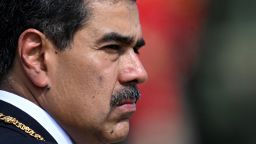
Nicolas Maduro, the Venezuelan president, has consistently defied expectations since he assumed power in April 2013. Despite widespread ridicule and skepticism about his leadership abilities, Maduro remains one of the longest-serving leaders in Latin America, having held office for over twelve years. His political journey has been characterized by significant challenges, including economic collapse, voter dissatisfaction, and international isolation.
Maduro’s ascent to power was largely influenced by his predecessor, the late Hugo Chávez. Chávez publicly endorsed him just hours before his death in December 2012, declaring, “choose Nicolás Maduro” if he was unable to continue as president. This endorsement came during a tumultuous time when Maduro had only minority support within the United Socialist Party of Venezuela (PSUV). Critics often label his decisions as eccentric, coining the term “maduradas” to describe his unusual statements and actions.
Despite predictions of his imminent political failure, Maduro has managed to navigate through crises that have led to the loss of millions of Venezuelans and a staggering 72% decline in the country’s economy. The situation in Venezuela has deteriorated significantly, with the economy reduced to a fraction of its size prior to Maduro’s presidency. According to the International Monetary Fund (IMF), the Venezuelan economy is currently only 28% of what it was in 2013.
Political Survival and Controversies
Maduro’s political survival has been fraught with controversy. His administration has faced numerous allegations of electoral fraud, human rights violations, and repression of dissent. In the April 2013 elections, Maduro won by a mere 1.59% against opposition leader Henrique Capriles, raising suspicions about the legitimacy of the electoral process. Subsequent elections have continued to be marred by allegations of fraud and manipulation, with international observers and opposition parties questioning their transparency.
The United Nations and the International Criminal Court (ICC) have documented numerous human rights violations under Maduro’s regime. Reports indicate that the Venezuelan government has engaged in systematic abuses, including excessive force against protesters, arbitrary detentions, and extrajudicial executions. In a 2020 report, the UN concluded that there were reasonable grounds to believe that authorities had planned and executed large-scale human rights violations since 2014.
In response to international scrutiny, Maduro has often resorted to an anti-imperialist narrative, framing external criticism as part of a broader conspiracy against Venezuela. This rhetoric has resonated with some segments of the population, allowing him to maintain a degree of support despite the country’s dire economic situation.
Challenges Ahead and International Relations
Maduro’s government continues to face immense pressure, both domestically and internationally. The recent U.S. military presence in the Caribbean has intensified scrutiny of his administration and raised fears of potential intervention. U.S. policies aimed at weakening Maduro’s grip on power have included economic sanctions and diplomatic isolation, but these strategies have so far failed to dislodge him.
The Venezuelan president has cultivated alliances with countries like Cuba, Russia, and China, which have provided him with crucial support amid international sanctions. His relationship with Cuba, in particular, has played a significant role in shaping his governance style and maintaining his position of power.
Despite the challenges, Maduro’s ability to adapt to evolving political landscapes has allowed him to maintain control. His administration’s tactics include distributing power among loyalists, leveraging military support, and employing paramilitary groups to suppress dissent. Analysts suggest that these strategies have created a complex power dynamic that makes Maduro’s removal difficult.
As Venezuela continues to grapple with economic hardship and social unrest, the question remains: can Nicolás Maduro withstand the pressures from both domestic opposition and international actors? His history suggests that underestimation of his political acumen may lead to further surprises in the already turbulent landscape of Venezuelan politics.